Dracaena angolensis
Formerly Sansevieria cylindrica, Sansevieria angolensis, Acyntha cylindrica
Keep Dracaena angolensis in bright, indirect light and water it only when the soil is dry. It tolerates low light, and its water need is rated dry to medium. It grows slowly. The listing marks it as toxic to both cats and dogs if ingested.
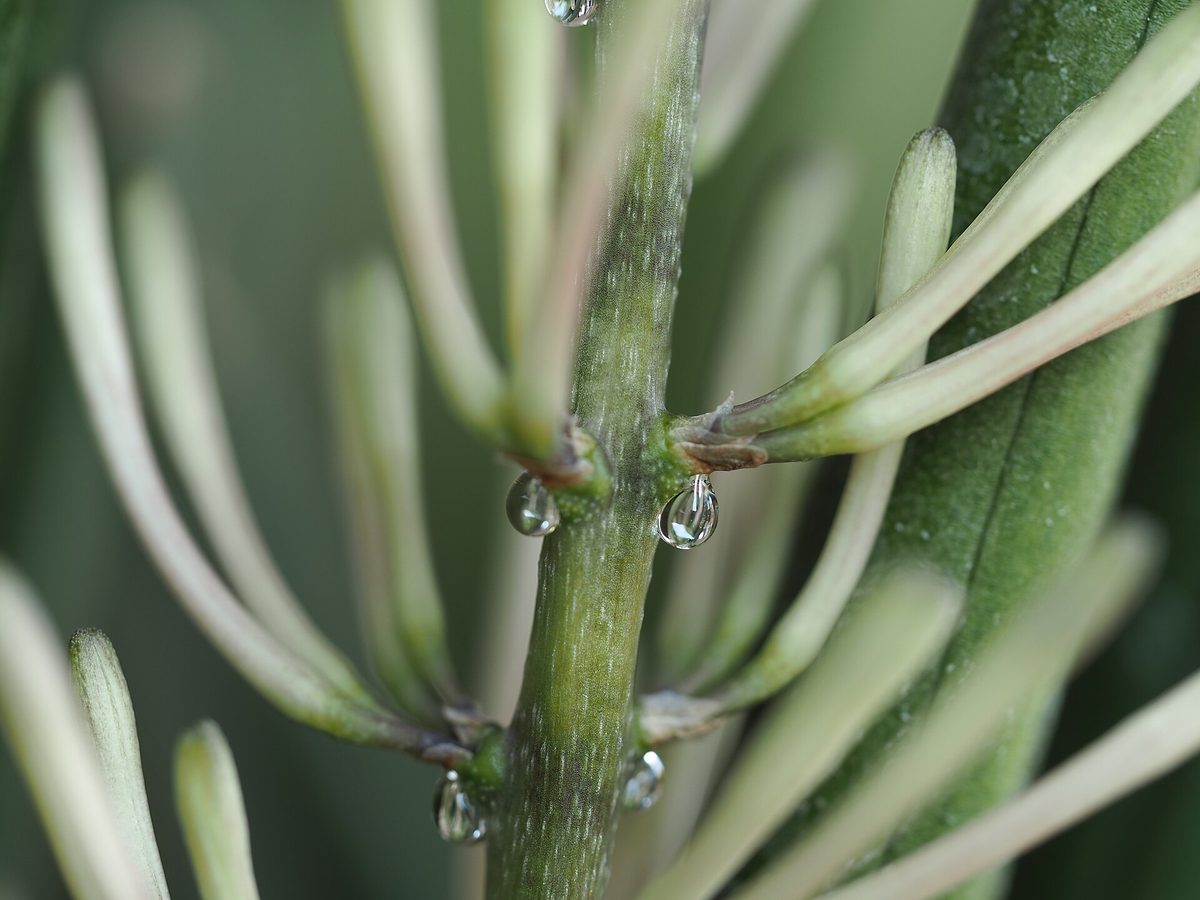
Photo: Bernard Ladenthin, CC BY 4.0 via Wikimedia Commons

Quick facts
| Light: | Bright, indirect light; tolerates low light11 source |
|---|---|
| Water: | Dry to medium12 |
| Soil: | Well drained12 |
| Minimum temperature: | 55.4 °F (13 °C)11 source |
| Size: | 0.5–7 ft (0.15–2.13 m) × 3 ft (0.91 m)121 source |
| Growth rate: | Slow11 source |
| Bloom: | Jun–Aug, Pink and white1Not documented by major sources |
| Cats: | Toxic to cats (1 source) 1 |
| Dogs: | Toxic to dogs (1 source) 1 |
| Family: | Asparagaceae |
How much light does a Dracaena angolensis need?
Bright, indirect light suits this plant indoors. One source suggests placing it in a brightly lit window. It also tolerates low light.
Outdoors, part shade is preferred, which means direct sunlight for only part of the day, about 2 to 6 hours. Full shade is also listed, described as dappled sunlight, with shade from the upper canopy all day.
- Light: Bright, indirect light; tolerates low light1
How often to water a Dracaena angolensis
Water this plant only when the soil is dry. Its water need is rated dry to medium. One source puts the rhythm at about every 2 weeks in summer and monthly in winter.
The plant also needs well-drained soil. Root rot is the disease listed for it, and overwatering is the cause the source gives.
Best soil for a Dracaena angolensis
This plant needs well-drained soil. Grow it in a well-drained potting mix, and note that one made for cacti and succulents is a good choice.
Soil moisture for the plant is rated dry to medium. No cited source records a preferred soil pH for this plant, so that value is not documented here.
Temperature and humidity
The lowest temperature listed for this plant is 55.4 °F (13 °C). One source says to bring it indoors when the temperature falls below 55 °F.
A brightly lit window is the indoor spot that source suggests. No cited source records a humidity preference, so that value is not documented here.
- Minimum temperature: 55.4 °F (13 °C)1
Repotting a Dracaena angolensis
Repot this plant with fresh potting media about every 5 years. The source words the interval as every 5 years or so. Use a well-drained potting mix when you do.
Mature height runs from 0.5 to 7 ft (0.15 to 2.13 m). Some plants of this species can spread up to 3 ft (0.91 m) beyond the edge of the container.
- Repotting: Every 5 years2
How to propagate a Dracaena angolensis
Division and leaf cuttings are the propagation methods on record for this plant. The plants are often sold as rooted leaf cuttings, sometimes with three or more leaves braided together.
Division is the other method listed. No cited source gives steps, timing or rooting times for either method, so those details are not documented here.
- Propagation: Division and leaf cuttings1
Common problems
Mealybugs and spider mites occasionally bother this plant. Both are listed as occasional troubles rather than constant ones.
Root rot is the common disease on record, and the source ties it to overwatering. No cited source here lists further pests or diseases.
| Problem | Kind |
|---|---|
| Mealybugs | Pest |
| Spider mites | Pest |
| Root rot | Disease |
Is Dracaena angolensis toxic to cats and dogs?
The record lists this plant as toxic to cats if ingested. It lists the plant as toxic to dogs in the same way.
The source names these signs for cats and dogs: enlarged pupils, vomiting, an upset stomach, belly pain, drooling, weakness and low mood. The listing is about ingestion. The cited source does not say which parts of the plant are toxic, so that detail is not documented here.
Pet-safe alternatives
Recommended supplies
- Light: bright, indirect light, such as near an east window; a full-spectrum grow light substitutes where no window does.
- Soil: a free-draining mix, and a pot with a drainage hole.
Questions and answers
- How often should I water Dracaena angolensis?
- Water it only when the soil is dry. One source gives about every 2 weeks in summer and monthly in winter. Check the soil rather than the calendar, because root rot is the common disease listed and overwatering is its cause.
- Is Dracaena angolensis toxic to cats and dogs?
- It is listed as toxic to cats if ingested. It is listed as toxic to dogs as well. The source names vomiting, drooling, weakness and an upset stomach among the signs.
- How much light does Dracaena angolensis need indoors?
- Bright, indirect light suits it best, such as a brightly lit window. It also tolerates low light. Outdoors, part shade is preferred, with full shade also listed.
Sources
- NC State Extension Gardener Plant Toolbox. https://plants.ces.ncsu.edu/plants/dracaena-angolensis/. Accessed 27 October 2026.
- Penn State Extension. https://extension.psu.edu/snake-plant-a-forgiving-low-maintenance-houseplant. Accessed 25 October 2026.
How this page was made
- Written with AI assistance from the sources listed on this page. AI is never the source of a fact.