American Evergreen (Syngonium podophyllum)
Formerly Syngonium vellozianum, Pothos auritus, Syngonium affine
This fast-growing vine is low-maintenance and grows well in medium indoor light, tolerating both low light and bright, indirect light. Its water needs run from dry to medium, so let the surface dry slightly before watering again. It climbs or trails as it grows, and it is toxic to both cats and dogs.
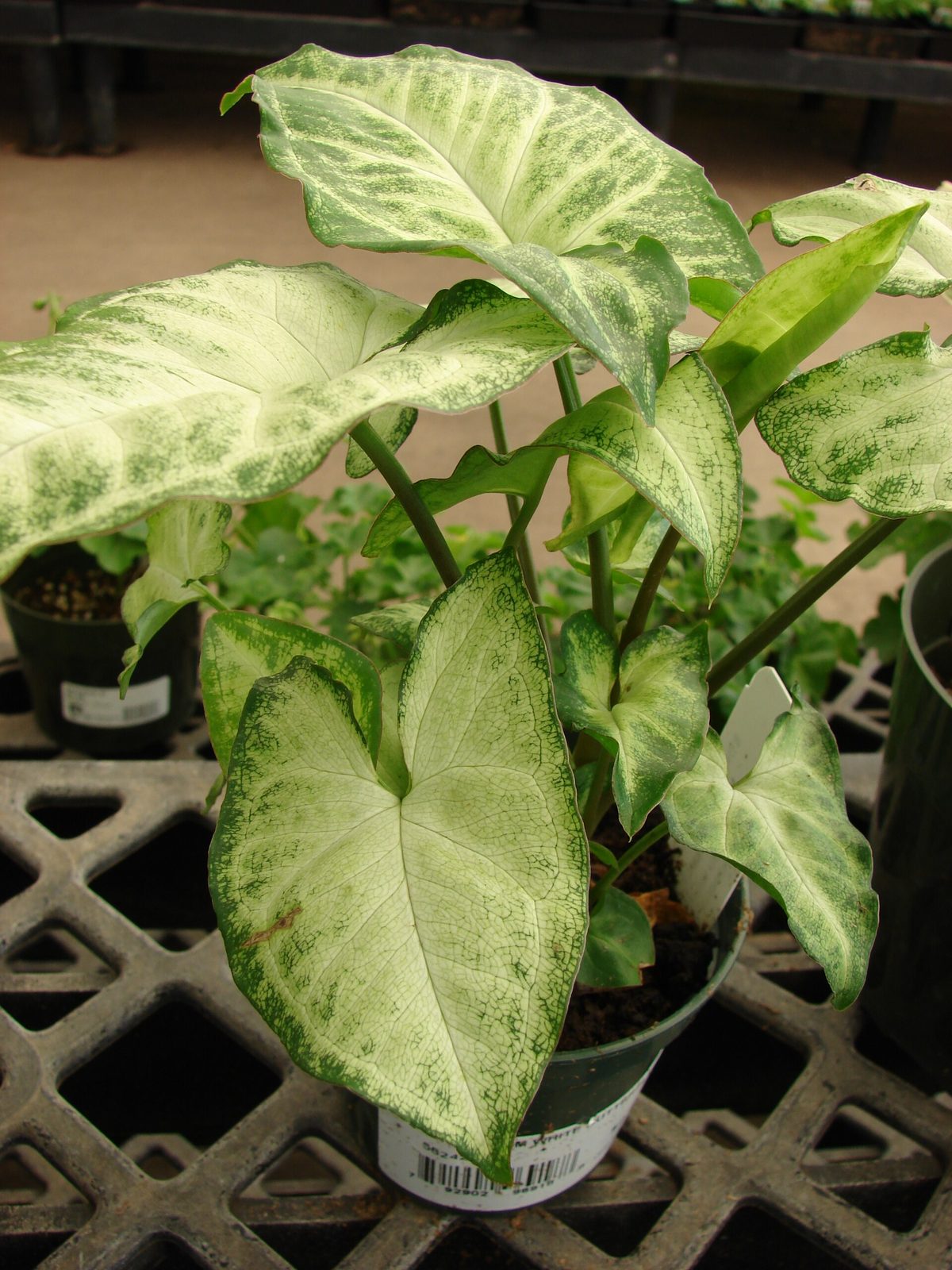
Photo: Forest & Kim Starr, CC BY 3.0 via Wikimedia Commons

Quick facts
| Light: | Medium light; tolerates low light and bright, indirect light11 source |
|---|---|
| Water: | Dry to medium21 source |
| Soil: | Moist31 source |
| Size: | 3–6 ft (0.91–1.83 m) × 1–2 ft (0.3–0.61 m)31 |
| Growth rate: | Rapid51 source |
| Bloom: | Green, white and yellow31 source |
| Cats: | Toxic to cats (1 source) 4 |
| Dogs: | Toxic to dogs (1 source) 4 |
| Native range: | BLZ, BOL, BZC, BZE, BZL, BZN, CLM, COS, ECU, ELS, FRG, GUA, GUY, HON, MXC, MXE, MXG, MXS, MXT, NIC, PAN, PER, SUR, TRT, VEN, VNA6 |
| Family: | Araceae |
How much light does an American Evergreen need?
Give this plant medium light indoors, the level it grows best under. It also tolerates low light and bright, indirect light. Outdoors, part shade is the preferred light, and it tolerates full shade too. Part shade means direct sun for only part of the day, about 2 to 6 hours, while full shade means shade from the canopy above all day long.
- Light: Medium light; tolerates low light and bright, indirect light1
How often to water an American Evergreen
This plant's water needs run from dry to medium. Let the surface of the potting mix dry out slightly before you water it again. The soil moisture level recorded for this plant is moist. Keep the mix within that range, watering again once the top layer has dried slightly rather than letting it go fully dry.
- Water: Dry to medium2
Best soil for an American Evergreen
The soil moisture level recorded for this plant is moist. No other moisture level is listed for it, so aim to keep the potting mix at that one level rather than letting it swing to another. That single value is the only soil-moisture detail documented for this species, with nothing recorded about drainage speed or soil type.
- Soil drainage: Moist3
Temperature and humidity
This plant does best with humidity at 50% or higher. Lower humidity than that is not the level recorded for good growth. It is rated hardy outdoors in USDA zones 10a through 12b. Outside those zones, the hardiness rating recorded for it does not extend to colder areas.
- Humidity: High1
Fertilizing an American Evergreen
Feed this plant once a month during spring and summer, which is its growing season. Use a reduced rate rather than a full-strength dose at each feeding. Hold off on fertilizer outside of that spring-to-summer window. That timing matches the months of March through August. A reduced rate means feeding at less than the full strength given on a fertilizer's label.
- Fertilizer: Monthly in the growing season (Mar–Aug)1
Common problems
Watch this plant for aphids, mealybugs, and spider mites. These are the pests recorded for it. Bacterial leaf spot and soft rot can occur, along with stem rot and bacterial blight. Those four problems are the diseases recorded for this plant. In total, three pests and four diseases are listed for it.
| Problem | Kind |
|---|---|
| Aphids | Pest |
| Mealybugs | Pest |
| Spider mites | Pest |
| Bacterial leaf spot | Disease |
| Soft rot | Disease |
| Stem rot | Disease |
| Bacterial blight | Disease |
Is American Evergreen toxic to cats and dogs?
This plant is toxic to cats. It is also toxic to dogs. Both cats and dogs are listed as toxic to this plant. The toxic rating is the same for both species, with no difference recorded between them. If a cat or dog in your home has access to this plant, this is the toxicity status recorded for it. The toxic listing covers this species for both cats and dogs together. This plant's toxic status is recorded without any mention of a severity level for either cats or dogs. No specific part of the plant is singled out in that toxic listing for cats or dogs. That is the main safety fact to know about this plant if you share your home with pets.
Pet-safe alternatives
Recommended supplies
- Light: a bright room out of direct sun; a full-spectrum grow light makes up the difference in a darker one.
- Soil: a mix that holds moisture without staying wet.
- Humidity: it wants humid air; a pebble tray or a humidifier is the usual fix.
Questions and answers
- Is this plant toxic to cats or dogs?
- Yes, it is toxic to both cats and dogs, the same rating recorded for each animal, based on its listing in poison-control records.
- Does this plant need bright light to grow indoors?
- No, it tolerates low light, though it grows best in medium light and also tolerates bright, indirect light. Even a spot that gets only low light will not stop it from growing, though medium to bright light suits it better. Outdoors, part shade is the light it prefers, and it also tolerates full shade.
- How often should you fertilize this plant?
- Feed it once a month during spring and summer, its growing season, using a reduced rate rather than full strength. There's no need to feed it the rest of the year, since that monthly schedule covers only the growing season. That growing season runs from March through August.
Sources
- Clemson Cooperative Extension HGIC. https://hgic.clemson.edu/factsheet/arrowhead-vine-syngonium-spp-indoor-care-growing-tips-plant-guide/. Accessed 13 October 2026.
- University of Florida IFAS Extension (EDIS). https://ask.ifas.ufl.edu/EP244. Accessed 14 October 2026.
- NC State Extension Gardener Plant Toolbox. https://plants.ces.ncsu.edu/plants/syngonium-podophyllum/. Accessed 13 October 2026.
- ASPCA Animal Poison Control Center. https://www.aspca.org/pet-care/aspca-poison-control/toxic-and-non-toxic-plants/arrow-head-vine. Accessed 13 October 2026.
- University of Missouri Extension. https://extension.missouri.edu/publications/g6520. Accessed 28 October 2026.
- Royal Botanic Gardens, Kew (World Checklist of Vascular Plants). https://sftp.kew.org/pub/data-repositories/WCVP/wcvp.zip. Accessed 4 June 2026.
How this page was made
- Written with AI assistance from the sources listed on this page. AI is never the source of a fact.