Cast Iron Plant (Aspidistra elatior)
Formerly Aspidistra insularis, Aspidistra variegata, Plectogyne variegata
Give your cast iron plant part shade or full shade outdoors and water it only when the top few inches of soil start to dry out, letting it swing between dry and medium moisture. It grows best in deep shade where many houseplants struggle. The ASPCA lists it as non-toxic to both cats and dogs.
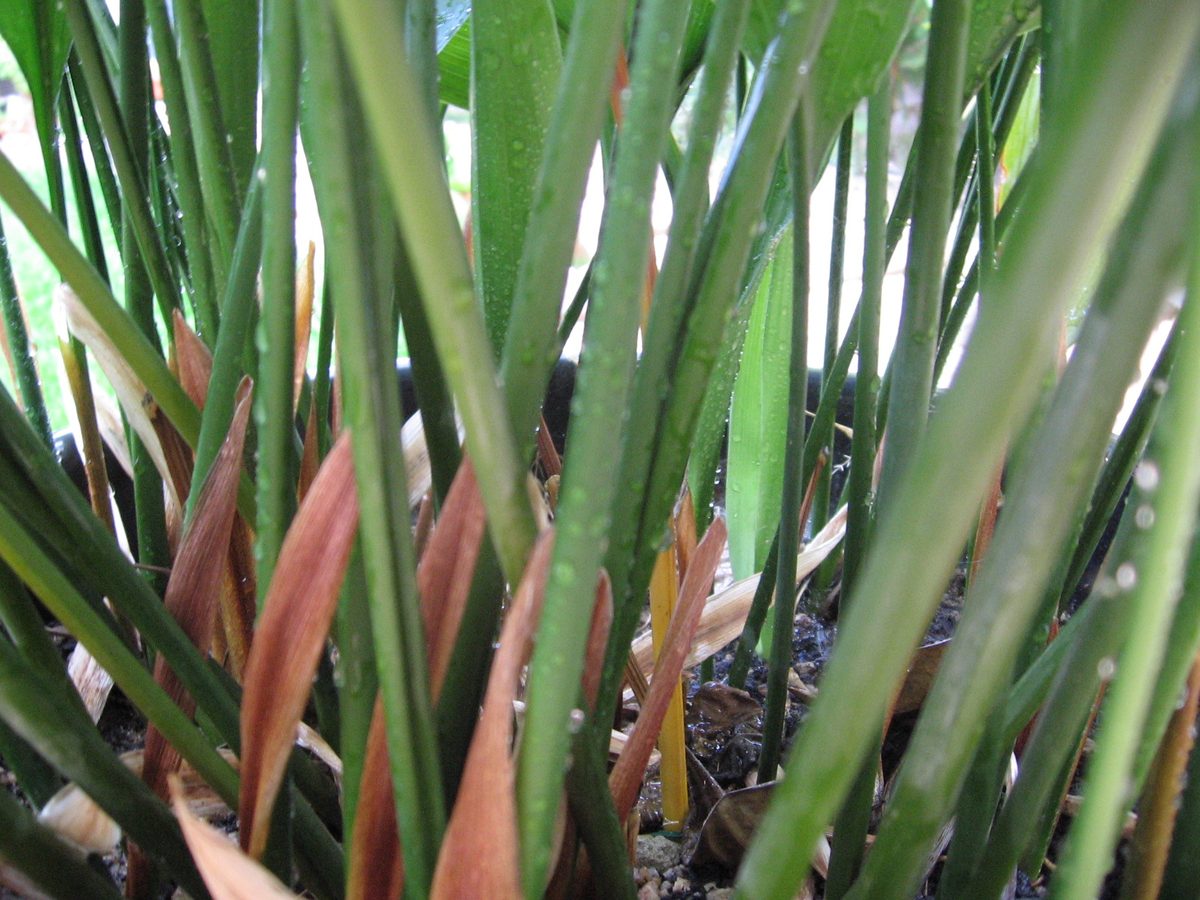
Photo: Digigalos, CC BY-SA 3.0 via Wikimedia Commons

Quick facts
| Light: | Part shade and full shade (part shade preferred)123 |
|---|---|
| Water: | Dry to medium31 source |
| Soil: | Well drained, occasionally dry and moist; pH 3.5–911 source |
| Hardiness: | Zones 7a–11b13 |
| Size: | 1–3 ft (0.3–0.91 m) × 1–3 ft (0.3–0.91 m)13 |
| Growth rate: | Slow11 source |
| Bloom: | Brown and purple11 source |
| Cats: | Non-toxic to cats 51 |
| Dogs: | Non-toxic to dogs 51 |
| Native range: | JAP6 |
| Family: | Asparagaceae |
How much light does a Cast Iron Plant need?
Cast iron plant grows best outdoors in part shade to full shade. Direct sun scorches the leaves, so choose a spot under trees or on the shaded side of a building. Indoors, it tolerates low light better than most houseplants, which makes it a good fit for a north-facing room or a corner far from a window. It does not need bright light to survive, and it keeps its deep green color even in dim rooms. If you move a potted plant outside for summer, ease it into shade rather than part sun to avoid leaf burn.
How often to water a Cast Iron Plant
Check the top two inches of soil before you water cast iron plant again. Water only when it feels dry to medium, not when it is wet or soggy. Cast iron plant handles short dry spells between waterings better than it handles sitting in water. Plant it in soil that drains well but still holds some moisture, since it also does fine in soil that dries out now and then. Soggy, waterlogged soil is the fastest way to rot the roots of this plant. In containers, make sure the pot has drainage holes so extra water can escape after you water.
- Water: Dry to medium3
Best soil for a Cast Iron Plant
This plant prefers soil that sheds extra water but keeps some moisture most of the time. It also tolerates soil that dries out between waterings, so it forgives an occasional missed watering. Avoid heavy, wet soil that stays soggy for long stretches, since that leads to root problems. No cited source on this page records a preferred soil pH for this species. A general all-purpose potting mix or garden soil with good structure works well for most plantings. Raised beds or containers help keep the roots from sitting in water outdoors. Good drainage matters more than soil type for this plant's long-term health.
Hardiness and temperature
This plant grows well outdoors in USDA zones 7a through 11b. In the cooler end of that range, roots usually survive winter even if some leaves show damage. No cited source on this page states an exact minimum temperature this plant can survive. Average indoor humidity suits this plant fine, so you do not need a humidifier or pebble tray. It is a forgiving choice for normal home conditions rather than a plant that needs a steamy bathroom or greenhouse. Bring potted plants indoors before the first fall frost if you garden outside zone 7a. Keep humidity steady rather than letting the air swing from damp to very dry.
Fertilizing a Cast Iron Plant
Feed cast iron plant lightly just once a year. Apply it during the growing season, from spring into summer, when the plant is putting out new leaves. Because this plant grows slowly, it does not need frequent feeding to stay healthy. Skip fertilizer in fall and winter, when growth slows or stops.
- Fertilizer: Light, once a year (Mar–Aug)2
Pruning a Cast Iron Plant
Most pruning on cast iron plant is just removing dead or damaged leaves as you spot them. Cut these off at the base with clean shears any time you notice them. In late winter, before new growth starts, you can also cut the whole plant back hard to renew it if it has grown tired or leggy. This hard renewal cut encourages a fresh flush of leaves once warmer weather returns.
- Pruning: Remove dead growth only and Hard renewal pruning (Jan–Feb)2
How to plant a Cast Iron Plant
You can grow cast iron plant outdoors year-round from USDA zone 7a up through 11b. If you garden colder than zone 7a, grow it in a container you can bring indoors before frost instead of planting it in the ground. Choose a spot in part shade to full shade, since this plant does not want direct sun. Give it soil that drains well, though it still appreciates occasional moisture. Space plants about 1 to 3 feet (0.3 to 0.9 m) apart, since clumps spread to roughly that width as they mature. Mature plants reach about 1 to 3 feet (0.3 to 0.9 m) tall, so give them room to fill in without crowding nearby plants.
Winter care
Cast iron plant can stay outdoors all winter in USDA zones 7a and warmer. A hard freeze may brown the leaves, but the roots often survive and regrow. No cited source on this page gives an exact minimum temperature for this plant. Gardeners colder than zone 7a should shelter potted plants before the first fall frost. Keep indoor plants in low light and let soil dry toward medium between waterings. Zones above 11b see no frost, so plants there need no winter protection. This zone range, 7a to 11b, covers most mild winter climates in the US.
Care calendar
| Task | Jan | Feb | Mar | Apr | May | Jun | Jul | Aug | Sep | Oct | Nov | Dec |
|---|---|---|---|---|---|---|---|---|---|---|---|---|
| Fertilize | Fertilize in Mar | Fertilize in Apr | Fertilize in May | Fertilize in Jun | Fertilize in Jul | Fertilize in Aug | ||||||
| Prune | Prune in Jan | Prune in Feb |
How to propagate a Cast Iron Plant
Division is the method used to propagate cast iron plant. Dig up a mature clump and split the rhizomes apart by hand or with a clean knife, keeping a few leaves and roots on each piece. Replant the divisions right away in soil that drains well, since soggy ground slows new roots. Because this plant grows slowly, new divisions take time to fill in and look established. Spring is a good time to divide, since the plant is entering its active growing months.
Common problems
Watch for spider mites and scale insects on cast iron plant, especially on the undersides of leaves. Both pests are easier to control if you catch them early, before they spread to nearby leaves. Leaf-spot is the main disease reported on this plant, showing up as spots on the foliage. Good air flow and avoiding overly wet soil help keep leaf-spot from taking hold.
| Problem | Kind |
|---|---|
| Spider mites | Pest |
| Scale insects | Pest |
| Leaf spot | Disease |
Is Cast Iron Plant toxic to cats and dogs?
The ASPCA lists cast iron plant as non-toxic to cats. The ASPCA gives dogs the same non-toxic rating for this plant. This rating comes from the ASPCA Animal Poison Control Center. The ASPCA tracks plants that are safe or harmful for pets. No part of this plant is flagged as toxic in the ASPCA's entries for cats or dogs. A non-toxic rating does not list a severity level, since the ASPCA expects no toxic reaction in either pet. Even so, eating a large amount of any plant can upset a cat's or dog's stomach, so contact your vet or a pet poison line if your pet shows vomiting or other unusual signs.
Recommended supplies
- Soil: a free-draining mix, and a pot with a drainage hole.
Questions and answers
- Is cast iron plant toxic to cats or dogs?
- The ASPCA lists cast iron plant as non-toxic to both cats and dogs. This rating means the ASPCA found no toxic compounds of concern for either pet.
- How much light does cast iron plant need?
- Outdoors, give it part shade to full shade, since direct sun scorches its leaves. Indoors, it tolerates low light better than most houseplants, so it suits rooms far from a window.
- How often should I water cast iron plant?
- Water it when the soil feels dry to medium, not when it is wet or soggy. Checking the top couple inches of soil tells you when it is time to water again.
Sources
- NC State Extension Gardener Plant Toolbox. https://plants.ces.ncsu.edu/plants/aspidistra-elatior/. Accessed 24 September 2026.
- Clemson Cooperative Extension HGIC. https://hgic.clemson.edu/cast-iron-plant/. Accessed 24 September 2026.
- UF/IFAS Extension EDIS. https://ask.ifas.ufl.edu/publication/FP053. Accessed 24 September 2026.
- University of Missouri Extension. https://extension.missouri.edu/publications/g6510. Accessed 30 October 2026.
- ASPCA Animal Poison Control Center. https://www.aspca.org/pet-care/aspca-poison-control/toxic-and-non-toxic-plants/cast-iron-plant. Accessed 24 September 2026.
- Royal Botanic Gardens, Kew (World Checklist of Vascular Plants). https://sftp.kew.org/pub/data-repositories/WCVP/wcvp.zip. Accessed 4 June 2026.
How this page was made
- Written with AI assistance from the sources listed on this page. AI is never the source of a fact.