Mexican Tea (Dysphania ambrosioides)
Formerly Chenopodium ambrosioides, Chenopodium spathulatum, Atriplex ambrosioides
Give Mexican tea, Dysphania ambrosioides, full sun, meaning 6 or more hours of direct sunlight a day. Watering needs are not documented on this page. The ASPCA lists the plant as toxic to cats and toxic to dogs. It is a herbaceous perennial that reaches 2–5 ft (0.61–1.52 m) tall.
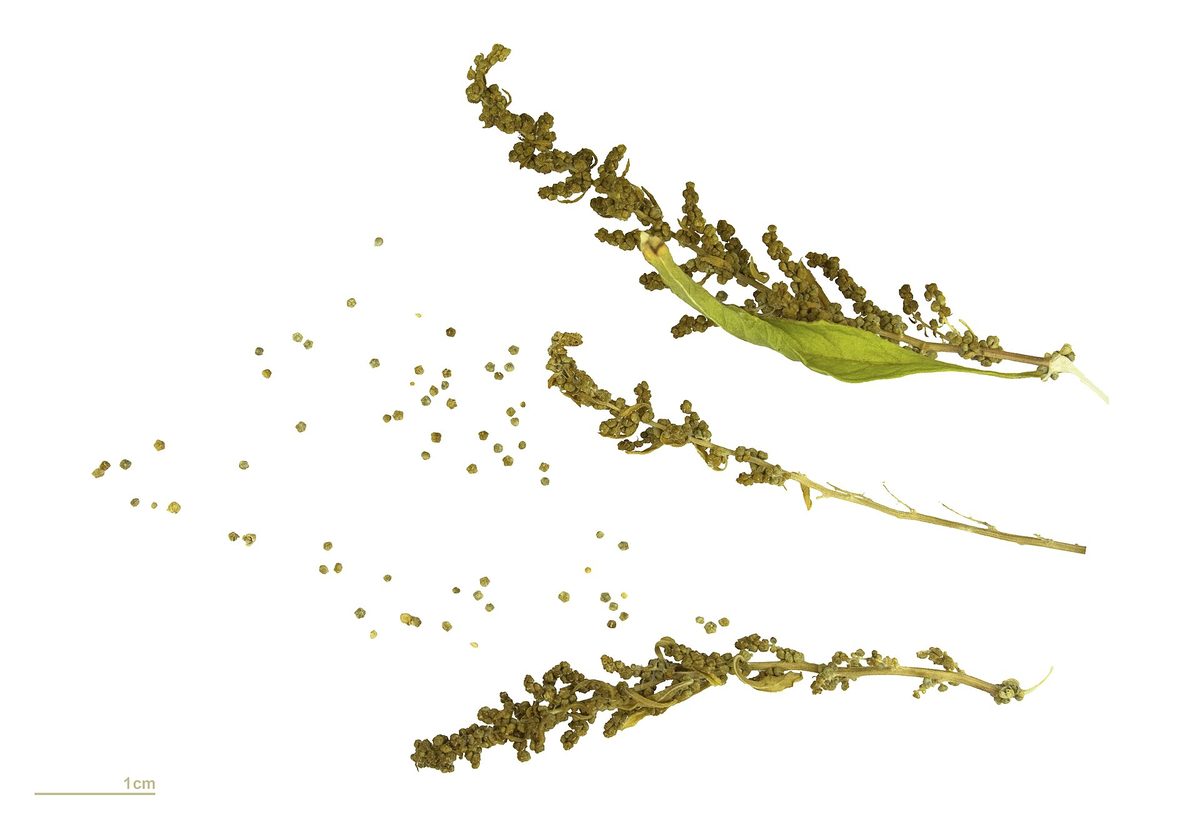
Photo: Roger Culos, CC BY-SA 3.0 via Wikimedia Commons

Quick facts
| Light: | Full sun11 source |
|---|---|
| Soil: | Well drained, moist and occasionally dry11 source |
| Size: | 2–5 ft (0.61–1.52 m)11 source |
| Growth rate: | Rapid11 source |
| Bloom: | Jun–Oct, Green511 source |
| Cats: | Toxic to cats (1 source) 4 |
| Dogs: | Toxic to dogs (1 source) 4 |
| Native range: | AGE, AGS, AGW, ARK, ARU, BLZ, BOL, BZC, BZE, BZL, BZN, BZS, CLC, CLM, CLN, CLS, COS, ELS, FLA, GEO, GUA, HON, LOU, MRY, MSI, MXC, MXE, MXG, MXS, MXT, NCA, NIC, OKL, PAN, PAR, PER, SCA, TDC, TEX, URU, VEN, VRG6 |
| Family: | Amaranthaceae |
How much light does a Mexican Tea need?
Outdoors, Mexican tea does best in full sun. Full sun means 6 or more hours of direct sunlight a day (6 h/day). No other light level is listed for this plant, so full sun is the only exposure to plan around. Check that your chosen spot gets 6 hours of direct sun before you plant. The plant grows 2–5 ft (0.61–1.52 m) tall with many irregular side branches, and its growth rate is listed as rapid.
Best soil for a Mexican Tea
Mexican tea is recorded on soil that is well drained, moist and occasionally dry. Moist is the one condition that the cited quote names directly. University of Illinois Extension describes epazote as extremely easy to grow from seed in a full sun location with moist, well-drained soil. Drainage and moisture are the two soil conditions to match, and an occasional dry spell falls within the recorded range. No soil pH range is documented for this plant, so no pH target is given here.
- Soil drainage: Well drained, moist and occasionally dry1
How to propagate a Mexican Tea
Seed is the recommended propagation strategy for Mexican tea. University of Illinois Extension calls epazote extremely easy to grow from seed. It names a full sun location with moist, well-drained soil for the job. No other propagation method, such as cuttings or division, is documented for this plant.
Common problems
The pests recorded for Mexican tea are graphocephala atropunctata, liriomyza huidobrensis and oncometopia nigricans. The diseases recorded are orthotospovirus tomatomaculae, phymatotrichopsis omnivora and xylella fastidiosa. Deer resistance is reported for this plant. No treatment steps are documented here.
| Problem | Kind |
|---|---|
| Graphocephala atropunctata | Pest |
| Liriomyza huidobrensis | Pest |
| Oncometopia nigricans | Pest |
| Orthotospovirus tomatomaculae | Disease |
| Phymatotrichopsis omnivora | Disease |
| Xylella fastidiosa | Disease |
Is Mexican Tea toxic to cats and dogs?
The ASPCA lists Mexican tea as toxic to cats. It also lists the plant as toxic to dogs. The entry reads: "Toxicity: Toxic to Dogs, Toxic to Cats, Toxic to Horses". The position is recorded separately for each animal, and both records say toxic, with no difference between them. No severity is recorded for either animal in the facts on this page. Which parts of the plant are toxic is also not documented here.
Pet-safe alternatives
Recommended supplies
- Soil: a free-draining mix, and a pot with a drainage hole.
Questions and answers
- Is Mexican tea toxic to cats and dogs?
- The ASPCA lists Mexican tea as toxic to cats and as toxic to dogs. The two animals have separate records, and each one says toxic. Severity and the plant parts involved are not documented here.
- How much sun does Mexican tea need?
- Mexican tea is listed for full sun outdoors, which means 6 or more hours of direct sunlight a day. It grows 2–5 ft (0.61–1.52 m) tall, and its growth rate is listed as rapid.
- Is Mexican tea native to the United States?
- The native-status record lists Mexican tea as native in the lower 48 states and in Puerto Rico. The same record lists it as introduced in Hawaii. It is classed as a herbaceous perennial.
Sources
- NC State Extension Gardener Plant Toolbox. https://plants.ces.ncsu.edu/plants/dysphania-ambrosioides/. Accessed 14 October 2026.
- University of Illinois Extension. https://extension.illinois.edu/herbs/epazote. Accessed 31 October 2026.
- EPPO Global Database. https://gd.eppo.int/taxon/CHEAM/pests. Accessed 14 October 2026.
- ASPCA Animal Poison Control Center. https://www.aspca.org/pet-care/aspca-poison-control/toxic-and-non-toxic-plants/epazote. Accessed 14 October 2026.
- Lady Bird Johnson Wildflower Center (Native Plant Database). https://www.wildflower.org/plants/result.php?id_plant=DYAM. Accessed 21 October 2026.
- Royal Botanic Gardens, Kew (World Checklist of Vascular Plants). https://sftp.kew.org/pub/data-repositories/WCVP/wcvp.zip. Accessed 4 June 2026.
How this page was made
- Written with AI assistance from the sources listed on this page. AI is never the source of a fact.