Absinthium (Artemisia absinthium)
Formerly Artemisia rehan, Artemisia albida, Artemisia inodora
Artemisia absinthium grows best in full sun and tolerates part shade, and it takes soil from dry to medium moisture. It is listed as toxic to both cats and dogs, but only if large quantities are eaten. It is hardy in zones 3a to 9b, and it is an herbaceous perennial.
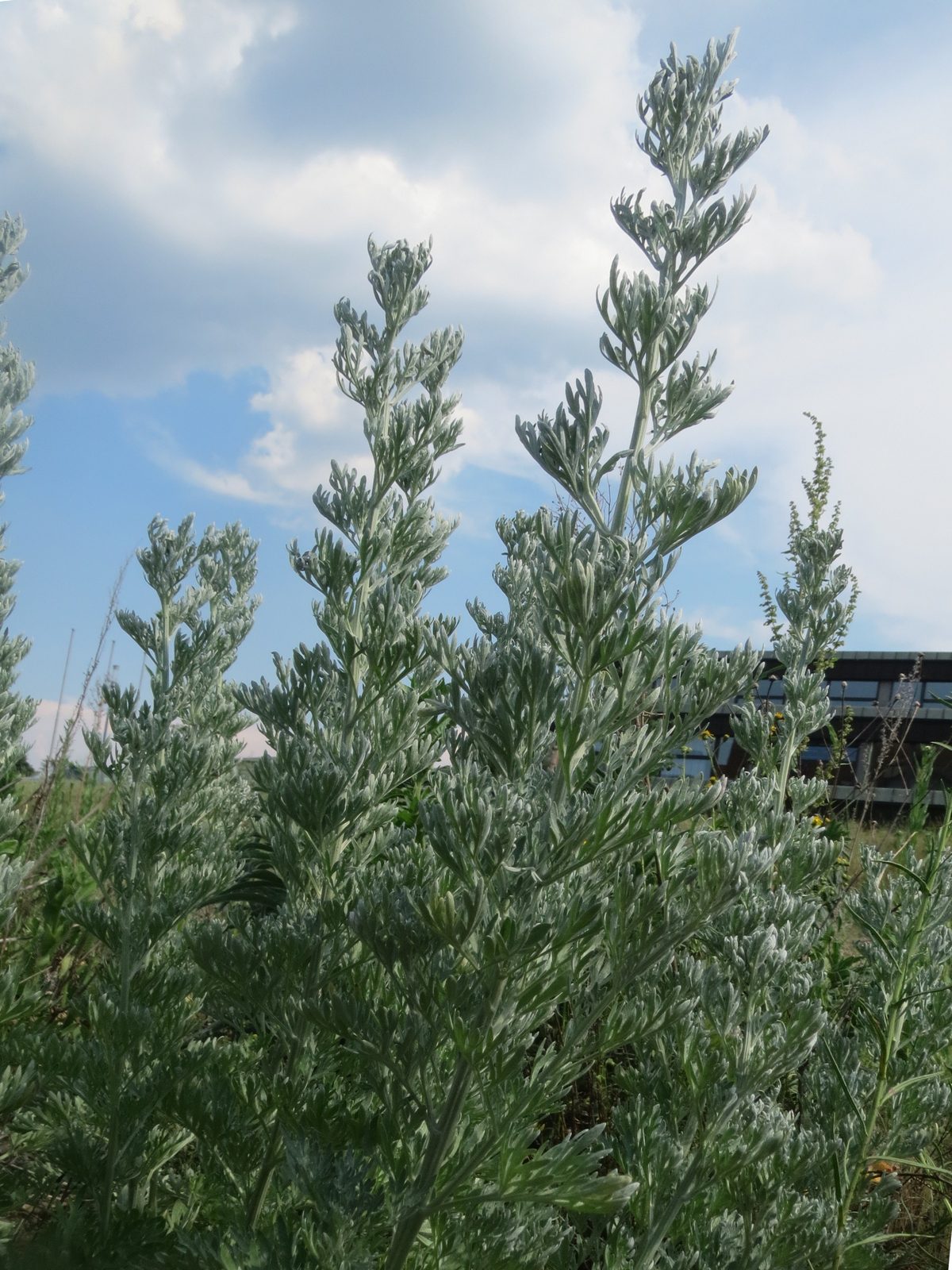
Photo: Wikimedia Commons contributor, CC0 via Wikimedia Commons

Quick facts
| Light: | Full sun and part shade (full sun preferred)12 |
|---|---|
| Water: | Dry to medium15 |
| Soil: | Well drained, moist and occasionally dry15 |
| Hardiness: | Zones 3a–9b11 source |
| Size: | 1.3–5 ft (0.4–1.52 m) × 2–5 ft (0.6–1.52 m)318 |
| Growth rate: | Rapid81 source |
| Bloom: | Jul–Aug and Sep–Oct, Yellow and green931 source |
| Cats: | Toxic to cats (1 source) 7 |
| Dogs: | Toxic to dogs (1 source) 7 |
| Native range: | AFG, ALB, ALG, ALT, AUT, BGM, BLR, BLT, BRY, BUL, CHS, CZE, DEN, EGY, FRA, GER, GRC, HUN, ICE, IRK, IRN, IRQ, ITA, KAZ, KGZ, KRA, KRI, KRY, LBS, LBY, MOR, NCS, NET, PAK, POL, POR, ROM, RUC, RUE, RUN, RUS, RUW, SPA, SWE, SWI, TCS, TKM, TUE, TUR, TZK, UKR, UZB, WHM, WSA, WSB, YUG10 |
| Family: | Asteraceae |
How much light does an Absinthium need?
Plant it in full sun, which the NC State Extension Gardener Plant Toolbox describes as six or more hours of direct sunlight a day. Part shade is also listed, though full sun is the preferred exposure. Clemson Cooperative Extension says it grows best in full sun and well-drained soils. Its sun minimum is 6 hours a day.
How often to water an Absinthium
The water range for this plant runs from dry to medium. NC State Extension describes the soil as well-drained, and moist to moderately dry. University of Illinois Extension lists the conditions as dry or moist, with good drainage. That same source says it needs very well-drained soil in a full sun location.
Best soil for an Absinthium
Good drainage is what the sources ask for in this plant's soil. The listed drainage classes are well drained, moist and occasionally dry. NC State Extension notes good drainage, and University of Illinois Extension says it needs very well-drained soil in full sun. Clemson Cooperative Extension also pairs full sun with well-drained soils. No soil pH range is documented for this page. Soil moisture can run from dry to medium.
Hardiness and temperature
This plant is listed for USDA hardiness zones 3a through 9b. That range covers 3a, 3b, 4a, 4b and on through each half-zone to 9b. No minimum temperature is documented for this page, and humidity is not covered either. Zone 3a is the cold end of the listed range, and 9b is the warm end.
- Hardiness: Zones 3a–9b1
Pruning an Absinthium
Pinch back the tips in spring, which NC State Extension says will help promote shorter, bushier growth. Deadhead the flowers as well, to prevent the plant from self-seeding. The recorded pruning type is light shaping, and the timing given is spring. Pinching tips and deadheading are the two steps the source describes.
- Pruning: Light shaping (Mar–May)3
How to plant an Absinthium
Choose a spot in USDA zones 3a through 9b, the range where this plant is listed. Plan for a mature spread of 2–5 ft (0.6–1.52 m) and a height of 1.3–5 ft (0.4–1.52 m). Pick a site with full sun and very well-drained soil. It is listed as introduced in the lower 48 US states. Its growth rate is rapid.
- Hardiness: Zones 3a–9b1
Winter care
Winter hardiness for this plant is given as zones 3a through 9b. Zone 3a is the coldest zone in that range, and 9b is the warmest zone listed. The listing runs through every half-zone between 3a and 9b. No minimum temperature is documented, and no winter protection steps are documented either. The listed plant type is herbaceous perennial.
- Hardiness: Zones 3a–9b1
Care calendar
| Task | Jan | Feb | Mar | Apr | May | Jun | Jul | Aug | Sep | Oct | Nov | Dec |
|---|---|---|---|---|---|---|---|---|---|---|---|---|
| Prune | Prune in Mar | Prune in Apr | Prune in May | |||||||||
| Bloom | Bloom in Jul | Bloom in Aug | Bloom in Sep | Bloom in Oct |
Common problems
EPPO Global Database records the southern armyworm (Spodoptera eridania) among the pests of this plant. It also records two diseases, Xylella fastidiosa and tomato spotted wilt virus. The tomato spotted wilt virus is listed under the name Orthotospovirus tomatomaculae. No other pests or diseases are documented for this page.
| Problem | Kind |
|---|---|
| Southern armyworm | Pest |
| Xylella fastidiosa | Disease |
| Tomato spotted wilt virus | Disease |
Is Absinthium toxic to cats and dogs?
Cats: the NC State Extension Gardener Plant Toolbox lists this plant as toxic. Dogs: the same source lists it as toxic as well. The entry reads toxic only if large quantities are eaten, with poisoning through ingestion. It names all parts of the plant as poisonous. The toxic parts are the same for cats and dogs, since the entry names all parts. No severity or clinical signs are recorded for this plant on this page.
Pet-safe alternatives
Recommended supplies
- Soil: a free-draining mix, and a pot with a drainage hole.
Questions and answers
- How much sun does Artemisia absinthium need?
- It grows best in full sun, meaning six or more hours of direct sunlight a day. Part shade is also listed, with full sun preferred. Soil should be well drained.
- Is Artemisia absinthium toxic to cats and dogs?
- The NC State Extension Gardener Plant Toolbox lists it as toxic to cats and to dogs. The entry says it is toxic only if large quantities are eaten, and it names all parts as poisonous.
- Which USDA hardiness zones is Artemisia absinthium listed for?
- It is listed for zones 3a through 9b. The range includes every half-zone from 3a to 9b. It is an herbaceous perennial that grows 1.3–5 ft (0.4–1.52 m) tall.
Sources
- NC State Extension Gardener Plant Toolbox. https://plants.ces.ncsu.edu/plants/artemisia-absinthium/common-name/absinthe/. Accessed 23 September 2026.
- Clemson Cooperative Extension Home & Garden Information Center. https://hgic.clemson.edu/factsheet/herbs/. Accessed 23 September 2026.
- NC State Extension Gardener Plant Toolbox. https://plants.ces.ncsu.edu/plants/artemisia-absinthium/. Accessed 28 October 2026.
- University of Minnesota Extension. https://extension.umn.edu/garden-and-home/yard-and-garden/yard-and-garden-insects/slugs. Accessed 28 October 2026.
- University of Illinois Extension. https://extension.illinois.edu/flowers/wormwood. Accessed 23 September 2026.
- EPPO Global Database. https://gd.eppo.int/taxon/ARTAB/pests. Accessed 23 September 2026.
- NC State Extension Gardener Plant Toolbox. https://plants.ces.ncsu.edu/plants/artemisia/. Accessed 24 September 2026.
- USDA Forest Service Fire Effects Information System. https://www.fs.usda.gov/database/feis/plants/forb/artabs/all.html. Accessed 30 October 2026.
- Chicago Botanic Garden. https://www.chicagobotanic.org/plant-information/plant-finder/artemisia-absinthium-lambrook-silver-wormwood. Accessed 27 October 2026.
- Royal Botanic Gardens, Kew (World Checklist of Vascular Plants). https://sftp.kew.org/pub/data-repositories/WCVP/wcvp.zip. Accessed 4 June 2026.
How this page was made
- Written with AI assistance from the sources listed on this page. AI is never the source of a fact.