Cantaloupe (Cucumis melo)
Formerly Cucumis flexuosus, Cucumis dudaim, Cucumis conomon
To keep cantaloupe thriving, plant it in full sun and give it medium to wet watering. It is a warm-season crop that climbs 6 to 9 ft (1.83–2.74 m) high. The ASPCA Animal Poison Control Center lists it as non-toxic to cats and also non-toxic to dogs.
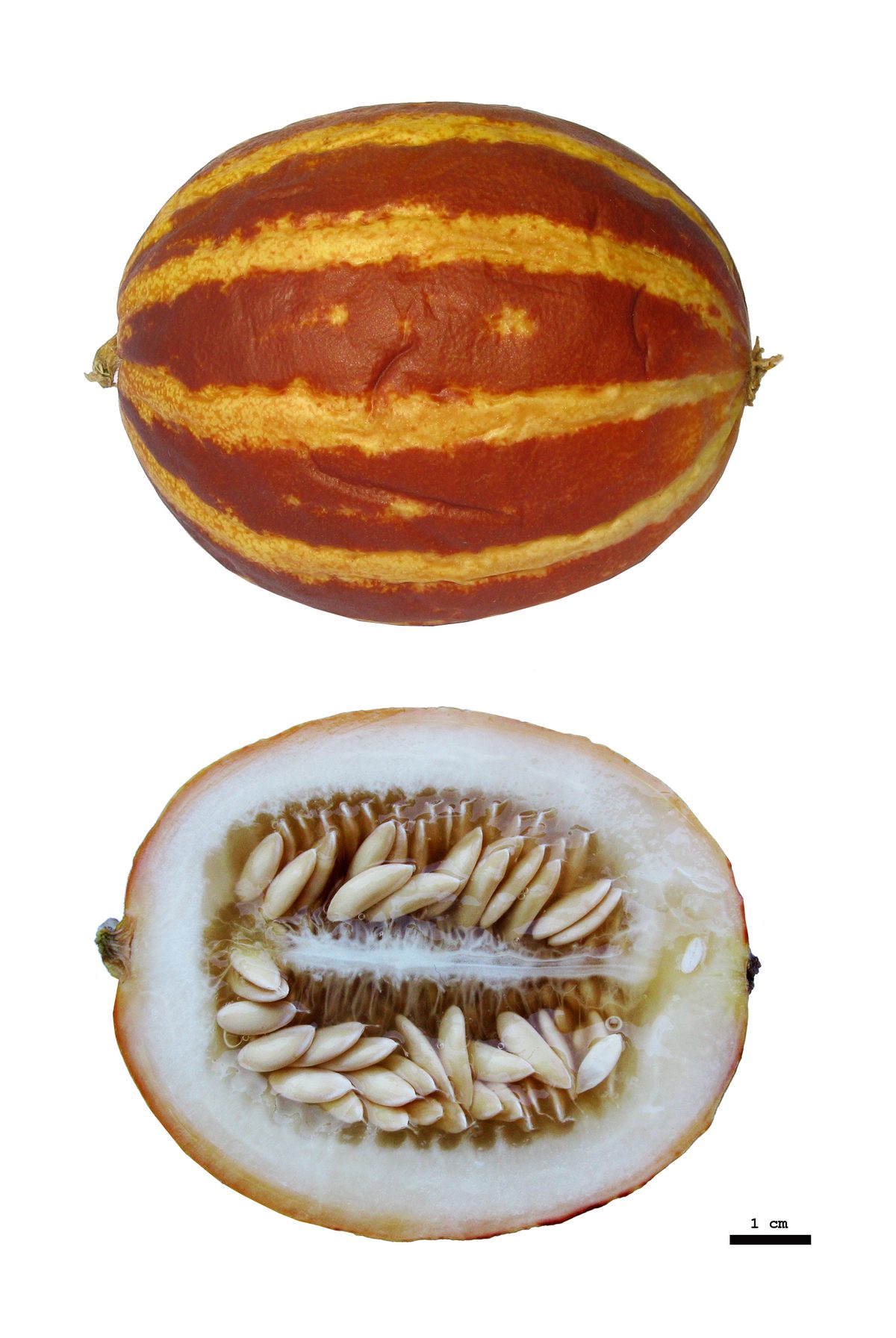
Photo: Anaxibia, CC BY 4.0 via Wikimedia Commons

Quick facts
| Light: | Full sun11 source |
|---|---|
| Water: | Medium to wet11 source |
| Soil: | Well drained and moist; pH 6–6.521 source |
| Hardiness: | Zones 2a–11b11 source |
| Size: | 6–9 ft (1.83–2.74 m) × 1–3 ft (0.3–0.91 m)110 |
| Growth rate: | Moderate111 source |
| Bloom: | Yellow11 source |
| Cats: | Non-toxic to cats 91 |
| Dogs: | Non-toxic to dogs 91 |
| Native range: | AFG, ANG, CHA, ERI, ETH, GST, IND, IRN, IRQ, KEN, LBS, MLW, MOZ, NSW, NTA, NWG, OMA, PAK, PAL, QLD, SAU, SOA, SOM, SRL, SUD, TAN, TVL, UGA, WAU, YEM, ZAM, ZIM11 |
| Family: | Cucurbitaceae |
How much light does a Cantaloupe need?
Outdoors, cantaloupe prefers full sun. Full sun means 6 or more hours of direct sunlight a day. Cantaloupe is a warm-season crop, and the only outdoor light level listed for it is full sun. A spot with less than six hours of direct sun falls short of that description.
- Light: Full sun1
How often to water a Cantaloupe
Medium to wet describes the water cantaloupe needs. Its soil should be moist and also have good drainage. Melons grow best on well-drained, sandy loam soils. The listed soil drainage values are well drained and moist. Anything drier than medium falls outside the listed range.
- Water: Medium to wet1
Best soil for a Cantaloupe
Sandy loam with good drainage is where cantaloupe grows best. Its preferred soil pH falls between 6.0 and 6.5. The drainage values on file are well drained and moist. Soil that is neutral to acidic, moist and has good drainage is also described for this plant. Melons are described as growing best within that pH band on well-drained soil. Sandy loam is the texture named for good growth.
Hardiness and temperature
Hardiness zones listed for cantaloupe run from 2a to 11b. The range spans very cold zones, such as 2a, and warm zones, such as 11b. A temperature below 50 °F (10 °C) slows growth and maturation of the crop. Heat above 95 °F (35 °C) does the same. Cantaloupe is a warm-season crop. Humidity needs are not documented for this plant.
How to plant a Cantaloupe
Zones 2a through 11b are listed for cantaloupe. The vine climbs 6 to 9 ft (1.83–2.74 m) high and spreads 1 to 3 ft (0.3–0.91 m) wide. Plant it where it gets full sun. Set transplants out at your last frost date, when soil is at least 60.1 °F (15.6 °C). Aim for soil with a pH of 6.0 to 6.5.
- Hardiness: Zones 2a–11b1
Winter care
Cantaloupe is a warm-season crop. Growth and maturation of the crop slow when temperatures fall below 50 °F (10 °C). Plant it only after the danger of frost is past. The hardiness range given is zones 2a to 11b. No winter protection method is documented for this plant. Penn State guidance also names 95 °F (35 °C) as a point above which growth slows.
When to plant Cantaloupe
Indoors, seeds go in 2 to 4 weeks before your last spring frost date. For direct sowing, wait until the last spring frost, with soil at least 60.1 °F (15.6 °C). Transplants go out at the last frost, also with soil at 60.1 °F (15.6 °C) or warmer.
| Step | When |
|---|---|
| Start indoors | 2–4 weeks before last frost |
| Direct sow | at last spring frost, soil at least 60.1 °F (15.6 °C) |
| Transplant | at last spring frost, soil at least 60.1 °F (15.6 °C) |
When and how to harvest Cantaloupe
Look for the stem to separate easily at the point of attachment, called full slip. Maturity takes 80 to 100 days from transplant. The University of Maryland Extension gives that range from transplanting. Full slip is the harvest indicator on file for cantaloupe. Both the stem sign and the day count apply to the harvest.
How to propagate a Cantaloupe
Seed is the propagation method listed for cantaloupe. No other propagation method is recorded for it. You can start seeds indoors 2 to 4 weeks before your last spring frost date. You can also plant seed outdoors after the last frost. Soil should be at least 60.1 °F (15.6 °C) for direct sowing. Plants grown from seed reach maturity in 80 to 100 days from transplant.
- Propagation: Seed1
Common problems
Two pests are recorded on cantaloupe: cucumber beetles and melon aphid. Cucumber beetles are serious pests of smooth-skinned cucurbits, especially melon varieties. Melon aphids feed on cantaloupe, honeydew melon, casaba and Persian melons. Diseases include powdery mildew, downy mildew, gummy stem blight, anthracnose and bacterial wilt. Bacterial wilt is most severe on cucumber and cantaloupe.
| Problem | Kind |
|---|---|
| Cucumber beetles | Pest |
| Melon aphid | Pest |
| Powdery mildew | Disease |
| Downy mildew | Disease |
| Gummy stem blight | Disease |
| Anthracnose | Disease |
| Bacterial wilt | Disease |
Is Cantaloupe toxic to cats and dogs?
The ASPCA Animal Poison Control Center lists cantaloupe as non-toxic to cats. It lists the plant as non-toxic to dogs as well. The NC State Extension Gardener Plant Toolbox also tags the plant as non-toxic for cats. That same toolbox tags it as non-toxic for dogs. Cats and dogs each have their own entry here, and both read non-toxic.
Recommended supplies
- Soil: a free-draining mix, and a pot with a drainage hole.
Questions and answers
- Is cantaloupe poisonous to cats or dogs?
- The ASPCA lists cantaloupe as non-toxic to cats and non-toxic to dogs. The NC State Extension Gardener Plant Toolbox also tags it as non-toxic for both.
- How much sun does cantaloupe need?
- Cantaloupe needs full sun, which means 6 or more hours of direct sunlight a day. It is also a warm-season crop. Growth slows below 50 °F (10 °C).
- When can I plant cantaloupe outdoors?
- Plant seed or transplants outdoors after the last frost, once soil is at least 60.1 °F (15.6 °C). Indoors, start seeds 2 to 4 weeks before your last spring frost date.
Sources
- NC State Extension Gardener Plant Toolbox. https://plants.ces.ncsu.edu/plants/cucumis-melo/. Accessed 12 October 2026.
- University of Minnesota Extension. https://extension.umn.edu/garden-and-home/yard-and-garden/gardening-in-minnesota/growing-melons-in-the-home-garden. Accessed 12 October 2026.
- Penn State Extension. https://extension.psu.edu/cantaloupe-muskmelon-production. Accessed 28 October 2026.
- Iowa State University Extension and Outreach (Yard and Garden). https://yardandgarden.extension.iastate.edu/how-to/growing-cantaloupe-muskmelon-and-other-melons-home-garden. Accessed 13 October 2026.
- University of Maryland Extension. https://extension.umd.edu/resource/growing-melons-home-garden. Accessed 12 October 2026.
- UC Statewide Integrated Pest Management Program. https://ipm.ucanr.edu/agriculture/cucurbits/cucumber-beetles/. Accessed 12 October 2026.
- UC Statewide Integrated Pest Management Program. https://ipm.ucanr.edu/agriculture/cucurbits/melon-aphid/. Accessed 12 October 2026.
- Clemson Cooperative Extension HGIC. https://hgic.clemson.edu/factsheet/cucumber-squash-melon-other-cucurbit-diseases/. Accessed 12 October 2026.
- ASPCA Animal Poison Control Center. https://www.aspca.org/pet-care/aspca-poison-control/toxic-and-non-toxic-plants/true-cantaloupe. Accessed 12 October 2026.
- Penn State Extension. https://extension.psu.edu/cantaloupe-in-the-garden-and-the-kitchen. Accessed 12 October 2026.
- Royal Botanic Gardens, Kew (World Checklist of Vascular Plants). https://sftp.kew.org/pub/data-repositories/WCVP/wcvp.zip. Accessed 4 June 2026.
How this page was made
- Written with AI assistance from the sources listed on this page. AI is never the source of a fact.