Wild Bergamot (Monarda fistulosa)
Formerly Monarda mollis, Monarda menthifolia, Monarda dubia
Wild bergamot, Monarda fistulosa, does best in full sun, accepts part shade, and has medium water use. It is a herbaceous perennial that reaches 2–5 ft (0.61–1.52 m) tall and is listed for zones 3a–9b. Pet toxicity for cats and dogs is not documented on this page.
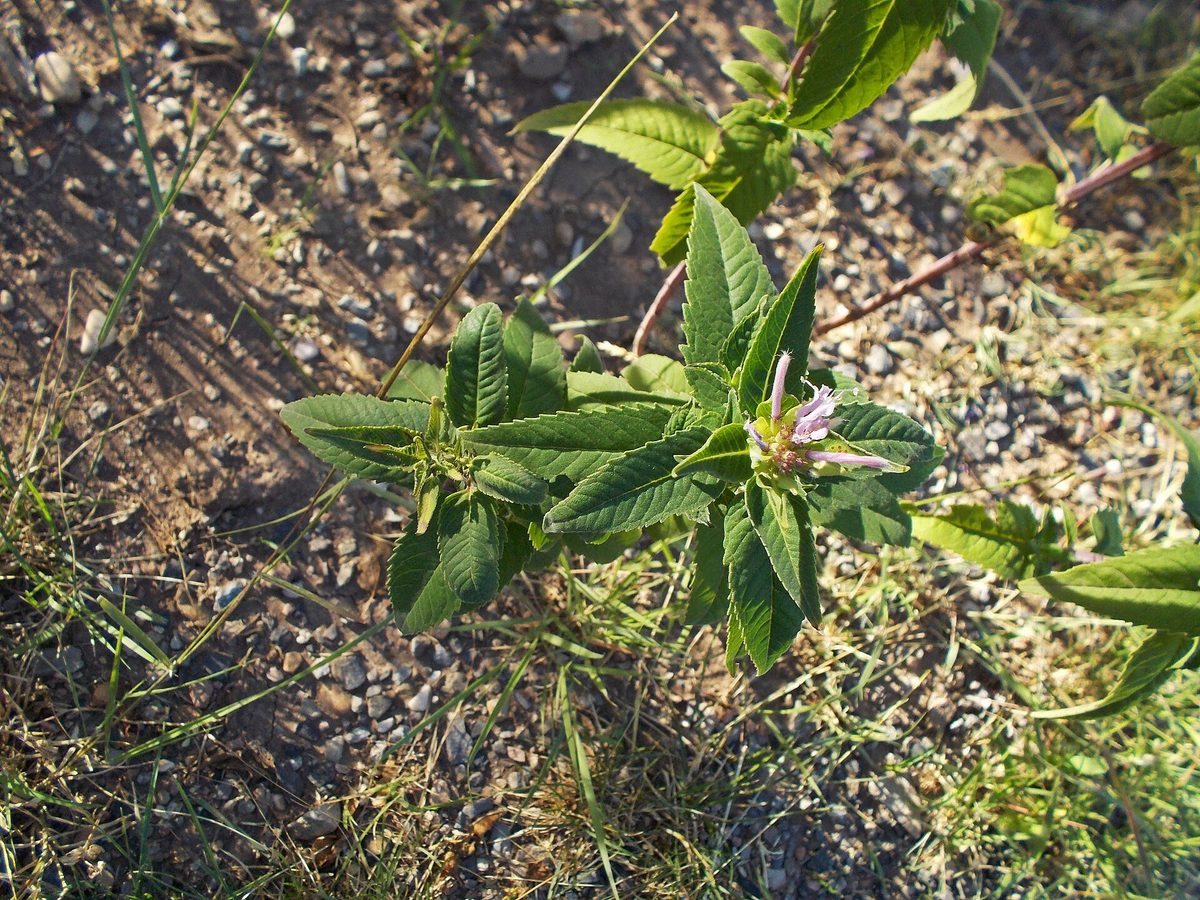
Photo: Andrey Zharkikh from Salt Lake City, USA, CC BY 2.0 via Wikimedia Commons

Quick facts
| Light: | Full sun and part shade (full sun preferred)12 |
|---|---|
| Water: | Medium21 source |
| Soil: | Well drained, moist and occasionally dry11 source |
| Hardiness: | Zones 3a–9b11 source |
| Size: | 2–5 ft (0.61–1.52 m) × 2–3 ft (0.61–0.91 m)231 |
| Growth rate: | Moderate31 source |
| Bloom: | Jun–Sep, Pink, purple and white121 source |
| Cats: | Not documented by major sources |
| Dogs: | Not documented by major sources |
| Native range: | ABT, ALA, ARI, ARK, BRC, CNT, COL, FLA, GEO, IDA, ILL, INI, IOW, KAN, KTY, LOU, MAI, MAN, MAS, MIC, MIN, MNT, MRY, MSI, MSO, MXE, NCA, NDA, NEB, NWH, NWJ, NWM, NWY, OHI, OKL, ONT, ORE, PEN, QUE, RHO, SAS, SDA, TEN, TEX, VER, VRG, WAS, WDC, WIS, WVA, WYO4 |
| Family: | Lamiaceae |
How much light does a Wild Bergamot need?
Full sun, described as 6 or more hours of direct sunlight a day, is the preferred exposure for wild bergamot. Part shade is also listed as a light requirement, though full sun comes first. If you can, choose a site that gets 6 or more hours of direct sun each day.
How often to water a Wild Bergamot
Water use is listed as medium for wild bergamot. The listed range for water is medium at both ends, so the sources give a single level rather than a span. The soil it grows in is described as well drained, moist and occasionally dry. Good drainage is also named in the soil listing.
- Water: Medium2
Best soil for a Wild Bergamot
Wild bergamot grows in soil described as well drained, moist and occasionally dry. The quoted requirement is good drainage. Moist soil and occasionally dry soil are both on the list, so the description covers more than one condition. Medium water use is listed alongside these soil conditions. No cited source records a soil pH range for this plant, so none is given here. Soil texture, such as sand or clay, is not recorded either.
- Soil drainage: Well drained, moist and occasionally dry1
Hardiness and temperature
Hardiness zones run from 3a to 9b, which covers a wide span of USDA climates. The source names every half zone in that span: 3a, 3b, 4a, 4b, and so on up to 9a and 9b. Gardeners in zones 3a through 9b are inside the listed range. No cited source records a minimum temperature, so no figure is given. Humidity is not documented for this plant either.
- Hardiness: Zones 3a–9b1
Pruning a Wild Bergamot
Pruning for wild bergamot is limited to removing dead growth. One source says to cut back dead stems to 12 to 24 inches (30–61 cm). The recorded method removes dead growth only, so live stems stay in place. This is the only pruning method recorded for the plant.
- Pruning: Remove dead growth only1
How to plant a Wild Bergamot
Plan for a mature width of 2–3 ft (0.61–0.91 m) and a height of 2–5 ft (0.61–1.52 m). Choose a site in USDA zones 3a through 9b, the range where the plant is listed. Pick a spot with full sun and good drainage. The plant is a herbaceous perennial native to the lower 48 US states. The same extension source links powdery mildew to crowded conditions with poor airflow.
- Hardiness: Zones 3a–9b1
Winter care
The recorded hardiness range is zones 3a–9b. Gardeners in the colder zones, such as 3a, and the warmer ones up to 9b all fall within the listed range. The plant type is recorded as herbaceous perennial. No cited source records a minimum temperature or any winter protection step. Frost dates and dormancy are not documented either.
- Hardiness: Zones 3a–9b1
How to propagate a Wild Bergamot
Two propagation methods are recorded for wild bergamot: seed and division. One source gives seed as the recommended propagation strategy. Division is also listed as a method. Cuttings are not among the methods recorded. No cited source describes timing, depth or temperatures for either method, so none are given here.
- Propagation: Seed and division1
Common problems
Disease records for this plant list powdery mildew and rust. One extension source notes that powdery mildew can be a problem with all beebalm species, especially in crowded conditions with poor airflow. Rust is also listed as a common disease. No cited source records common insect pests for this plant.
- Common diseases: powdery mildew and rust1
| Problem | Kind |
|---|---|
| Powdery mildew | Disease |
| Rust | Disease |
Is Wild Bergamot toxic to cats and dogs?
Recommended supplies
- Soil: a free-draining mix, and a pot with a drainage hole.
Questions and answers
- How much sun does wild bergamot need?
- It prefers full sun, described as 6 or more hours of direct sunlight a day. Part shade is also listed as a light requirement for this plant.
- How tall and wide does wild bergamot get?
- Height is listed as 2–5 ft (0.61–1.52 m). The mature width is 2–3 ft (0.61–0.91 m), and the plant is a herbaceous perennial.
- When does wild bergamot bloom, and what colors does it have?
- It blooms from June to September. The flowers are pink, purple and white. It is also reported as resistant to deer.
Sources
- NC State Extension. https://plants.ces.ncsu.edu/plants/monarda-fistulosa/. Accessed 14 October 2026.
- Lady Bird Johnson Wildflower Center. https://www.wildflower.org/plants/result.php?id_plant=mofi. Accessed 14 October 2026.
- Utah State University Extension. https://extension.usu.edu/ecorestore/assessment-tool?plant=195. Accessed 14 October 2026.
- Royal Botanic Gardens, Kew (World Checklist of Vascular Plants). https://sftp.kew.org/pub/data-repositories/WCVP/wcvp.zip. Accessed 4 June 2026.
How this page was made
- Written with AI assistance from the sources listed on this page. AI is never the source of a fact.