Common Water Hyacinth (Pontederia crassipes)
Formerly Oshuna crassipes, Piaropus crassipes, Eichhornia crassipes
Give common water hyacinth, Pontederia crassipes, full sun and keep it in standing water, and it grows rapidly. It needs at least 6 hours of direct sun a day. New growth needs temperatures above 50 °F (10 °C). The ASPCA lists it as non-toxic to cats and to dogs.
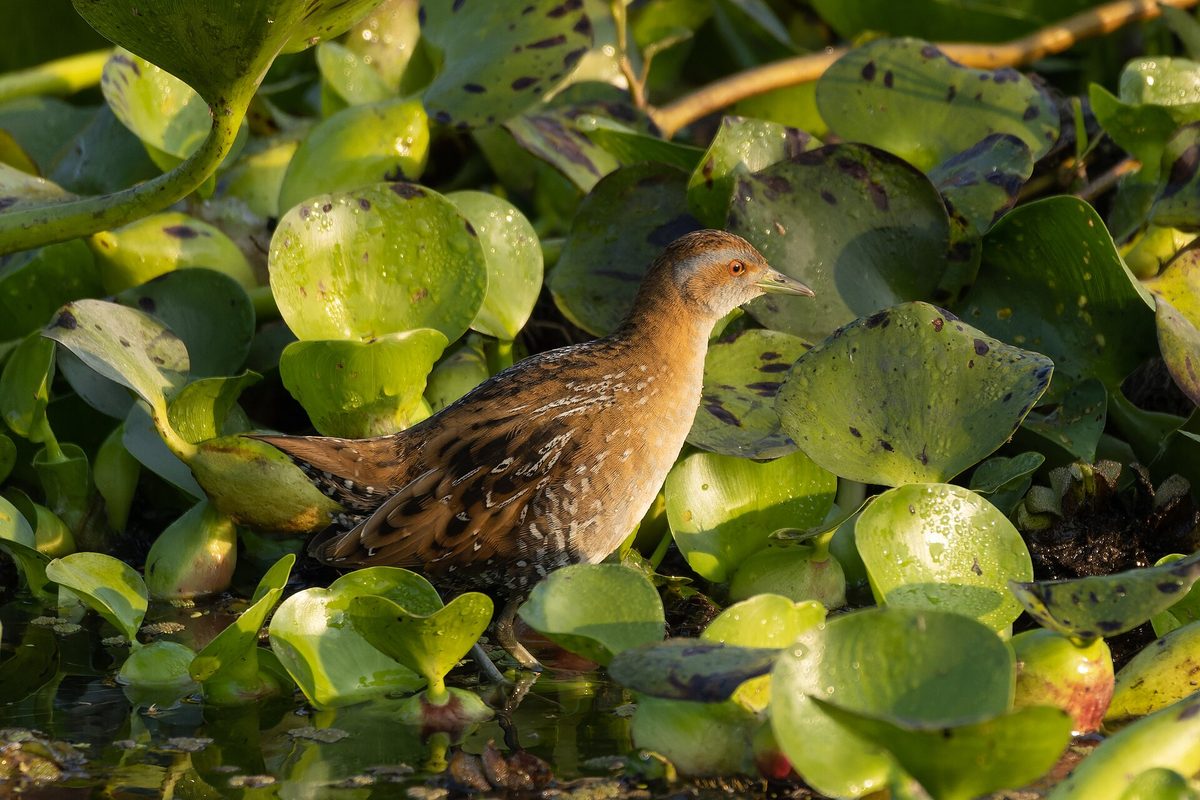
Photo: Tisha Mukherjee, CC BY-SA 4.0 via Wikimedia Commons

Quick facts
| Water: | Wet11 source |
|---|---|
| Soil: | Occasionally wet and poorly drained11 source |
| Minimum temperature: | 50 °F (10 °C)21 source |
| Growth rate: | Rapid13 |
| Bloom: | Jul–Oct (temperate climate) and Jan–Dec (tropical climates), Blue and purple161 source |
| Cats: | Non-toxic to cats 51 |
| Dogs: | Non-toxic to dogs 51 |
| Native range: | AGE, AGW, BOL, BZC, BZE, BZL, BZN, BZS, CLC, CLM, FRG, GUY, PAR, PER, SUR, URU, VEN7 |
| Family: | Pontederiaceae |
How often to water a Common Water Hyacinth
The water need for this plant is wet, and its listing gives wet as both the minimum and the maximum. The source describes the growing site as having frequent standing water. Soil that is occasionally wet or poorly drained also suits it. Check that standing water is present rather than counting days between waterings.
- Water: Wet1
Best soil for a Common Water Hyacinth
Soil drainage for this plant is listed as occasionally wet and poorly drained. The source for watering names frequent standing water as the condition. A soil pH range is not documented for this plant, so no pH figure is given here. A preferred soil texture is not documented either. Outdoors, the same listing gives full sun, which means 6 or more hours of direct sunlight a day.
- Soil drainage: Occasionally wet and poorly drained1
Temperature and humidity
This plant needs temperatures above 50 °F (10 °C) to produce new growth. It can survive moderate freezes. Humidity is not documented for this plant. The growth rate is listed as rapid. In a temperate climate the flowers bloom from mid-summer to mid-autumn, while in tropical climates blooms appear throughout the year.
- Minimum temperature: 50 °F (10 °C)2
How to propagate a Common Water Hyacinth
You can propagate common water hyacinth by seed or by offsets. Offsets are one of two listed methods, alongside seed. Mature plants rapidly produce new daughter plants from horizontal stolons. Populations of the plant can double in size in as little as 6 to 18 days through this vegetative strategy. The habit is listed as spreading. Sowing details for seed are not documented.
- Propagation: Seed and offsets3
Common problems
The NC State listing records no known diseases or insect pests for this plant. No specific disease is named for it in the facts on file. A list of named pests is not documented. The listing does give a rapid growth rate and a spreading habit.
| Problem | Kind |
|---|---|
| Neochetina bruchi | Pest |
| Neochetina eichhorniae | Pest |
Is Common Water Hyacinth toxic to cats and dogs?
The ASPCA lists common water hyacinth as non-toxic to cats. The ASPCA lists it as non-toxic to dogs as well. NC State Extension Gardener Plant Toolbox also tags it as non-toxic for cats and for dogs. The position for cats is non-toxic, and the position for dogs is also non-toxic. Affected plant parts and severity are not documented, because the listings give none.
Recommended supplies
- Soil: a mix that tolerates periods of wet soil.
Questions and answers
- Does water hyacinth need full sun?
- The outdoor light listing for this plant is full sun, which means 6 or more hours of direct sunlight a day. Full sun is the only outdoor light value listed.
- Is common water hyacinth toxic to cats and dogs?
- The ASPCA lists it as non-toxic to both cats and dogs. NC State tags it as non-toxic for cats and for dogs as well. Affected plant parts and severity are not documented.
- What temperature does water hyacinth need to grow?
- New growth needs temperatures above 50 °F (10 °C). The plant can survive moderate freezes. The growth rate is rapid. Humidity is not documented for this plant.
Sources
- NC State Extension Gardener Plant Toolbox. https://plants.ces.ncsu.edu/plants/pontederia-crassipes/. Accessed 14 October 2026.
- University of Florida IFAS Extension (EDIS). https://ask.ifas.ufl.edu/publication/AG385. Accessed 14 October 2026.
- University of Florida IFAS Extension (EDIS). https://ask.ifas.ufl.edu/ag385. Accessed 14 October 2026.
- EPPO Global Database. https://gd.eppo.int/reporting/article-5163. Accessed 31 October 2026.
- ASPCA Animal Poison Control Center. https://www.aspca.org/pet-care/aspca-poison-control/toxic-and-non-toxic-plants/water-hyacinth. Accessed 21 October 2026.
- University of Minnesota Extension. https://extension.umn.edu/natural-resources/forestry-and-wildlife/invasive-species/water-hyacinth. Accessed 31 October 2026.
- Royal Botanic Gardens, Kew (World Checklist of Vascular Plants). https://sftp.kew.org/pub/data-repositories/WCVP/wcvp.zip. Accessed 4 June 2026.
How this page was made
- Written with AI assistance from the sources listed on this page. AI is never the source of a fact.