Dragontree (Dracaena draco)
Formerly Palma draco, Yucca draco, Drakaina draco
Bright, indirect light is ideal for a dragontree, and it tolerates some direct morning light. Water it when the top 2 inches (5 cm) of soil have dried out. The ASPCA lists it as toxic to dogs and toxic to cats. Dracaena draco is slow growing.
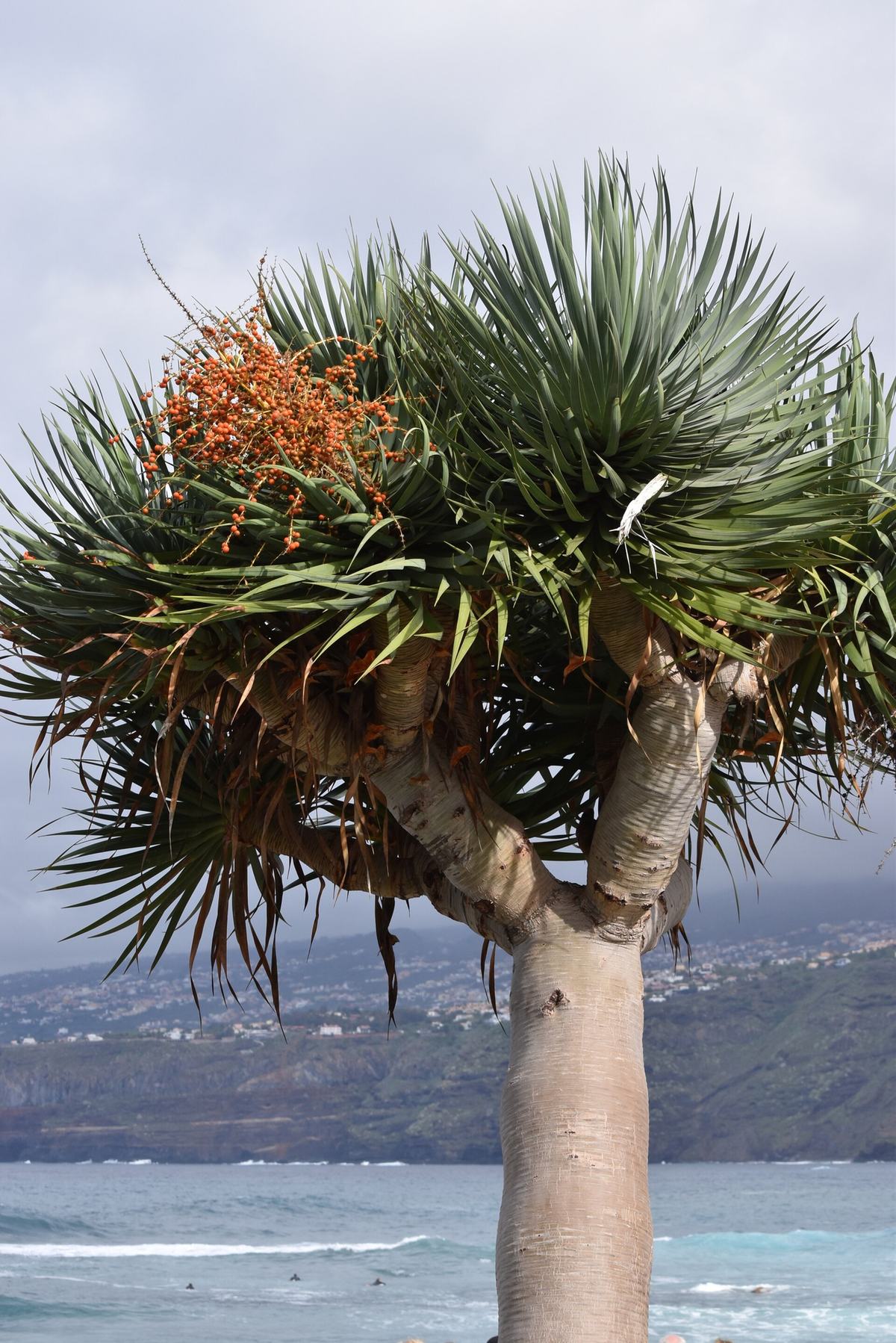
Photo: Nasser Halaweh, CC BY 4.0 via Wikimedia Commons

Quick facts
How often to water a Dragontree
Dragon trees like to be watered when the top 2 inches (5 cm) of soil have dried out. The recorded water need runs from dry to medium. Soil drainage is recorded as well drained, and a cactus mix potting soil is where the plant does best. Check the top layer of the soil before you water, and look for dryness rather than a set number of days.
- Water: Dry to medium1
Best soil for a Dragontree
Use a well-drained soil for this tree. Dragon trees do best in a cactus mix potting soil. No cited source records a preferred soil pH, so that value is not documented here. Drainage is the one soil trait on record, and the entry reads well drained and nothing more.
- Soil drainage: Well drained1
Pruning a Dragontree
Prune this plant only to remove dead growth. Removing dead or yellowing lower leaves is typical for this plant. It should not raise alarm. Indoors it can reach 6 to 8 feet (1.83–2.44 m) tall, and it typically grows 3 to 5 inches (7.6–12.7 cm) per year in ideal conditions.
- Pruning: Remove dead growth only1
Common problems
Recorded pests are chaetanaphothrips signipennis, euwallacea fornicatus, opogona sacchari, pseudaulacaspis pentagona and scyphophorus acupunctatus. The recorded disease is tomato spotted wilt virus, listed by EPPO as Orthotospovirus tomatomaculae. Opogona sacchari appears in the EPPO Global Database under the code OPOGSC.
| Problem | Kind |
|---|---|
| Chaetanaphothrips signipennis | Pest |
| Euwallacea fornicatus | Pest |
| Opogona sacchari | Pest |
| Pseudaulacaspis pentagona | Pest |
| Scyphophorus acupunctatus | Pest |
| Tomato spotted wilt virus | Disease |
Is Dragontree toxic to cats and dogs?
The ASPCA lists dragontree as toxic to cats. It also lists dragontree as toxic to dogs. Pet Poison Helpline's entry for the corn plant says ingestion by companion animals leads to nausea with salivation and vomiting. The position is the same for both animals: cats are recorded as toxic, and dogs are recorded as toxic. Cats and dogs are the only animals this page covers.
Pet-safe alternatives
Recommended supplies
- Soil: a free-draining mix, and a pot with a drainage hole.
Questions and answers
- Is dragontree toxic to cats and dogs?
- The ASPCA lists it as toxic to dogs and toxic to cats. Pet Poison Helpline describes nausea with salivation and vomiting after companion animals ingest the corn plant.
- How much light does a dragontree need?
- Bright indirect light is the ideal setting for a dragon tree. It can also tolerate some direct morning light. Light needs outdoors are not documented on this page.
- How fast does a dragontree grow, and how tall does it get?
- Dragon trees are slow growing, typically adding 3 to 5 inches (7.6–12.7 cm) per year in ideal conditions. Indoors they can reach 6 to 8 feet (1.83–2.44 m) tall.
Sources
- Clemson Cooperative Extension Home & Garden Information Center. https://hgic.clemson.edu/exciting-houseplant-selections-for-beginners/. Accessed 14 October 2026.
- EPPO Global Database. https://gd.eppo.int/taxon/DRNDR/pests. Accessed 14 October 2026.
- ASPCA. https://www.aspca.org/pet-care/aspca-poison-control/toxic-and-non-toxic-plants/dracaena. Accessed 14 October 2026.
- Pet Poison Helpline. https://www.petpoisonhelpline.com/poison/corn-plant/. Accessed 14 October 2026.
- Royal Botanic Gardens, Kew (World Checklist of Vascular Plants). https://sftp.kew.org/pub/data-repositories/WCVP/wcvp.zip. Accessed 4 June 2026.
How this page was made
- Written with AI assistance from the sources listed on this page. AI is never the source of a fact.