Italian Stone Pine (Pinus pinea)
Formerly Apinus pinea, Pinus africana, Pinus maderiensis
Italian stone pine, Pinus pinea, wants full sun. It prefers dry to medium moisture. It is a slow-growing evergreen tree. The listed hardiness is Zones 7a–11b. Mature height is 40–60 ft (12.19–18.29 m). It is introduced in the contiguous US. Pet toxicity for cats and dogs is not documented here.
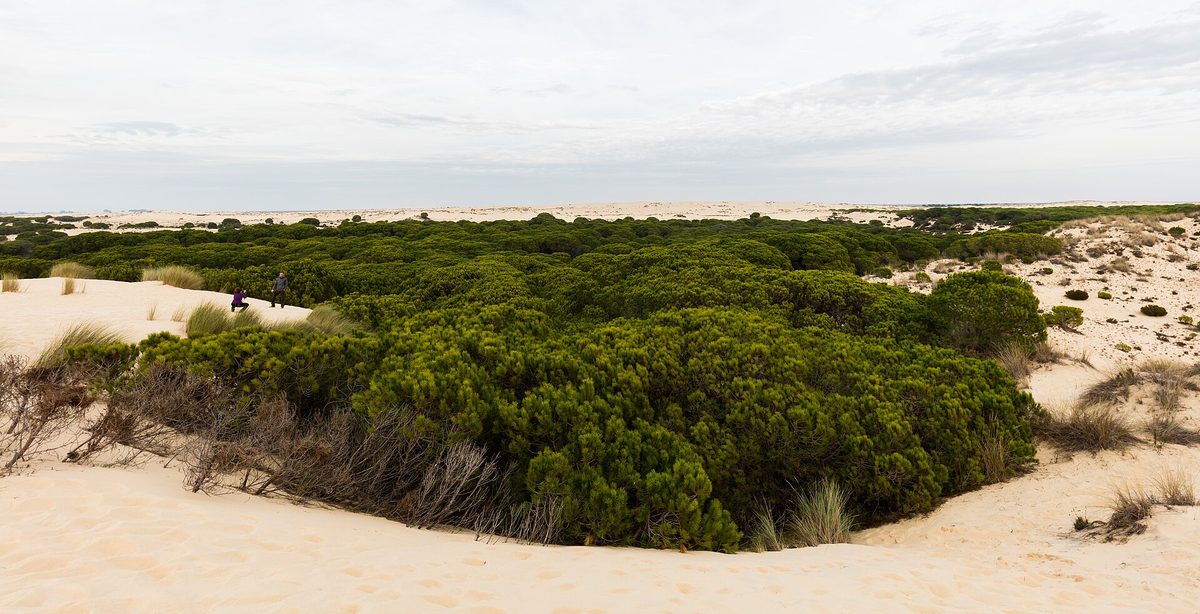
Photo: Wikimedia Commons contributor, CC BY-SA 4.0 via Wikimedia Commons

Quick facts
| Light: | Full sun12 |
|---|---|
| Water: | Dry to medium11 source |
| Soil: | Well drained, moist and occasionally dry11 source |
| Hardiness: | Zones 7a–11b11 source |
| Size: | 40–60 ft (12.19–18.29 m) × 20–40 ft (6.1–12.19 m)11 source |
| Growth rate: | Slow11 source |
| Bloom: | , 11 source |
| Cats: | Not documented by major sources |
| Dogs: | Not documented by major sources |
| Native range: | ALB, BAL, COR, CYP, EAI, FRA, GRC, ITA, KRI, LBS, POR, SIC, SPA, TUR4 |
| Family: | Pinaceae |
How much light does an Italian Stone Pine need?
Italian stone pine does best in full sun, meaning 6 or more hours of direct sunlight a day. A site with full sun gives the tree a dense, full canopy. The tree is a needled evergreen with a single trunk and branches at the top radiating out like an umbrella.
How often to water an Italian Stone Pine
Italian stone pine does best in dry to medium moist conditions. Its water range runs from dry at the low end to medium at the high end. The soil it grows in can be well drained, moist or occasionally dry. Good drainage is part of the listing for this tree. Full sun and sandy to loam soil go along with those conditions.
- Water: Dry to medium1
Best soil for an Italian Stone Pine
Italian stone pine does best in sandy to loam soil with a slightly acidic pH. The soil can be well drained, moist or occasionally dry. Good drainage is part of the listing for this tree. The same listing pairs that soil with full sun and dry to medium moist conditions. Its mature height is 40–60 ft (12.19–18.29 m) and its spread is 20–40 ft (6.1–12.19 m).
- Soil drainage: Well drained, moist and occasionally dry1
Hardiness and temperature
The tree is listed for Zones 7a–11b. That range covers 7a, 7b, 8a, 8b, 9a, 9b, 10a, 10b, 11a and 11b. Zones 7a and 7b are the coldest in the listed range, and 11a and 11b are the warmest. It is an evergreen tree with a single trunk and branches at the top radiating out like an umbrella.
- Hardiness: Zones 7a–11b1
How to plant an Italian Stone Pine
Plant Italian stone pine in an area within Zones 7a–11b. Allow room for a spread of 20–40 ft (6.1–12.19 m). The tree grows 40–60 ft (12.19–18.29 m) tall. Choose a site with full sun and good drainage. In the contiguous US it is introduced rather than native. Its native range is recorded with these region codes: ALB, BAL, COR, CYP, EAI, FRA, GRC, ITA, KRI, LBS, POR, SIC, SPA and TUR.
- Hardiness: Zones 7a–11b1
Winter care
Italian stone pine is listed for Zones 7a through 11b. A site colder than Zone 7a falls outside that listing. The tree is a needled evergreen. Full sun and good drainage remain the listed site conditions. Dry to medium moist conditions are listed as well. The zone range tops out at 11b, the warmest zone listed. The growth rate is slow.
- Hardiness: Zones 7a–11b1
How to propagate an Italian Stone Pine
You can propagate Italian stone pine by seed and by grafting. Seed and grafting are the two methods listed. It is a slow-growing tree that reaches 40–60 ft (12.19–18.29 m) at maturity. The plant record lists the tree as non-flowering. Whichever method you choose, the mature tree wants full sun.
- Propagation: Seed and grafting1
Common problems
Pests listed for Italian stone pine are pine needle scale, sawflies, pine borers, western conifer seed bug, pine processionary moth, giant pine scale and sirex woodwasp. Diseases listed are diplodia tip blight, red band needle blight, brown spot needle blight, heterobasidion root rot and pitch canker. The tree can suffer from the fungus Diplodia pinea and from Mycosphaerella pini.
| Problem | Kind |
|---|---|
| Pine needle scale | Pest |
| Sawflies | Pest |
| Pine borers | Pest |
| Western conifer seed bug | Pest |
| Pine processionary moth | Pest |
| Giant pine scale | Pest |
| Sirex woodwasp | Pest |
| Diplodia tip blight | Disease |
| Red band needle blight | Disease |
| Brown spot needle blight | Disease |
| Heterobasidion root rot | Disease |
| Pitch canker | Disease |
Is Italian Stone Pine toxic to cats and dogs?
Recommended supplies
- Soil: a free-draining mix, and a pot with a drainage hole.
Questions and answers
- How much sun does Italian stone pine need?
- It does best in full sun, meaning 6 or more hours of direct sunlight a day. Full sun gives the tree a dense, full canopy. The tree is a needled evergreen with an umbrella-like top.
- What hardiness zones suit Pinus pinea?
- Pinus pinea is listed for Zones 7a–11b. It grows 40–60 ft (12.19–18.29 m) tall with a spread of 20–40 ft (6.1–12.19 m). Its growth rate is slow.
- How do you propagate Italian stone pine?
- Seed and grafting are the listed methods. The tree grows slowly, and the plant record lists it as non-flowering. Choose a site with full sun and good drainage for the result.
Sources
- NC State Extension Gardener Plant Toolbox. https://plants.ces.ncsu.edu/plants/pinus-pinea/. Accessed 21 October 2026.
- Clemson Cooperative Extension Home & Garden Information Center. https://hgic.clemson.edu/italian-stone-pine-likes-my-stingy-approach-to-watering/. Accessed 21 October 2026.
- EPPO Global Database. https://gd.eppo.int/taxon/PIUPN/pests. Accessed 21 October 2026.
- Royal Botanic Gardens, Kew (World Checklist of Vascular Plants). https://sftp.kew.org/pub/data-repositories/WCVP/wcvp.zip. Accessed 4 June 2026.
How this page was made
- Written with AI assistance from the sources listed on this page. AI is never the source of a fact.