Sweet Bay (Laurus nobilis)
Formerly Laurus angusta, Laurus undulata, Laurus papillosa
Sweet bay, Laurus nobilis, grows in full sun outdoors and also takes part shade. Its water needs run from dry to medium, and it grows best with consistent moisture. The plant is toxic to both cats and dogs. It is an evergreen tree that reaches 8–12 ft (2.44–3.66 m).
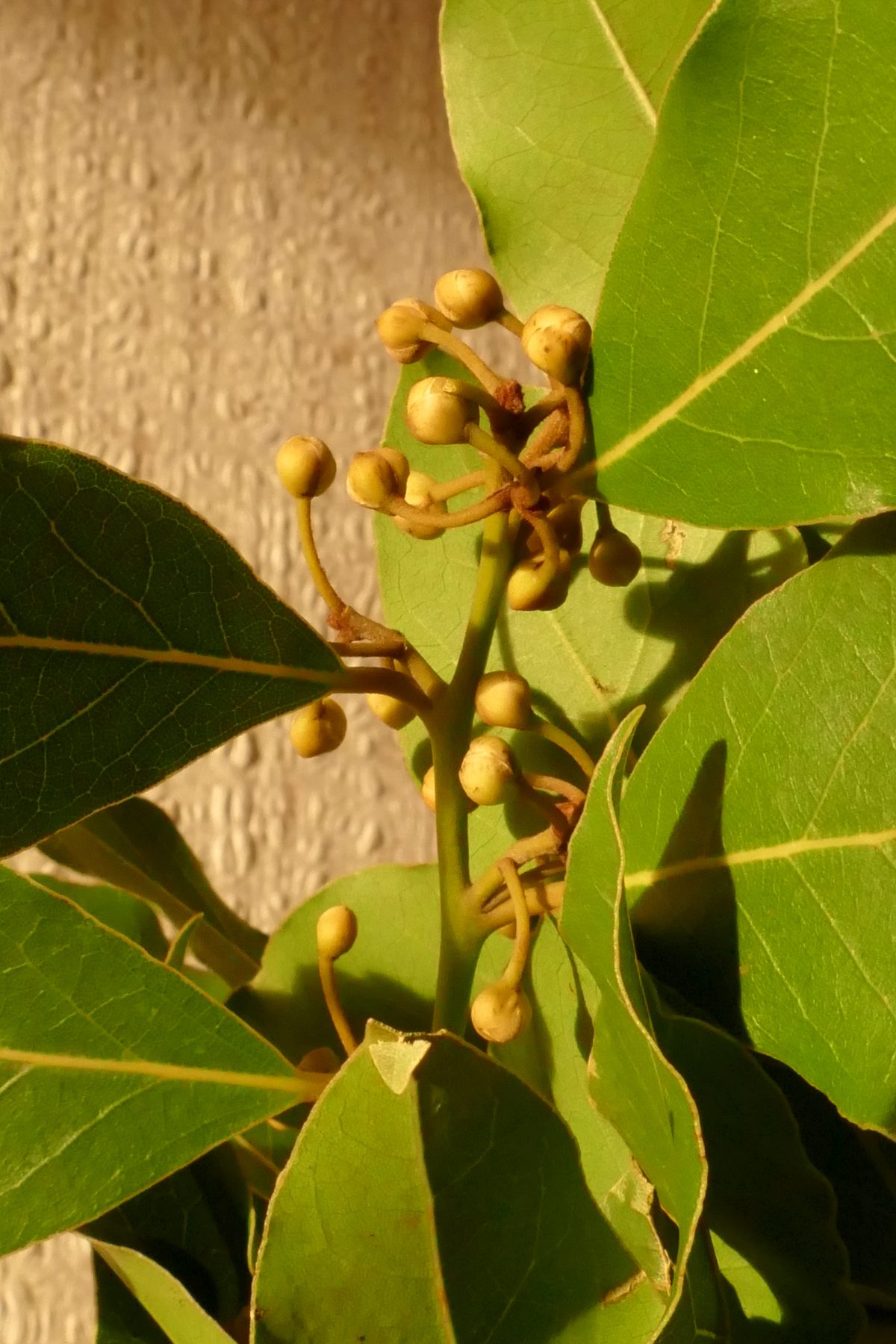
Photo: Bff, CC BY-SA 3.0 via Wikimedia Commons

Quick facts
| Light: | Full sun and part shade (full sun preferred)123 |
|---|---|
| Water: | Dry to medium41 source |
| Soil: | Well drained, occasionally dry and occasionally wet35 |
| Hardiness: | Zones 7a–10b21 source |
| Size: | 8–12 ft (2.44–3.66 m) × 8–10 ft (2.44–3.05 m)13 |
| Growth rate: | Moderate1133 |
| Bloom: | Mar–May, Yellow, green and white1231 source |
| Cats: | Toxic to cats 71 |
| Dogs: | Toxic to dogs 71 |
| Native range: | ALB, ALG, COR, CYP, EAI, FRA, GRC, ITA, KRI, LBS, LBY, MOR, PAL, SAR, SIC, TUE, TUN, TUR, YUG8 |
| Family: | Lauraceae |
How much light does a Sweet Bay need?
Outdoors, full sun is the preferred position, which means 6 or more hours of direct sunlight a day. Part shade is also listed as acceptable. Container-grown bay trees thrive in full sun. Inside the house, give the plant the brightest location available, such as a sunny south-facing window. It tolerates bright, indirect light there.
How often to water a Sweet Bay
Water needs for sweet bay run from dry to medium. A short period of drought is tolerated, but consistent moisture gives the best growth. The soil should be well drained yet hold enough moisture for good growth. The drainage range on file also includes occasionally dry and occasionally wet conditions. No watering schedule in days is documented for this plant.
- Water: Dry to medium4
Best soil for a Sweet Bay
The recorded soil drainage for sweet bay is well drained, occasionally dry and occasionally wet. One source calls for fertile, well-drained soil. Another says the mix should drain well yet keep enough moisture for good growth. Both occasional conditions are listed, so the soil can swing between dry and wet at times. No soil pH range is documented for this plant.
Hardiness and temperature
Zones 7a to 10b are the recorded hardiness range for sweet bay, which is widely grown as an ornamental plant in mild climates. Zone 7a is the cold end of that range and zone 10b is the warm end. Older, established plants can take temperatures down to around -0.4 °F (-18 °C). No cited source records a minimum temperature for young plants. No humidity preference is documented for this plant.
Fertilizing a Sweet Bay
Use a general purpose liquid fertilizer about every 2 weeks during the growing season. The frequency on file is biweekly, tied to the growing season. A liquid product is the form named for this plant in the source. Sweet bay has a moderate growth rate, listed as medium.
- Fertilizer: Every two weeks in the growing season5
Pruning a Sweet Bay
Sweet bay can be used as topiary, a hedge or a screen. The pruning type on file is light shaping. Container plants also need their roots pruned at least every two years, even if the plant stays in the same pot. A mature tree stands 8–12 ft (2.44–3.66 m) tall, with a spread of 8–10 ft (2.44–3.05 m).
- Pruning: Light shaping3
How to plant a Sweet Bay
Plant sweet bay outdoors in USDA zones 7a to 10b. It is widely grown as an ornamental plant in mild climates within that range. Allow for a spread of 8–10 ft (2.44–3.05 m) when you choose a spot. Full sun is the preferred position, with part shade also listed. Choose well-drained soil. A mature tree reaches 8–12 ft (2.44–3.66 m) in height.
- Hardiness: Zones 7a–10b2
Winter care
Sweet bay is listed for USDA zones 7a to 10b. Zone 7a marks the cold edge of that range, and zone 10b is the warmest zone listed. Older, established plants can take temperatures down to around -0.4 °F (-18 °C). Sweet bay is an evergreen.
How to propagate a Sweet Bay
The propagation methods on file for sweet bay are seed, stem cuttings and layering. Cuttings can be taken from the plant, but they are difficult to root. Layering is the third method listed alongside seed and stem cuttings. Stem cuttings are the method the source flags as hard. Seed is the first method named in the list.
- Propagation: Seed, stem cuttings and layering5
Common problems
Scale insects, psyllids, spider mites, ambrosia beetles, thrips and whiteflies are the recorded pests. Scales and psyllids are described as occasional pests. The recorded diseases are laurel wilt, phytophthora root rot and root rot. The plant is described as susceptible to laurel wilt, phytophthora and root rot.
| Problem | Kind |
|---|---|
| Scale insects | Pest |
| Psyllids | Pest |
| Spider mites | Pest |
| Ambrosia beetles | Pest |
| Thrips | Pest |
| Whiteflies | Pest |
| Laurel wilt | Disease |
| Phytophthora root rot | Disease |
| Root rot | Disease |
Is Sweet Bay toxic to cats and dogs?
For cats, the ASPCA lists sweet bay as toxic. For dogs, the ASPCA also lists it as toxic. NC State Extension flags the plant as a problem for cats and as a problem for dogs. Each animal has its own entry, and both entries read toxic. The ASPCA heading reads toxic to dogs and toxic to cats. The listing applies to Laurus nobilis, the species this page covers.
Pet-safe alternatives
Recommended supplies
- Soil: a free-draining mix, and a pot with a drainage hole.
Questions and answers
- Is sweet bay toxic to cats and dogs?
- The ASPCA lists sweet bay as toxic to both cats and dogs. NC State Extension also flags it as a problem for each animal.
- How much sun does sweet bay need?
- Outdoors it prefers full sun, and part shade is also listed. Indoors, give it the brightest spot available, such as a sunny south-facing window. It tolerates bright, indirect light indoors.
- Which zones can sweet bay grow in?
- Sweet bay is listed for USDA zones 7a to 10b. It is widely grown as an ornamental plant in mild climates. Older, established plants can take temperatures down to around -0.4 °F (-18 °C).
Sources
- NC State Extension Gardener Plant Toolbox. https://plants.ces.ncsu.edu/plants/laurus-nobilis/. Accessed 24 September 2026.
- University of Wisconsin-Madison Division of Extension. https://hort.extension.wisc.edu/articles/sweet-bay-laurus-nobilis/. Accessed 24 September 2026.
- Clemson Cooperative Extension HGIC. https://hgic.clemson.edu/factsheet/laurel/. Accessed 24 September 2026.
- Iowa State University Extension and Outreach. https://yardandgarden.extension.iastate.edu/faq/how-do-i-grow-bay-laurel. Accessed 24 September 2026.
- University of Illinois Extension. https://extension.illinois.edu/herbs/bay-laurel. Accessed 24 September 2026.
- Clemson Cooperative Extension Home & Garden Information Center. https://hgic.clemson.edu/factsheet/herbs/. Accessed 12 October 2026.
- ASPCA Animal Poison Control Center. https://www.aspca.org/pet-care/aspca-poison-control/toxic-and-non-toxic-plants/bay-laurel. Accessed 24 September 2026.
- Royal Botanic Gardens, Kew (World Checklist of Vascular Plants). https://sftp.kew.org/pub/data-repositories/WCVP/wcvp.zip. Accessed 4 June 2026.
How this page was made
- Written with AI assistance from the sources listed on this page. AI is never the source of a fact.