Cork Oak (Quercus suber)
Formerly Quercus mitis, Quercus subera, Quercus cintrana
Give cork oak full sun, with part shade as an alternative, and soil that drains well and runs from dry to medium in moisture. It is rated for zones 8a–10b, and pet toxicity for cats and dogs is not documented on this page. It grows slowly to 70 to 100 feet (21.3 to 30.5 m) tall.
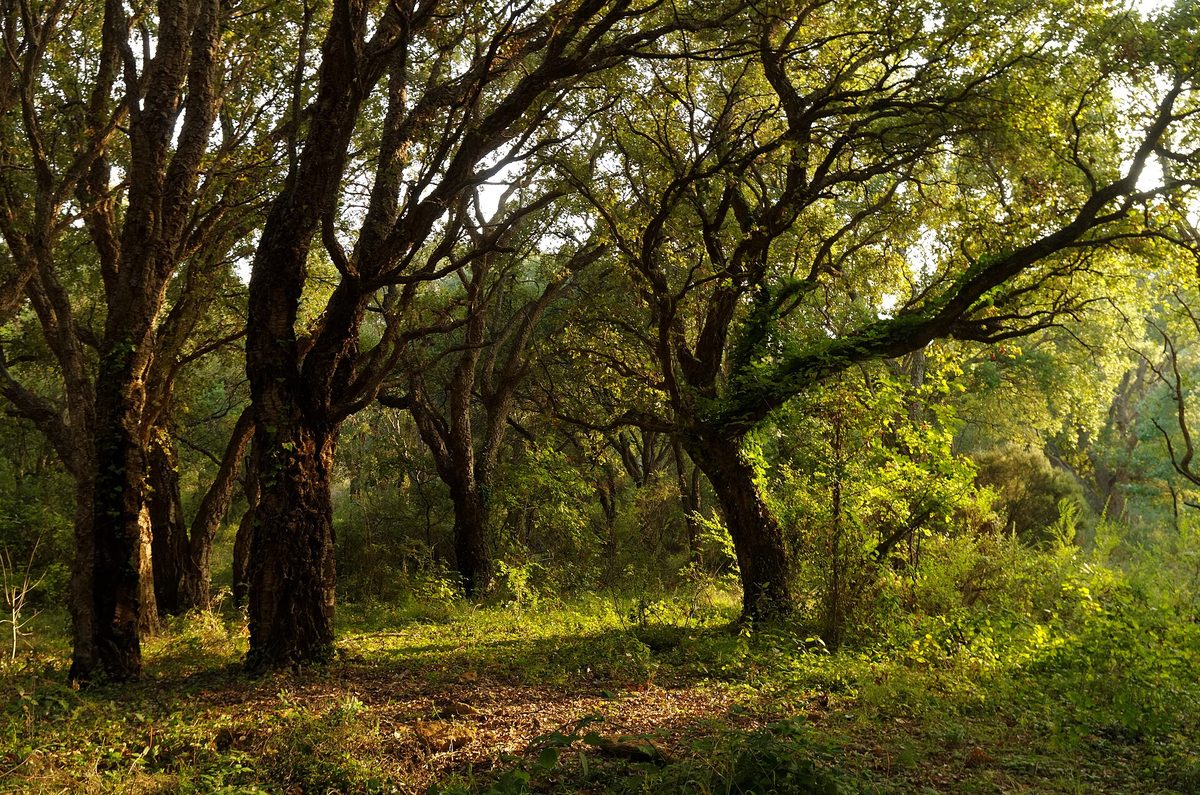
Photo: Mawoing, CC BY-SA 3.0 via Wikimedia Commons

Quick facts
| Light: | Full sun and part shade (full sun preferred)11 source |
|---|---|
| Water: | Dry to medium11 source |
| Soil: | Well drained, moist and occasionally dry11 source |
| Hardiness: | Zones 8a–10b11 source |
| Size: | 69.9–100.1 ft (21.3–30.5 m) × 69.9–100.1 ft (21.3–30.5 m)11 source |
| Growth rate: | Slow11 source |
| Bloom: | Yellow and green11 source |
| Cats: | Not documented by major sources |
| Dogs: | Not documented by major sources |
| Native range: | ALG, COR, FRA, ITA, MOR, POR, SAR, SIC, SPA, TUN3 |
| Family: | Fagaceae |
How much light does a Cork Oak need?
Cork oak grows best in full sun, and part shade is also within the range listed for it. The listing describes the tree as best grown in full sun to partial shade, in acidic, well-drained soil. Full sun is the preferred setting for outdoor planting. Choose a position in full sun where you can, and use part shade only when full sun is not available.
- Light: Full sun and part shade (full sun preferred)1
How often to water a Cork Oak
Cork oak is listed for water needs from dry to medium. The source describes its best soils as moist to dry. Drainage is listed as well drained, moist and occasionally dry. Rather than counting days, check how dry the soil is before you add water. Dry soil falls inside the listed range, and so does medium moisture.
- Water: Dry to medium1
Best soil for a Cork Oak
Cork oak is best grown in acidic, well-drained soil. The same description says the soil can run from moist to dry. Drainage is listed as well drained, moist and occasionally dry. Full sun to partial shade is listed alongside these soil conditions. Dry to medium is the listed water range for this tree. Moist soil and dry soil both fall inside the listed range. No numeric soil pH range is documented for this tree.
- Soil drainage: Well drained, moist and occasionally dry1
Hardiness and temperature
Cork oak is listed for USDA hardiness zones 8a to 10b. Zone 8a is the coldest zone in that listing, and zone 10b is the warmest. A garden colder than zone 8a falls outside the listed range, as does one warmer than zone 10b. Zones 8a, 8b, 9a, 9b, 10a and 10b are each included in the range. If your area falls in one of those zones, the tree is within its listed hardiness range. No minimum temperature is documented for this tree.
- Hardiness: Zones 8a–10b1
How to plant a Cork Oak
Plant cork oak in USDA zones 8a to 10b. A mature tree reaches 70 to 100 feet (21.3 to 30.5 m) in height. Leave room for a spread of 70 to 100 feet (21.3 to 30.5 m) when you choose a spot. Growth is listed as slow. Full sun is preferred, and part shade is also listed. The soil should be acidic and well drained, from moist to dry. The tree is evergreen.
- Hardiness: Zones 8a–10b1
Winter care
Cork oak is listed for zones 8a to 10b, which sets the range where it is documented as hardy. The leaves are evergreen, leathery and dark green above. A garden in zone 8a is at the cold edge of the listed range. A garden in zone 10b is at the warm edge of that range.
- Hardiness: Zones 8a–10b1
How to propagate a Cork Oak
Cork oak is propagated by seed and by stem cuttings. Seed is one of the two methods listed for this tree. Stem cuttings are the other method listed. You can choose either seed or a stem cutting from the two listed methods. Growth rate is listed as slow, whichever propagation method you use.
- Propagation: Seed and stem cuttings1
Common problems
The pest records for cork oak include agrilus bilineatus, anoplophora chinensis and lymantria dispar. They also include curculio elephas, malacosoma disstria and xylosandrus compactus. Twenty-three pests appear in the list in total. The list also names orgyia leucostigma and opogona sacchari. Other entries include euproctis chrysorrhoea, epiphyas postvittana and homalodisca vitripennis.
- Common pests: agrilus bilineatus, agrilus coxalis, anoplophora chinensis, apriona germari, arrhenodes minutus, curculio elephas, diabrotica virgifera zeae, epiphyas postvittana, euproctis chrysorrhoea, euwallacea fornicatus, euwallacea kuroshio, grapholita prunivora, homalodisca vitripennis, lymantria dispar, malacosoma disstria, malacosoma parallela, megaplatypus mutatus, opogona sacchari, parabemisia myricae, scirtothrips citri, trichoferus campestris, xylosandrus compactus and orgyia leucostigma2
| Problem | Kind |
|---|---|
| Agrilus bilineatus | Pest |
| Agrilus coxalis | Pest |
| Anoplophora chinensis | Pest |
| Apriona germari | Pest |
| Arrhenodes minutus | Pest |
| Curculio elephas | Pest |
| Diabrotica virgifera zeae | Pest |
| Epiphyas postvittana | Pest |
| Euproctis chrysorrhoea | Pest |
| Euwallacea fornicatus | Pest |
| Euwallacea kuroshio | Pest |
| Grapholita prunivora | Pest |
| Homalodisca vitripennis | Pest |
| Lymantria dispar | Pest |
| Malacosoma disstria | Pest |
| Malacosoma parallela | Pest |
| Megaplatypus mutatus | Pest |
| Opogona sacchari | Pest |
| Parabemisia myricae | Pest |
| Scirtothrips citri | Pest |
| Trichoferus campestris | Pest |
| Xylosandrus compactus | Pest |
| Orgyia leucostigma | Pest |
Is Cork Oak toxic to cats and dogs?
Recommended supplies
- Soil: a free-draining mix, and a pot with a drainage hole.
Questions and answers
- How much sun does cork oak need?
- Cork oak is best grown in full sun to partial shade, and full sun is the preferred setting. Both settings are within the listed range for growing it outdoors.
- How big does a cork oak get?
- A mature tree grows 70 to 100 feet (21.3 to 30.5 m) tall and about as wide. Its growth rate is listed as slow, so plan your spacing for the full size.
- Where is cork oak native?
- The native range record lists ALG, COR, FRA, ITA, MOR, POR, SAR, SIC, SPA and TUN. In the lower 48 states and Hawaii, its status is listed as introduced.
Sources
- NC State Extension. https://plants.ces.ncsu.edu/plants/quercus-suber/. Accessed 14 October 2026.
- EPPO Global Database. https://gd.eppo.int/taxon/QUESU/pests. Accessed 14 October 2026.
- Royal Botanic Gardens, Kew (World Checklist of Vascular Plants). https://sftp.kew.org/pub/data-repositories/WCVP/wcvp.zip. Accessed 4 June 2026.
How this page was made
- Written with AI assistance from the sources listed on this page. AI is never the source of a fact.