Vilevine (Philodendron hederaceum)
Formerly Philodendron scandens, Philodendron micans, Arum hederaceum
Keep vilevine in medium indoor light and water it when the top of the soil is dry. It tolerates low light as well. Its water needs run from dry to medium. This plant is listed as toxic to cats and toxic to dogs. Its Latin name is Philodendron hederaceum.
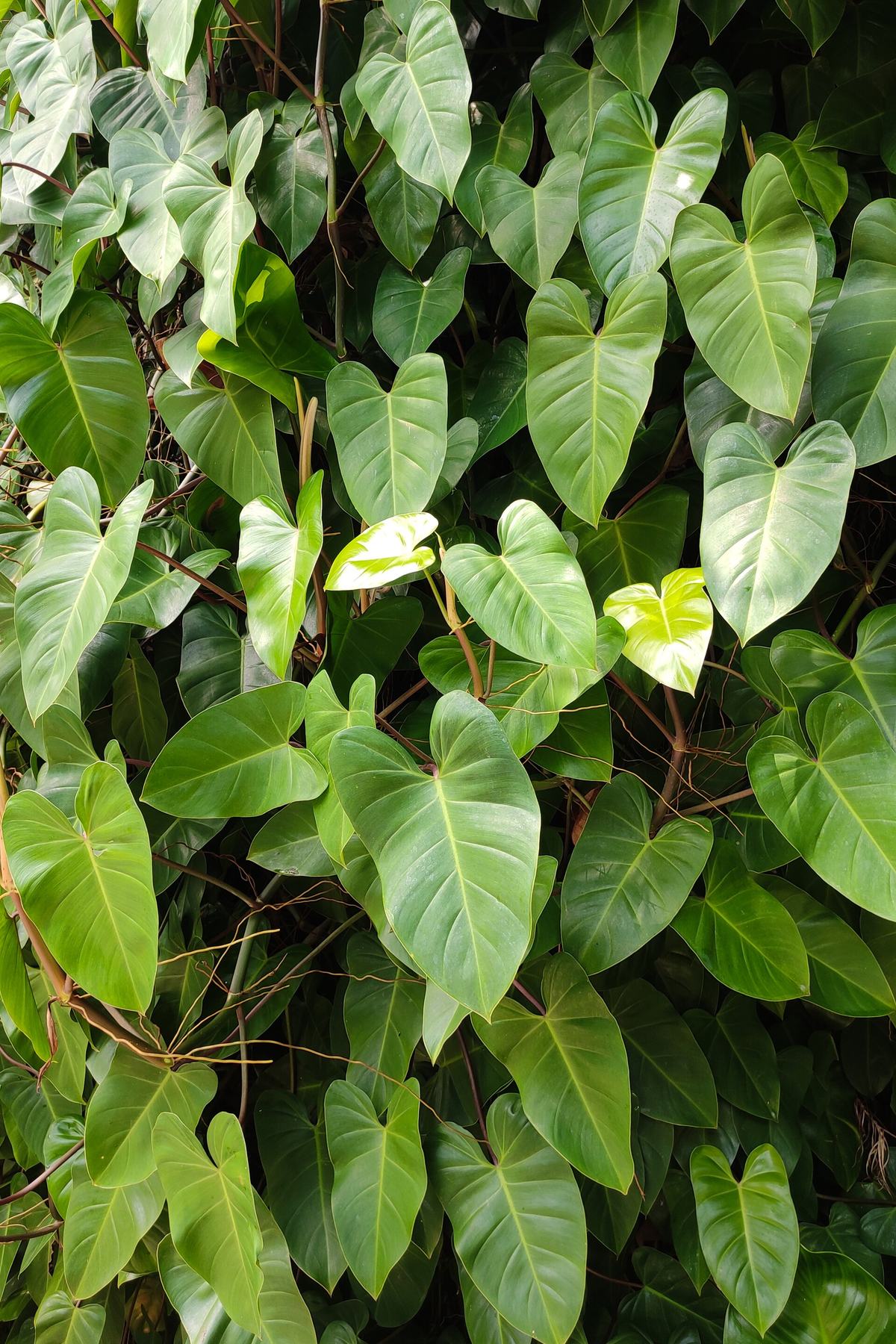
Photo: Wikimedia Commons contributor, CC BY-SA 4.0 via Wikimedia Commons

Quick facts
| Light: | Medium light; tolerates low light123 |
|---|---|
| Water: | Dry to medium142 |
| Soil: | Well drained and moist151 source |
| Size: | 0.3–6 ft (0.1–1.83 m) × 0.5–6 ft (0.15–1.83 m)151 source |
| Growth rate: | Moderate31 source |
| Bloom: | Green and white11 source |
| Cats: | Toxic to cats 67 |
| Dogs: | Toxic to dogs 67 |
| Family: | Araceae |
How much light does a Vilevine need?
Vilevine prefers medium light indoors. It will also tolerate low light. Outdoors, in zones 11a to 12b, it prefers part shade. Full shade is also listed, meaning less than two hours of direct sun down to none. Part shade means direct sunlight for only part of the day, about 2 to 6 hours.
How often to water a Vilevine
Water vilevine when the top of the soil is dry. The listed range runs from dry to medium moisture needs. Keep the soil slightly moist, and water less in winter. Moist soil and good drainage are both listed for this plant. Root rot can occur in overly wet soil.
Best soil for a Vilevine
Vilevine grows in soil that is well drained and moist. Good drainage and moisture are both listed for it. No cited source records a soil pH range for this plant, so that value is not documented. Root rot can occur in overly wet soil. Leaf spots may be seen as well. Medium relative humidity and moist soil are what it prefers. Water it when the top of the soil is dry.
Temperature and humidity
No cited source records a minimum temperature for this plant, so that value is not documented here. Vilevine prefers medium relative humidity. The humidity level on file is average. It also prefers moist soil and appreciates misting. Misting is the humidity step the source mentions. Its hardiness range is zones 11a to 12b. The range tops out at zone 12b.
Fertilizing a Vilevine
Fertilize vilevine lightly, about once or twice a month. The frequency on file is monthly in the growing season. Light feeding is the advice given, not heavy feeding. Feeding is tied to the growing season in the listing. The quoted advice is simply to fertilize lightly.
- Fertilizer: Monthly in the growing season4
Pruning a Vilevine
Pruning for vilevine is light shaping. Vining types can be kept to the height of their support through training and pruning. It climbs or trails if given support. Its height range is 0.3 to 6 ft (0.1 to 1.83 m). The spread range is 0.5 to 6 ft (0.15 to 1.83 m).
- Pruning: Light shaping2
How to propagate a Vilevine
You can propagate vilevine from stem cuttings or by air layering. Stem cutting is the recommended propagation strategy. Plants may be propagated at any season. Layering is the other method listed. Air layering is the layering method named. Climbing and trailing stems are the growth habit given for this plant. The source gives no rooting medium or timing steps, so those details are not documented.
Common problems
Aphids, spider mites, mealybugs and scale insects can infest vilevine. Monitor the plant for these pests. Four pests are listed: aphids, spider mites, mealybugs and scale. Leaf spots may be seen. Root rot can occur in overly wet soil. Leaf spot and root rot are the diseases listed.
| Problem | Kind |
|---|---|
| Aphids | Pest |
| Spider mites | Pest |
| Mealybugs | Pest |
| Scale insects | Pest |
| Leaf spot | Disease |
| Root rot | Disease |
Is Vilevine toxic to cats and dogs?
Vilevine is listed as toxic to cats. It is also listed as toxic to dogs. The ASPCA gives that toxicity listing for both animals. When pets chew the plant, it releases crystals. Those crystals cause irritation and pain in the pet's lips, mouth and throat. Pet Poison Helpline describes the effect on the lips, oral cavity and throat. The position is the same for cats and for dogs: both are listed as toxic.
Pet-safe alternatives
Recommended supplies
- Light: a bright room out of direct sun; a full-spectrum grow light makes up the difference in a darker one.
- Soil: a free-draining mix, and a pot with a drainage hole.
Questions and answers
- Is vilevine toxic to cats and dogs?
- Vilevine is listed as toxic to cats and toxic to dogs. Chewing the plant releases crystals that irritate the lips, mouth and throat. Keep that in mind for cats and for dogs alike.
- How often should I water vilevine?
- Water it when the top of the soil is dry. Keep the soil slightly moist, and water less in winter. Its listed water needs run from dry to medium.
- Does vilevine need bright light?
- It prefers medium light indoors and tolerates low light. Outdoors it prefers part shade, and full shade is also listed. Part shade means direct sun for only 2 to 6 hours.
Sources
- NC State Extension Gardener Plant Toolbox. https://plants.ces.ncsu.edu/plants/philodendron-hederaceum/common-name/heart-leaf-philodendron/. Accessed 25 October 2026.
- Clemson Cooperative Extension HGIC. https://hgic.clemson.edu/factsheet/philodendron-pothos-monstera/. Accessed 25 October 2026.
- University of Florida IFAS Extension (EDIS). https://ask.ifas.ufl.edu/publication/FP472. Accessed 25 October 2026.
- Iowa State University Extension and Outreach (Yard and Garden). https://yardandgarden.extension.iastate.edu/how-to/growing-philodendrons-home. Accessed 25 October 2026.
- NC State Extension Gardener Plant Toolbox. https://plants.ces.ncsu.edu/plants/philodendron-hederaceum/. Accessed 25 October 2026.
- ASPCA Animal Poison Control Center. https://www.aspca.org/pet-care/aspca-poison-control/toxic-and-non-toxic-plants/heartleaf-philodendron. Accessed 25 October 2026.
- Pet Poison Helpline. https://www.petpoisonhelpline.com/poison/heartleaf-philodendron/. Accessed 25 October 2026.
How this page was made
- Written with AI assistance from the sources listed on this page. AI is never the source of a fact.