Asian Pigeonwings (Clitoria ternatea)
Formerly Nauchea ternatea, Wisteria dubia, Derris javanica
Asian pigeonwings does best outdoors in full sun to part shade. Let the soil run dry to medium between waterings. Use well-drained soil that can dry out at times. This vine grows fast and bears blue and white flowers. It reaches 3 to 4 ft (0.9 to 1.2 m) tall. It is hardy outdoors in USDA zones 10a to 12b. Indoor light and pet toxicity aren't documented.
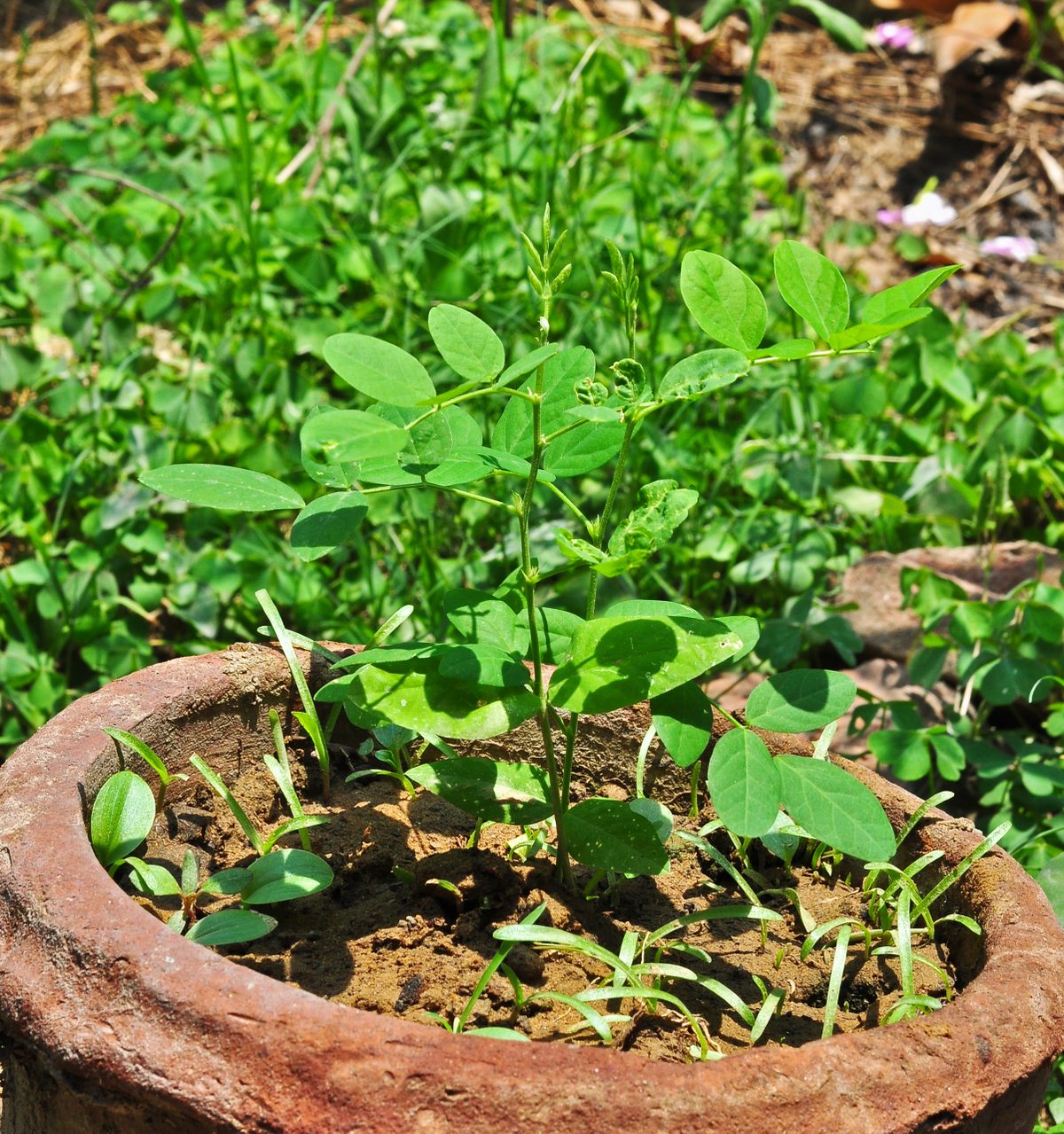
Photo: Joydeep, CC BY-SA 3.0 via Wikimedia Commons

Quick facts
| Water: | Dry to medium11 source |
|---|---|
| Soil: | Well drained and occasionally dry21 source |
| Size: | 3–4 ft (0.91–1.22 m) × 3–6 ft (0.91–1.83 m)211 source |
| Growth rate: | Rapid1331 |
| Bloom: | Blue and white41 |
| Cats: | Not documented by major sources |
| Dogs: | Not documented by major sources |
| Native range: | ANG, BEN, BKN, BUR, CAF, CHC, CHH, CHS, CMN, CPV, CVI, ERI, ETH, GAB, GAM, GGI, GHA, GNB, GST, GUI, KEN, MLW, MOZ, MTN, NAM, NGA, SAU, SEN, SIE, SOM, SUD, TAI, TAN, TOG, TVL, UGA, YEM, ZAI, ZAM, ZIM5 |
| Family: | Fabaceae |
How often to water an Asian Pigeonwings
Moisture needs for this vine range from dry to medium, so it does not need a strict watering routine. Wait until the top layer of soil feels dry before you water again, and choose well-drained soil so water never pools around the roots. Because this vine grows fast, steady moisture during its active growing season supports that pace. Outdoors, pair watering with a spot in full sun to part shade, since both affect how quickly the soil dries out. In USDA zones 10a to 12b, where this vine can grow outdoors year-round, keep an eye on soil moisture through dry spells.
- Water: Dry to medium1
Best soil for an Asian Pigeonwings
Give Asian pigeonwings soil that drains quickly after rain or watering. This vine also handles soil that dries out between waterings. Avoid heavy clay or any spot where water sits for long. Raised beds, slopes, or containers with drainage holes all work well. No cited source lists a preferred soil pH for this vine. Because the plant is a fast grower, loose soil lets its roots spread with less resistance. Outdoors it pairs well with full sun to part shade and the same free-draining ground. This matches the plant's wider tolerance for dry spells between waterings, which also depends on that same fast drainage.
- Soil drainage: Well drained and occasionally dry2
Pruning an Asian Pigeonwings
Light shaping is all this vine needs to stay neat. Trim back stray growth whenever it starts to sprawl, rather than on a fixed schedule. Because this vine grows fast, you may find yourself shaping it more than once during the growing season. Because it tolerates a range of soil moisture, you can prune at almost any time without worrying about stressing the roots.
- Pruning: Light shaping2
How to propagate an Asian Pigeonwings
Only one propagation method is documented for Asian pigeonwings: starting it from seed. Sow the seed in soil that drains well, since this vine needs drainage rather than standing water. Once it sprouts, this vine's fast growth rate means it fills out quickly in its first season. Give young plants the same dry-to-medium watering this species tolerates once established. In USDA zones 10a to 12b, where it survives outdoors year-round, you can sow seed directly in the ground.
- Propagation: Seed1
Common problems
Two pests are documented on Asian pigeonwings: spider mites and whiteflies. Anthracnose and bacterial soft rot are the diseases recorded for this vine. Good airflow and well-drained soil lower the odds of both the fungal and bacterial problems taking hold. Because this vine grows fast, check it often so you catch pest or disease problems early. Check leaves in sun and shade, since it tolerates both outdoors.
| Problem | Kind |
|---|---|
| Spider mites | Pest |
| Whiteflies | Pest |
| Anthracnose | Disease |
| Bacterial soft rot | Disease |
Is Asian Pigeonwings toxic to cats and dogs?
Recommended supplies
- Soil: a free-draining mix, and a pot with a drainage hole.
Questions and answers
- How fast does Asian pigeonwings grow?
- Asian pigeonwings is documented as a rapid grower. That fast pace is also why its care calls for only light shaping, since growth can get ahead of a tidy shape otherwise.
- What color are Asian pigeonwings flowers?
- Its flowers come in blue and white. Outdoors, the plant blooms best with full sun to part shade. It is hardy outdoors in USDA zones 10a to 12b. It reaches about 3 to 4 ft (0.9 to 1.2 m) tall at maturity.
- What pests or diseases should I watch for on Asian pigeonwings?
- Spider mites and whiteflies are the pests documented on this vine. Anthracnose and bacterial soft rot are the diseases recorded for it. Well-drained soil that isn't left wet helps lower the risk of both diseases taking hold.
Sources
- NC State Extension Gardener Plant Toolbox. https://plants.ces.ncsu.edu/plants/clitoria-ternatea/. Accessed 23 September 2026.
- Penn State Extension. https://extension.psu.edu/butterfly-pea-a-natural-food-coloring. Accessed 23 September 2026.
- University of Florida IFAS Extension (EDIS). https://ask.ifas.ufl.edu/ep573. Accessed 23 September 2026.
- Chicago Botanic Garden. https://www.chicagobotanic.org/plant-information/plant-finder/clitoria-ternatea-butterfly-pea. Accessed 23 September 2026.
- Royal Botanic Gardens, Kew (World Checklist of Vascular Plants). https://sftp.kew.org/pub/data-repositories/WCVP/wcvp.zip. Accessed 4 June 2026.
How this page was made
- Written with AI assistance from the sources listed on this page. AI is never the source of a fact.