Bird-of-paradise (Strelitzia reginae)
Formerly Strelitzia ovata, Strelitzia glauca, Strelitzia pumila
Give bird-of-paradise full sun outdoors, with part shade also tolerated, and water it to a medium level, letting the mix dry slightly between waterings. It grows at a moderate rate and reaches 3-4 ft (0.91-1.22 m) tall and wide. Its flowers are orange and blue. This plant is toxic to both cats and dogs.
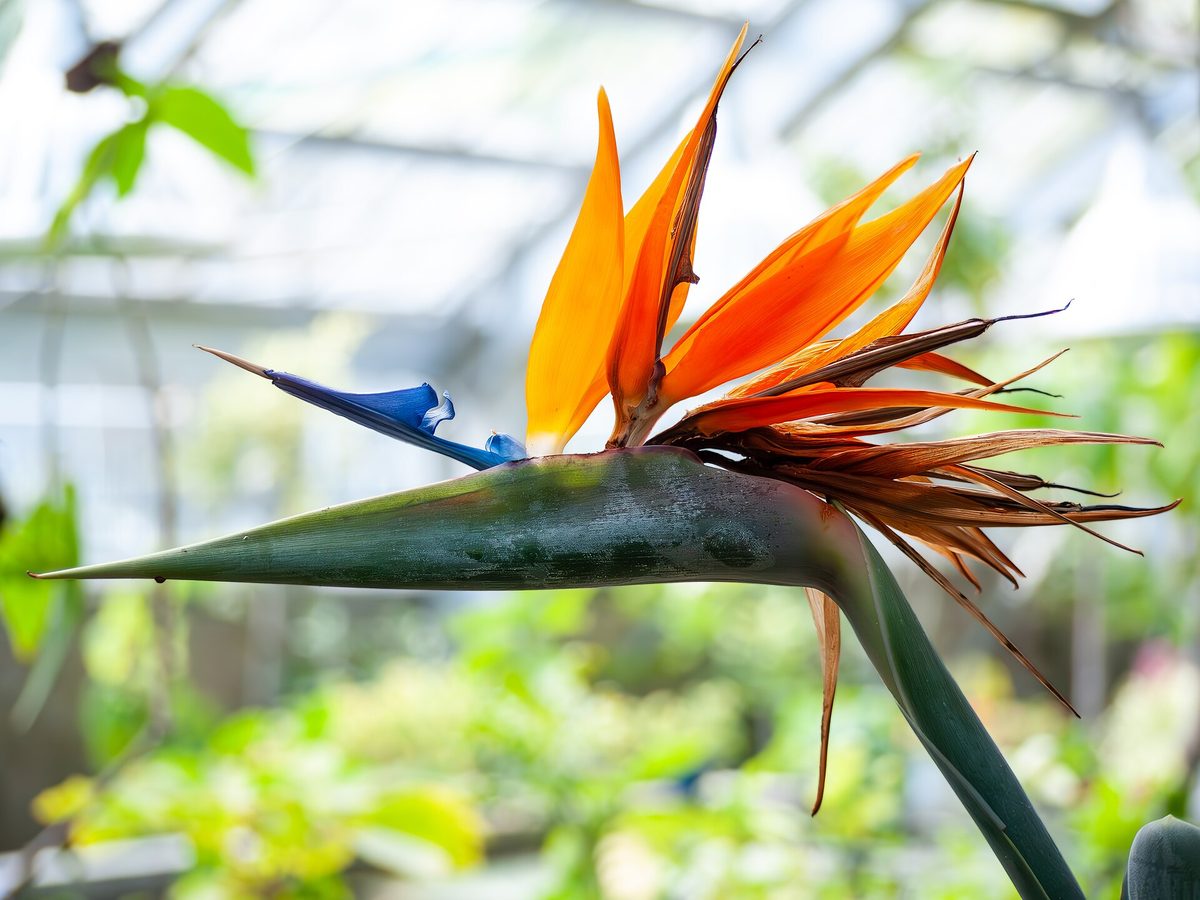
Photo: Reinhold Möller Ermell, CC BY-SA 4.0 via Wikimedia Commons

Quick facts
| Light: | Full sun and part shade (full sun preferred)11 source |
|---|---|
| Water: | Medium21 source |
| Hardiness: | Zones 10a–12b31 source |
| Size: | 3–4 ft (0.91–1.22 m) × 3–4 ft (0.91–1.22 m)31 source |
| Growth rate: | Moderate31 source |
| Bloom: | Orange and blue11 source |
| Cats: | Toxic to cats 43 |
| Dogs: | Toxic to dogs 43 |
| Family: | Strelitziaceae |
How much light does a Bird-of-paradise need?
Bird-of-paradise grows best in full sun outdoors, though it tolerates part shade as well. It needs close to full sun in summer and as much light as possible in winter to bloom. Indoors, give it the brightest spot you have, since it prefers direct sun but will still grow in bright, indirect light such as a south-facing window.
- Light: Full sun and part shade (full sun preferred)1
How often to water a Bird-of-paradise
Water this plant to a medium level, giving the potting mix a thorough soak and then letting it dry out slightly before you water it again. Check the mix for that slight dryness yourself before watering, rather than sticking to a fixed number of days between waterings.
- Water: Medium2
Hardiness and temperature
Bird-of-paradise is hardy outdoors only in USDA zones 10a through 12b, where winters stay mild enough for the plant to survive outdoors year-round. It can tolerate brief dips down to about 28.4 °F (-2 °C), but only for a limited amount of time. Indoors, it prefers moderate relative humidity, around 60 percent, which may call for daily misting during the dry winter months.
How to plant a Bird-of-paradise
Plant bird-of-paradise outdoors only in USDA zones 10a through 12b, where it can stay in the ground year-round. Give each plant room to reach its mature size of 3-4 ft (0.91-1.22 m) in both height and spread. It grows at a moderate rate once planted.
- Hardiness: Zones 10a–12b3
Winter care
Outside USDA zones 10a through 12b, bird-of-paradise cannot stay outdoors through winter. It can tolerate a brief drop to about 28.4 °F (-2 °C), but only for a limited amount of time. Indoors for winter, it prefers moderate relative humidity around 60 percent, which may call for daily misting during the dry winter months.
How to propagate a Bird-of-paradise
You can propagate bird-of-paradise in two ways: by dividing an established plant, or by starting new plants from seed. To divide it, split apart the rhizomes, the plant's underground stems, a method described as the easiest way to propagate this species. Seed propagation is the alternative named alongside division for starting new bird-of-paradise plants.
Common problems
Watch for mealybugs, scale and spider mites, the pests most often recorded on bird-of-paradise. Root rot can set in from overwatering or soil that drains poorly. Leaf spot is the other common disease, showing up as yellow or brown spots on the leaves.
| Problem | Kind |
|---|---|
| Mealybugs | Pest |
| Scale insects | Pest |
| Spider mites | Pest |
| Root rot | Disease |
| Leaf spot | Disease |
Is Bird-of-paradise toxic to cats and dogs?
The ASPCA's Animal Poison Control Center lists bird-of-paradise as toxic to cats. The same ASPCA listing also names the plant as toxic to dogs. NC State Extension's Plant Toolbox also records the same toxic status for both cats and dogs. The ASPCA entry for this plant covers other animals too, including horses, though this guide covers only cats and dogs.
Pet-safe alternatives
Questions and answers
- Is bird-of-paradise toxic to cats and dogs?
- Bird-of-paradise is toxic to cats, according to the ASPCA's Animal Poison Control Center. The same listing, along with NC State Extension's Plant Toolbox, also names it as toxic to dogs.
- What kind of light does bird-of-paradise need outdoors?
- Bird-of-paradise does best in full sun outdoors, though it also tolerates part shade. It needs close to full sun in summer and as much light as possible in winter to bloom.
- How often should I water bird-of-paradise?
- Bird-of-paradise needs a medium level of water: soak the potting mix thoroughly, then let it dry out slightly before you water again. Check the mix itself for that dryness, rather than watering on a set schedule. It also prefers moderate relative humidity around 60 percent indoors, which may call for daily misting during the dry winter months.
Sources
- University of Wisconsin-Madison Division of Extension (Wisconsin Horticulture). https://hort.extension.wisc.edu/articles/bird-of-paradise-strelitzia-reginae/. Accessed 15 November 2026.
- Clemson Cooperative Extension Home & Garden Information Center. https://hgic.clemson.edu/factsheet/bird-of-paradise/. Accessed 15 November 2026.
- NC State Extension Gardener Plant Toolbox. https://plants.ces.ncsu.edu/plants/strelitzia-reginae/. Accessed 15 November 2026.
- ASPCA Animal Poison Control Center. https://www.aspca.org/pet-care/aspca-poison-control/toxic-and-non-toxic-plants/bird-paradise-flower. Accessed 15 November 2026.
How this page was made
- Written with AI assistance from the sources listed on this page. AI is never the source of a fact.