Purple Coneflower (Echinacea purpurea)
Also called Eastern Purple Coneflower
Formerly Rudbeckia purpurea, Brauneria purpurea, Helichroa purpurea
Purple coneflower (Echinacea purpurea) is a herbaceous perennial that takes full sun, and part shade is also listed. Its water use is rated medium. Soil that is well drained, moist or occasionally dry is listed for it. Pet toxicity for cats and dogs is not documented for this page.
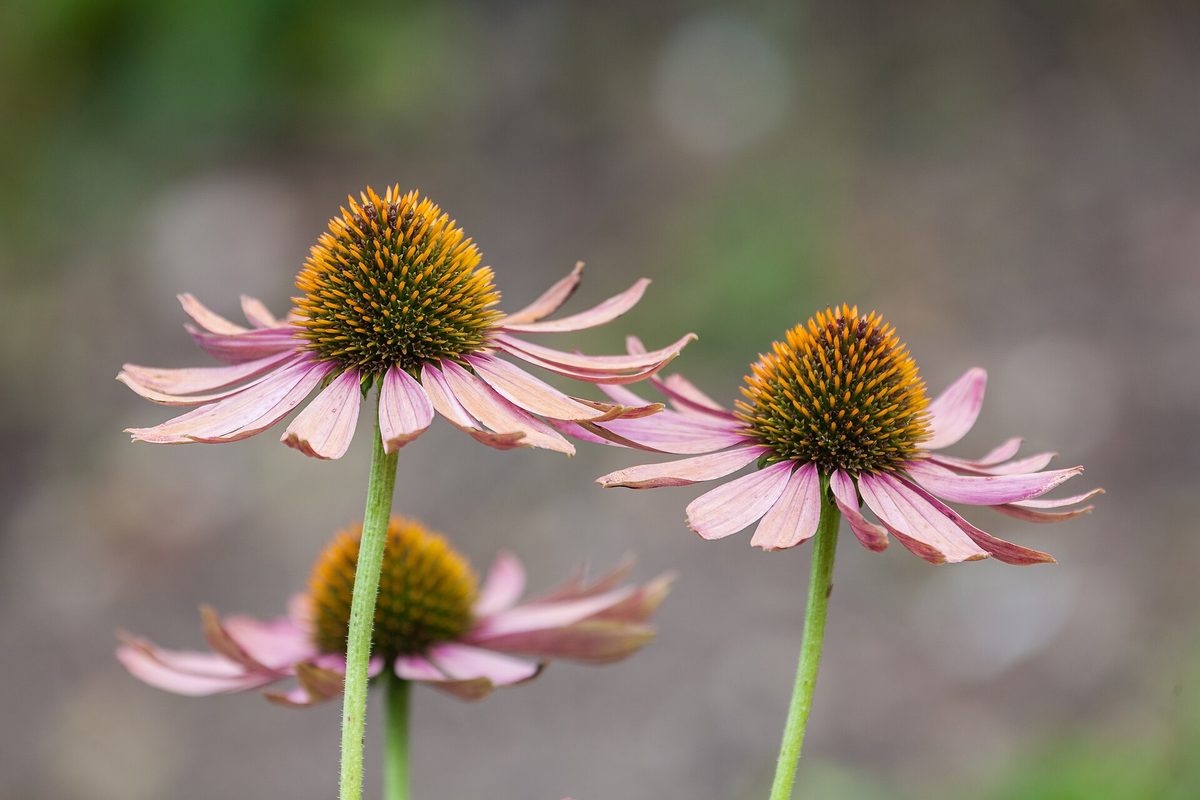
Photo: Wikimedia Commons contributor, CC BY-SA 3.0 via Wikimedia Commons

Quick facts
| Light: | Full sun and part shade (full sun preferred)11 source |
|---|---|
| Water: | Medium11 source |
| Soil: | Well drained, moist and occasionally dry; pH 6–821 |
| Hardiness: | Zones 3a–8b23 |
| Size: | 3–4 ft (0.91–1.22 m) × 2–3 ft (0.61–0.91 m)261 source |
| Growth rate: | Moderate61 source |
| Bloom: | Pink and purple31 source |
| Cats: | Not documented by major sources |
| Dogs: | Not documented by major sources |
| Native range: | ALA, ARK, COL, FLA, GEO, ILL, INI, IOW, KAN, KTY, LOU, MIC, MSI, MSO, NCA, NWY, OHI, OKL, PEN, SCA, TEN, TEX, VRG, WIS7 |
| Family: | Asteraceae |
How much light does a Purple Coneflower need?
Outdoors, purple coneflower takes full sun or part shade. Full sun is the preferred condition of the two. The Lady Bird Johnson Wildflower Center lists both sun and part shade for this species. Full shade is not among the listed conditions. The recorded values are full sun and part shade, with full sun marked as preferred.
- Light: Full sun and part shade (full sun preferred)1
How often to water a Purple Coneflower
Water use for purple coneflower is listed as medium, at both the low end and the high end of the recorded range. The Lady Bird Johnson Wildflower Center gives this as Water Use: Medium. The soil conditions listed for the plant are well drained, moist and occasionally dry. Check how the soil feels before you decide to water, because no watering schedule in days is recorded for this plant.
- Water: Medium1
Best soil for a Purple Coneflower
NC State Extension describes a preference for well-drained, moist loam. The Lady Bird Johnson Wildflower Center lists well-drained soils that are sandy or richer. The drainage values on record are well drained, moist and occasionally dry. Loam, sandy and richer soils all appear in these descriptions. Soil pH is listed from 6 to 8, and NC State labels that range neutral. Both a lower limit of pH 6 and an upper limit of pH 8 are given.
Hardiness and temperature
Purple coneflower is listed for USDA hardiness zones 3a through 8b. The recorded range steps through 3a, 3b, 4a and on to 8b. Chicago Botanic Garden gives the range as zones 3 to 8. NC State Extension also calls the plant heat, humidity and salt resistant. No cited source records a minimum temperature for it.
How to plant a Purple Coneflower
Gardeners in USDA zones 3a to 8b can plant purple coneflower outdoors. Allow 2–3 ft (0.61–0.91 m) of spread for each plant. Mature height is 3–4 ft (0.91–1.22 m), and the habit is erect. The growth rate is listed as moderate. Its native status for US-L48 is listed as native. The recorded native range covers 24 regions, from ALA and ARK to VRG and WIS.
Winter care
In zone 3a, the cold end of its range, purple coneflower is still listed as hardy. The recorded range is zones 3a to 8b, and Chicago Botanic Garden gives zones 3 to 8. Zones colder than 3a or warmer than 8b fall outside that recorded range. The plant is a herbaceous perennial. No cited source records a minimum temperature or winter protection steps for it.
How to propagate a Purple Coneflower
You can propagate purple coneflower by seed, by division or by root cuttings. NC State Extension lists all three of these as recommended strategies. Clemson Cooperative Extension says it is best to propagate Echinacea by division or seed. Root cuttings are therefore listed by NC State but are not among the two methods Clemson calls best. Steps and timing for these methods are not documented here.
Common problems
Japanese beetles, aphids, mites and sweet potato whitefly are the pests listed for purple coneflower. Penn State Extension names aphids, Japanese beetles and mites. The diseases listed are leaf spot, aster yellows, stem rot, powdery mildew and anthracnose. NC State Extension notes that the plant is susceptible to aster yellows disease.
| Problem | Kind |
|---|---|
| Japanese beetles | Pest |
| Aphids | Pest |
| Mites | Pest |
| Sweet potato whitefly | Pest |
| Leaf spot | Disease |
| Aster yellows | Disease |
| Stem rot | Disease |
| Powdery mildew | Disease |
| Anthracnose | Disease |
Is Purple Coneflower toxic to cats and dogs?
Recommended supplies
- Soil: a free-draining mix, and a pot with a drainage hole.
Questions and answers
- Does purple coneflower need full sun?
- Full sun is the preferred condition, and part shade is also listed. Full shade is not among the listed conditions. The Lady Bird Johnson Wildflower Center gives sun and part shade.
- How big does purple coneflower get?
- It reaches 3–4 ft (0.91–1.22 m) tall with a spread of 2–3 ft (0.61–0.91 m). Its habit is erect. The growth rate is listed as moderate.
- Is purple coneflower deer resistant?
- NC State Extension describes it as deer, heat, humidity and salt resistant. The label used on this page is Reported resistant. That label describes deer only.
Sources
- Lady Bird Johnson Wildflower Center. https://www.wildflower.org/plants/result.php?id_plant=ecpu. Accessed 13 October 2026.
- NC State Extension Gardener Plant Toolbox. https://plants.ces.ncsu.edu/plants/echinacea-purpurea/. Accessed 13 October 2026.
- Chicago Botanic Garden. https://www.chicagobotanic.org/plant-information/plant-finder/echinacea-purpurea-purple-coneflower. Accessed 15 October 2026.
- Clemson Cooperative Extension Home & Garden Information Center. https://hgic.clemson.edu/factsheet/echinacea/. Accessed 30 October 2026.
- Penn State Extension. https://extension.psu.edu/purple-coneflower. Accessed 13 October 2026.
- University of Florida IFAS Extension (EDIS). https://ask.ifas.ufl.edu/publication/FP192. Accessed 13 October 2026.
- Royal Botanic Gardens, Kew (World Checklist of Vascular Plants). https://sftp.kew.org/pub/data-repositories/WCVP/wcvp.zip. Accessed 4 June 2026.
How this page was made
- Written with AI assistance from the sources listed on this page. AI is never the source of a fact.