Indian Shot (Canna indica)
Formerly Canna coccinea, Canna lutea, Canna discolor
Canna indica is a tall, erect perennial that grows best outdoors in full sun to part shade with moist, well-drained soil. It blooms red, pink, yellow or orange flowers from August to October. The ASPCA lists this plant as non-toxic to cats and non-toxic to dogs.
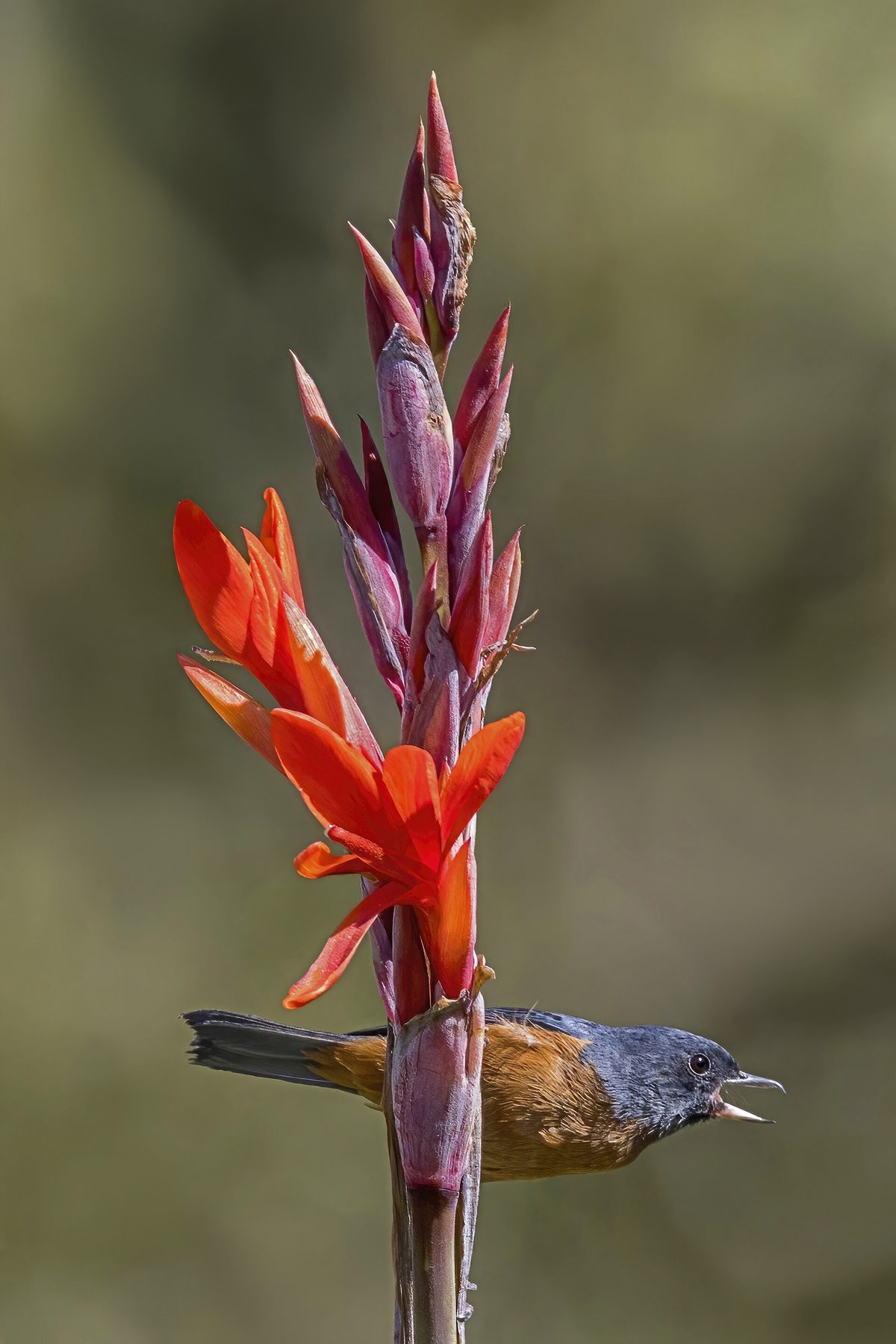
Photo: Wikimedia Commons contributor, CC BY-SA 4.0 via Wikimedia Commons

Quick facts
| Soil: | Well drained and moist11 source |
|---|---|
| Size: | 1.5–8.2 ft (0.46–2.49 m) × 1.5–3 ft (0.46–0.91 m)51 source |
| Bloom: | Aug–Oct, Red, pink, yellow and orange571 source |
| Cats: | Non-toxic to cats 65 |
| Dogs: | Non-toxic to dogs 65 |
| Native range: | AGE, AGW, BAH, BLZ, BOL, BZC, BZE, BZL, BZN, BZS, CLM, COS, CUB, DOM, ECU, ELS, FLA, FRG, GUA, GUY, HAI, HON, JAM, LEE, LOU, MXC, MXE, MXG, MXS, MXT, NIC, PAN, PAR, PER, PUE, SCA, SUR, TEX, TRT, URU, VEN, WIN8 |
| Family: | Cannaceae |
Best soil for an Indian Shot
Canna indica prefers soil that stays moist and drains well. Some canna plants also do fine in soil that holds extra moisture. In a bed or a container, pick a mix that lets water pass through rather than pool on top. No cited source for this page states a preferred soil pH for this species. Moist, well-drained conditions suit canna indica whether it grows in open ground or in a pot. That same preference for moisture paired with drainage applies no matter where you plant it. Choose a mix built for drainage if you are growing canna indica in a container.
- Soil drainage: Well drained and moist1
Pruning an Indian Shot
Remove canna indica's faded flowers regularly instead of letting them set seed. This keeps the plant blooming from early summer until the first frost. Its flowers come in red, pink, yellow and orange. That bloom period runs from August to October. Check the plant regularly during those months and clip off each flower once it fades.
- Pruning: Deadheading2
Repotting an Indian Shot
Plan to repot canna indica every three to four years. You can also repot it sooner than that if you want to increase your stock of plants. Spring is the recommended time for this work. This is also a natural point to propagate canna indica, since division is one of the ways it is grown.
- Repotting: Every 3–4 years3
How to propagate an Indian Shot
You can grow canna indica from seed or by dividing its rhizomes. Most plants in cultivation are grown from these rhizomes. Divide the rhizomes in spring, which is also when you would repot an established plant. Lift and separate clumps every three to four years if you want to increase your stock of plants. Seed is the other method listed for starting new plants.
- Propagation: Seed and division4
Common problems
The pests recorded for canna indica include the canna leaf roller moth, the Japanese beetle and the bird cherry oat aphid. The diseases recorded for it include canna rust, canna yellow mottle virus and canna yellow streak virus. Those six problems are the ones with documented records for this plant, covering both insect pests and diseases.
| Problem | Kind |
|---|---|
| Canna leaf roller | Pest |
| Japanese beetles | Pest |
| Bird cherry oat aphid | Pest |
| Canna rust | Disease |
| Canna yellow mottle virus | Disease |
| Canna yellow streak virus | Disease |
Is Indian Shot toxic to cats and dogs?
NC State Extension lists canna indica as non-toxic for cats. It also lists the plant as non-toxic for dogs. The ASPCA's listing for this plant matches that cat result, naming it non-toxic to cats. The ASPCA's listing also matches the dog result, naming it non-toxic to dogs. That means this species does not appear on either source's list of plants that are toxic to cats or dogs. No severity or symptom is listed, since both results are a straightforward non-toxic entry for this plant.
Recommended supplies
- Soil: a free-draining mix, and a pot with a drainage hole.
Questions and answers
- Is canna indica toxic to cats or dogs?
- Canna indica is listed as non-toxic to cats and non-toxic to dogs. No severity or symptom is listed, because both results are a plain non-toxic entry.
- How often should you repot canna indica?
- Repot canna indica every three to four years, or sooner if you want to divide it and increase your stock of plants. Spring is the recommended time to do this.
- What pests and diseases affect canna indica?
- Canna indica can be affected by canna leaf roller moths, Japanese beetles and bird cherry oat aphids, as well as canna rust, canna yellow mottle virus and canna yellow streak virus.
Sources
- Clemson Cooperative Extension Home & Garden Information Center. https://hgic.clemson.edu/cannas-can-take-the-heat/. Accessed 31 October 2026.
- Clemson Cooperative Extension Home & Garden Information Center. https://hgic.clemson.edu/factsheet/summer-and-fall-flowering-bulbs/. Accessed 15 October 2026.
- Clemson Cooperative Extension Home & Garden Information Center. https://hgic.clemson.edu/factsheet/dividing-perennials/. Accessed 28 October 2026.
- Iowa State University Extension and Outreach (Yard and Garden). https://yardandgarden.extension.iastate.edu/faq/it-possible-grow-cannas-seed. Accessed 28 October 2026.
- NC State Extension Gardener Plant Toolbox. https://plants.ces.ncsu.edu/plants/canna-indica/. Accessed 15 October 2026.
- ASPCA Animal Poison Control Center. https://www.aspca.org/pet-care/aspca-poison-control/toxic-and-non-toxic-plants/canna. Accessed 1 November 2026.
- University of Minnesota Extension. https://extension.umn.edu/garden-and-home/yard-and-garden/gardening-in-minnesota/calla-and-canna-lilies. Accessed 31 October 2026.
- Royal Botanic Gardens, Kew (World Checklist of Vascular Plants). https://sftp.kew.org/pub/data-repositories/WCVP/wcvp.zip. Accessed 4 June 2026.
How this page was made
- Written with AI assistance from the sources listed on this page. AI is never the source of a fact.