Papyrus (Cyperus papyrus)
Formerly Cyperus antiquorum, Chlorocyperus papyrus, Cyperus elapsus
Papyrus needs a sunny window and soil kept medium to wet. It is a large, clump-forming, aquatic, herbaceous perennial sedge from Africa. Outdoors it is hardy in USDA zones 9a to 12b. No cited source on this page records its toxicity to cats or dogs.
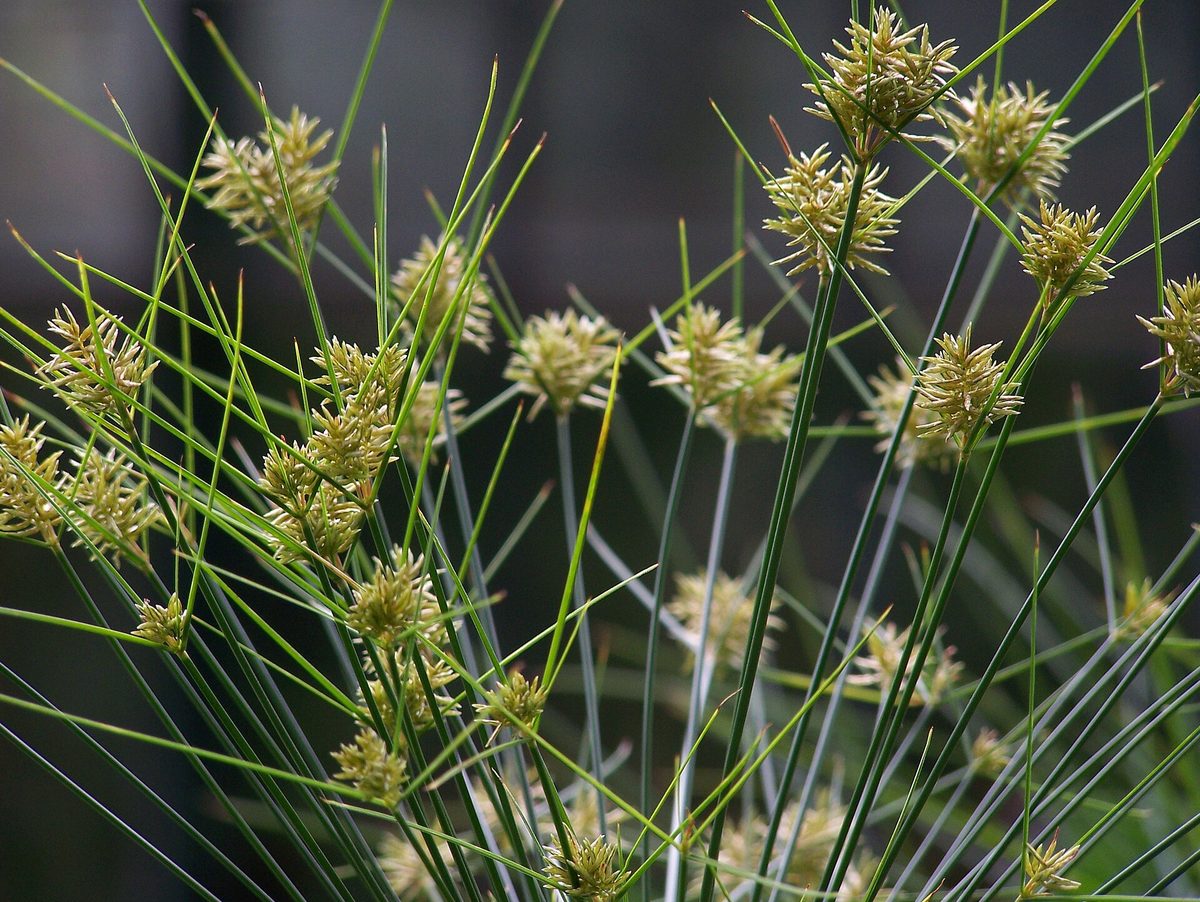
Photo: T.Voekler, CC BY-SA 3.0 via Wikimedia Commons

Quick facts
| Light: | Direct sun11 source |
|---|---|
| Water: | Medium to wet13 |
| Soil: | Moist and poorly drained; pH 6–8132 |
| Minimum temperature: | 39.2 °F (4 °C)11 source |
| Size: | 5–8 ft (1.52–2.44 m) × 2–4 ft (0.61–1.22 m)23 |
| Growth rate: | Rapid221 source |
| Bloom: | Jul–Sep, Brown and green231 source |
| Cats: | Not documented by major sources |
| Dogs: | Not documented by major sources |
| Native range: | ANG, BEN, BOT, BUR, CAF, CHA, CON, CPP, CPV, EGY, ETH, GAB, GAM, GUI, IVO, KEN, LBR, MDG, MLW, MOZ, NAM, NAT, NGA, PAL, RWA, SEN, SUD, TAN, TVL, UGA, ZAI, ZAM, ZIM4 |
| Family: | Cyperaceae |
How much light does a Papyrus need?
Direct sun is the indoor light level listed for papyrus, and NC State Extension points to a sunny window. Outdoors, the best exposure is full sun, which means six or more hours of direct sunlight a day. Papyrus also accepts part shade, and Clemson Extension calls it best suited to wet areas that receive part shade. NC State describes partial shade as direct sunlight for only part of the day, between 2 and 6 hours.
How often to water a Papyrus
Papyrus does best in consistently moist soil, and its water need runs from medium to wet. It can tolerate standing in up to 6 in (15 cm) of water. The University of Wisconsin-Madison Division of Extension advises keeping it very moist, preferably in standing water. Its soil drainage is listed as moist and poorly drained, and it tolerates wet soil.
Best soil for a Papyrus
Moist and poorly drained soil suits papyrus. NC State Extension lists frequent standing water for it. Wisconsin Extension suggests planting it in moist to wet soil, or growing it in a container to regulate moisture levels. The soil pH range on file is 6.0 to 8.0, which NC State labels neutral. Papyrus also tolerates clay soil.
Temperature and humidity
The lowest temperature on file for papyrus is 39.2 °F (4 °C). NC State Extension says to bring the plant indoors before the first frost or when temperatures drop to or below 40 °F (4 °C). For a room, it suggests keeping the temperature preferably around 60 to 65 °F (16 to 18 °C). Outdoors, papyrus is hardy in USDA zones 9a to 12b. No cited source records a humidity preference for this plant.
- Minimum temperature: 39.2 °F (4 °C)1
How to propagate a Papyrus
You can propagate papyrus by seed or by division. NC State Extension says it is best propagated by division of the woody rhizomes, or by seeds, in spring. Wisconsin Extension also names division of the rhizomes in spring. Papyrus grows rapidly and can spread quickly, invading other plant areas.
Common problems
Mealybugs may be seen on papyrus, according to NC State Extension. That source otherwise reports no significant insect pests or diseases. No other pest is on file for this plant. No disease is on file for it either. The list of problems for papyrus is short: one pest and no diseases.
| Problem | Kind |
|---|---|
| Mealybugs | Pest |
Is Papyrus toxic to cats and dogs?
Recommended supplies
- Light: direct sun for several hours; indoors that means an unobstructed south window or a grow light.
- Soil: a mix that holds moisture without staying wet.
Questions and answers
- How much water does papyrus need?
- Papyrus does best in consistently moist soil and can tolerate standing in up to 6 in (15 cm) of water. Its water need is listed as medium to wet. Its soil drainage is listed as moist and poorly drained.
- Can papyrus grow outdoors?
- Papyrus is hardy in USDA zones 9a to 12b. NC State Extension says to bring it indoors before the first frost or when temperatures drop to or below 40 °F (4 °C). Outdoors it prefers full sun but also accepts part shade.
- How big does papyrus get?
- As an ornamental, papyrus usually grows 5 to 8 ft (1.52-2.44 m) tall and 2 to 4 ft (0.61-1.22 m) wide. NC State Extension notes that it grows rapidly and can spread quickly.
Sources
- NC State Extension. https://plants.ces.ncsu.edu/plants/cyperus-papyrus. Accessed 15 October 2026.
- NC State Extension Gardener Plant Toolbox. https://plants.ces.ncsu.edu/plants/cyperus-papyrus/. Accessed 30 October 2026.
- University of Wisconsin-Madison Division of Extension (Wisconsin Horticulture). https://hort.extension.wisc.edu/articles/papyrus-cyperus-papyrus/. Accessed 14 October 2026.
- Royal Botanic Gardens, Kew (World Checklist of Vascular Plants). https://sftp.kew.org/pub/data-repositories/WCVP/wcvp.zip. Accessed 4 June 2026.
How this page was made
- Written with AI assistance from the sources listed on this page. AI is never the source of a fact.