Blue Wild Indigo (Baptisia australis)
Formerly Sophora australis, Podalyria australis, Baptisia minor
Baptisia australis grows best outdoors in full sun. It also tolerates part shade. It needs a medium amount of water. That's not a lot and not very little. Its soil can be well drained, occasionally wet, or moist. Those three soil conditions are all recorded as fine for it outdoors. Cited sources don't document whether this plant is toxic to cats or dogs.
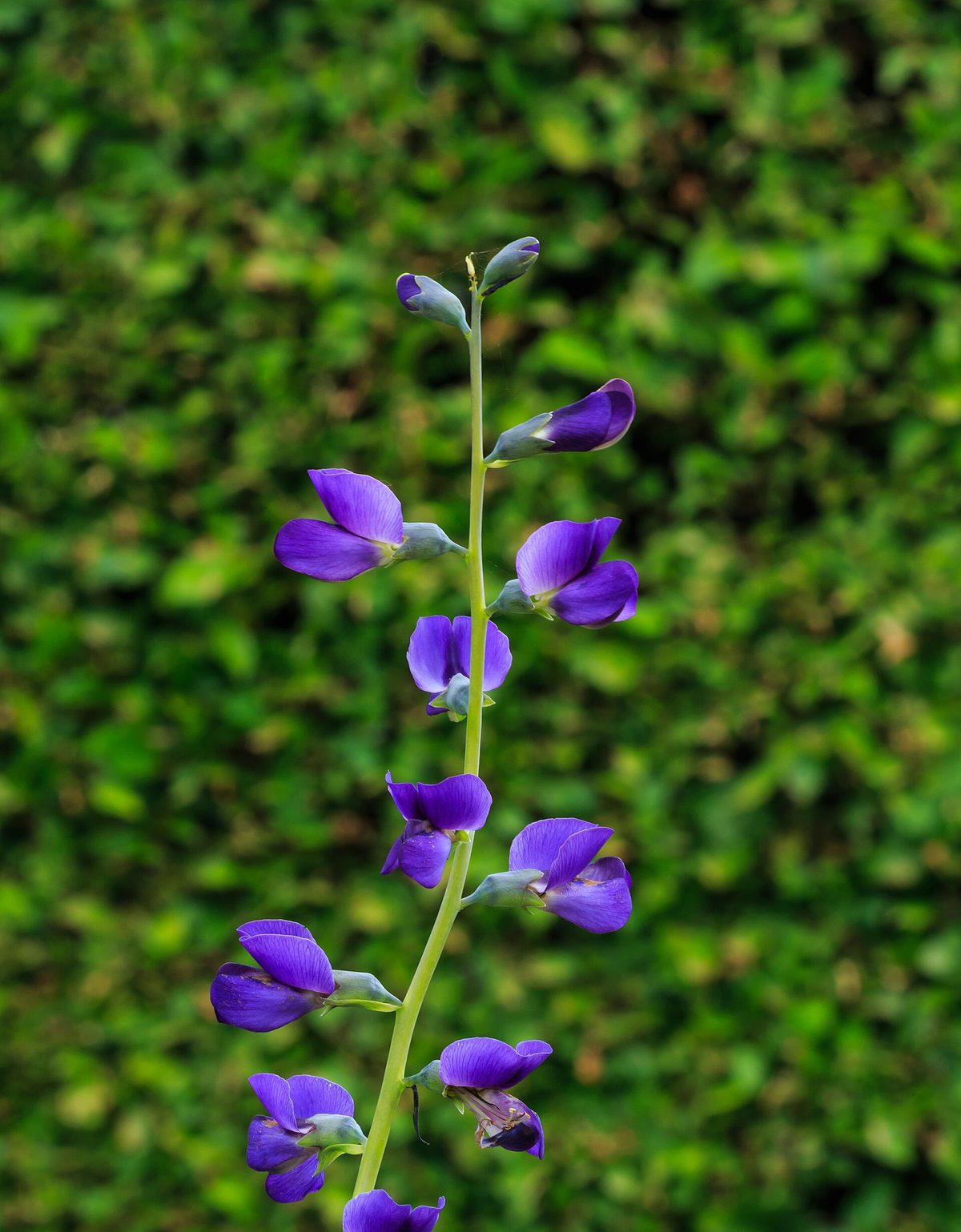
Photo: Dominicus Johannes Bergsma, CC BY-SA 4.0 via Wikimedia Commons

Quick facts
| Light: | Full sun and part shade (full sun preferred)11 source |
|---|---|
| Water: | Medium21 source |
| Soil: | Well drained, occasionally wet and moist21 |
| Hardiness: | Zones 3a–9b31 source |
| Size: | 3–4 ft (0.91–1.22 m) × 2–4 ft (0.61–1.22 m)31 source |
| Bloom: | Apr–Jul, Blue and purple21 source |
| Cats: | Not documented by major sources |
| Dogs: | Not documented by major sources |
| Family: | Fabaceae |
How much light does a Blue Wild Indigo need?
Give this plant full sun outdoors for its best growth. It also tolerates part shade, so a spot that gets some shade during the day still works for it. Between the two, full sun is the preferred light level for this plant. If you have a choice of spots, pick the sunnier one to match that preference. That preference for full sun applies to this plant wherever you grow it outdoors.
- Light: Full sun and part shade (full sun preferred)1
How often to water a Blue Wild Indigo
A medium amount of water outdoors is what this plant needs, not a lot and not very little. Its soil can be well drained, occasionally wet, or moist, and each of those moisture levels is recorded as fine for this plant outdoors. That medium water need outdoors pairs with that same range of soil moisture. That medium rating is the water need recorded for this plant outdoors.
- Water: Medium2
Best soil for a Blue Wild Indigo
Soil that drains well suits this plant outdoors, and it's described as easy to grow under those conditions. Its soil can also be occasionally wet or moist, and both of those moisture levels are recorded as fine for it outdoors. So the soil for this plant ranges from well drained on one end to occasionally wet or moist on the other. Well drained, occasionally wet, and moist all appear as recorded soil moisture conditions for this plant outdoors.
Hardiness and temperature
Across USDA hardiness zones 3a through 9b, this plant is rated hardy outdoors. That range runs from the cold winters typical of zone 3a to the mild winters typical of zone 9b. Zone 3a is the coldest zone listed for this plant, and zone 9b is the warmest. Zones in between, such as 5b or 7a, also fall within that same range outdoors.
- Hardiness: Zones 3a–9b3
Fertilizing a Blue Wild Indigo
No regular fertilizer is needed for this plant outdoors. It requires no chemical input at all, including fertilizer and pesticides. Skip the regular feeding schedule and let it grow outdoors without any added fertilizer. Its need for fertilizer outdoors is recorded simply as none at all. It is also described as long-lived. No pesticides are needed either. This plant's fertilizer and pesticide needs outdoors are both recorded as none.
- Fertilizer: Not needed1
Pruning a Blue Wild Indigo
Removing dead growth is this plant's main pruning need outdoors. Deadheading is also part of its care, and it stops the plant from self-seeding. Light shaping rounds out the pruning this plant needs outdoors. Together, removing dead growth, deadheading, and light shaping cover its pruning needs outdoors. Light shaping is also listed as part of its outdoor pruning, separate from removing dead growth or deadheading.
- Pruning: Remove dead growth only, Deadheading and Light shaping4
How to plant a Blue Wild Indigo
USDA hardiness zones 3a through 9b mark where you can grow this plant outdoors. Space plants to allow for a mature spread of 2 to 4 ft (0.61-1.22 m). It grows 3 to 4 ft (0.91-1.22 m) tall at maturity, so plan vertical space accordingly. Those zone numbers mark the coldest and warmest areas where it grows outdoors. Keep both the hardiness zone range and the mature spread in mind when you choose where to plant it outdoors. The mature spread of 2 to 4 ft (0.61-1.22 m) also tells you how far apart to set plants outdoors. Mature height of 3 to 4 ft (0.91-1.22 m) is useful to know before picking a planting spot outdoors too.
- Hardiness: Zones 3a–9b3
Winter care
Winter outdoors is survivable for this plant across USDA hardiness zones 3a through 9b. Zone 3a marks the coldest winters it's rated to handle, and zone 9b marks the warmest. Dead growth can also be removed outdoors as winter ends, which is part of its care. Hardiness zones 3a through 9b cover the full winter range recorded for this plant outdoors.
- Hardiness: Zones 3a–9b3
How to propagate a Blue Wild Indigo
You can propagate this plant from seed, by division, or from root cuttings. Its tough rootstock can be divided in fall or spring, while the plant is dormant. Division and root cuttings both work with that same rootstock. Seed is the third method listed for starting new plants from this one outdoors. Those three methods, seed, division, and root cuttings, give you more than one way to start a new plant outdoors. Seed, division, and root cuttings each appear as a separate method for starting new plants outdoors.
- Propagation: Seed, division and root cuttings2
Common problems
A parasitic weevil is the pest recorded for this plant outdoors, and it targets the seed pods. That weevil is the only pest listed for this plant, and it is described as parasitic. Its damage shows up in the seed pods. That makes the weevil the one pest documented for this plant's seed pods outdoors. No other insect is listed alongside it in the cited record.
- Common pests: weevils1
| Problem | Kind |
|---|---|
| Weevils | Pest |
Is Blue Wild Indigo toxic to cats and dogs?
Recommended supplies
- Soil: a free-draining mix, and a pot with a drainage hole.
Questions and answers
- Does Baptisia australis need fertilizer?
- No cited source recommends regular fertilizer for this plant outdoors. It is recorded as needing no chemical input at all. That includes both fertilizer and pesticides. This plant's long-lived nature is noted in that same record. No pesticides are needed for it outdoors either.
- How do you propagate Baptisia australis?
- You can propagate it from seed, by division, or from root cuttings. Its tough rootstock is typically divided in fall or spring while the plant is dormant. Seed is a third option alongside those two. All three methods are listed as ways to start this plant outdoors.
- What pests affect Baptisia australis?
- A parasitic weevil is the pest recorded for this plant outdoors. It targets the plant's seed pods. It is also described as a parasitic weevil outdoors. No disease is named alongside it in that same pest record. The seed pods remain the main site of that weevil's activity outdoors.
Sources
- Penn State Extension. https://extension.psu.edu/false-blue-indigo. Accessed 15 November 2026.
- Lady Bird Johnson Wildflower Center. https://www.wildflower.org/plants/result.php?id_plant=BAAU. Accessed 15 November 2026.
- NC State Extension Gardener Plant Toolbox. https://plants.ces.ncsu.edu/plants/baptisia-australis/. Accessed 15 November 2026.
- University of Wisconsin-Madison Division of Extension (Wisconsin Horticulture). https://hort.extension.wisc.edu/articles/blue-false-indigo-baptisia-australis/. Accessed 16 November 2026.
How this page was made
- Written with AI assistance from the sources listed on this page. AI is never the source of a fact.