Lantana (Lantana camara)
Formerly Camara aculeata, Lantana aculeata, Lantana urticifolia
Give lantana full sun outdoors and let the soil dry out somewhat between waterings to keep it healthy. It needs at least six hours of direct sun a day, and the soil should move between dry and medium moisture rather than staying wet. This plant is toxic to both cats and dogs, so keep it out of reach of pets.
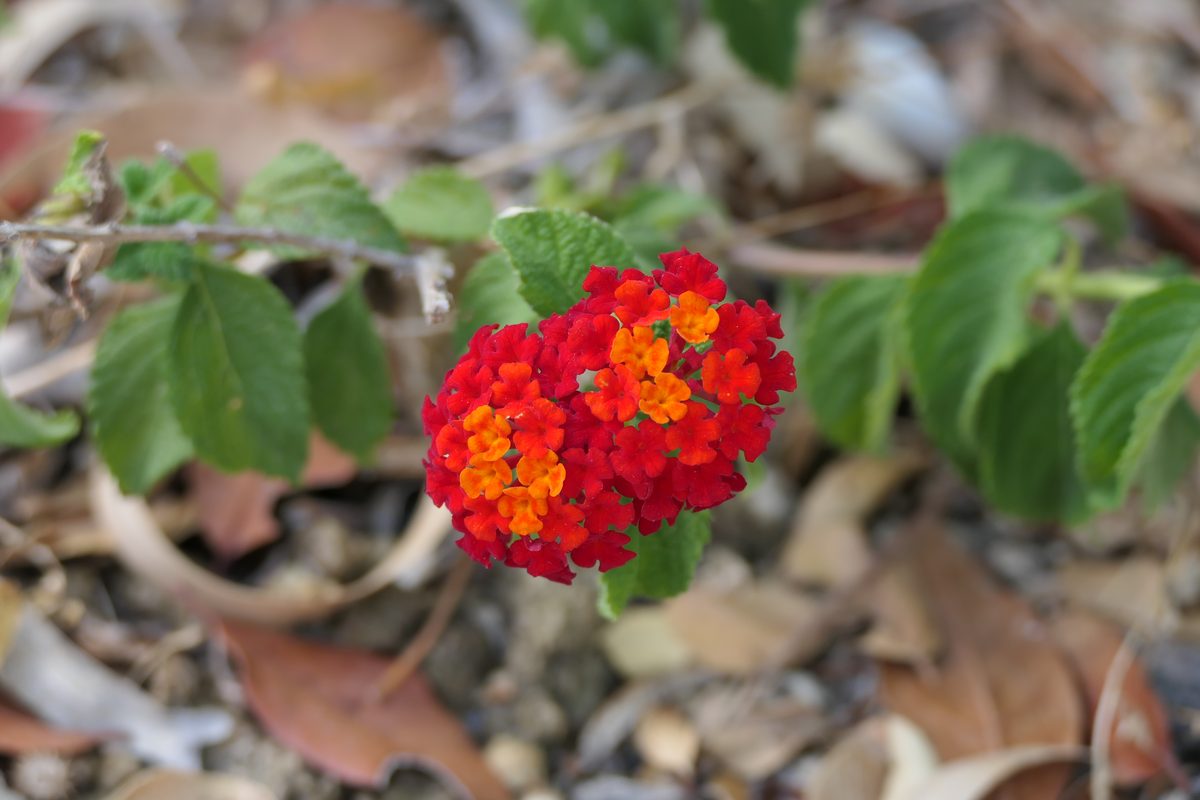
Photo: Petro Stelte, CC BY-SA 4.0 via Wikimedia Commons

Quick facts
| Light: | Full sun12 |
|---|---|
| Water: | Dry to medium31 source |
| Soil: | Well drained, moist and occasionally dry; pH 6–8411 source |
| Hardiness: | Zones 7a–11b11 source |
| Size: | 1–6 ft (0.3–1.83 m) × 3–5 ft (0.9–1.52 m)11 source |
| Growth rate: | Rapid141 |
| Bloom: | Yellow, orange, white, red, purple, multicoloured and pink2910111 |
| Cats: | Toxic to cats 71 |
| Dogs: | Toxic to dogs 781 |
| Native range: | ARU, BAH, BLZ, BZC, BZN, CAY, CLM, COS, CUB, DOM, ECU, ELS, GUA, GUY, HAI, HON, JAM, LEE, MXC, MXE, MXG, MXN, MXS, MXT, NIC, NLA, PAN, PUE, SWC, TRT, VEN, VNA, WIN12 |
| Family: | Verbenaceae |
How much light does a Lantana need?
Lantana needs full sun to grow and bloom well outdoors. Give it at least six hours of direct sunlight a day, and more is better since some guidance calls for a full eight hours. A spot that stays shaded most of the day will not meet this need.
How often to water a Lantana
Check the top inch or two of soil before you water lantana again. Add water only once that layer feels dry, since the plant does best with soil moisture that moves between dry and medium rather than staying wet. If the top layer still feels damp, wait before watering again.
- Water: Dry to medium3
Best soil for a Lantana
Lantana grows in nearly any soil type as long as it drains well. The soil can move from occasionally dry to lightly moist, but it should not stay wet. Soil that stays wet increases the risk of root rot, especially with frequent watering. Aim for a soil pH between 6.0 and 8.0. That span runs from slightly acidic through neutral to slightly alkaline.
Hardiness and temperature
USDA hardiness zones 7a through 11b outdoors suit lantana as a perennial. Zone 7a is the cooler edge of that range. Zone 11b is the warmest edge of that range. Many zones in between, such as 8, 9, and 10, also support it outdoors year-round. In full sun within this range, lantana grows quickly through the warm months. Check your local zone against 7a through 11b before you plant lantana as a perennial outdoors. No cited source here gives an exact minimum winter temperature for lantana.
Pruning a Lantana
Prune lantana hard in early spring to remove old growth and keep the plant from becoming woody. This is a hard, renewal-type cut. You can also do lighter shaping cuts through the summer months. Cutting back hard in early spring also removes growth left over from the previous year. Lantana grows quickly, and some cultivars are especially vigorous.
- Pruning: Light shaping and Hard renewal pruning (Mar, Jun–Aug)4
How to plant a Lantana
Outdoors, lantana grows as a perennial within USDA hardiness zones 7a through 11b. Zone 7a is the coolest zone in that range, and zone 11b is the warmest. Pick a planting site that gets full sun outdoors, since lantana needs at least six hours of direct light a day. Lantana also grows quickly once it is in the ground. Check your local USDA zone against this 7a to 11b range before you plant lantana outdoors as a perennial.
- Hardiness: Zones 7a–11b1
Winter care
Lantana is winter-hardy outdoors only within USDA zones 7a through 11b. Within that range, it can stay in the ground through winter as a perennial. Zone 7a marks the coolest end of this range, and zone 11b marks the warmest. Once new growth starts in spring, cut lantana back hard to remove old growth from the previous year. This hard, renewal-type cut is the pruning method recommended for lantana in spring.
How to propagate a Lantana
You can start new lantana plants from stem cuttings. Look for a stem that has no flowers on it. Clip off a piece about 6 inches (15 cm) long. This simple cutting method is the propagation approach described in the cited extension sources used for this page.
- Propagation: Stem cuttings3
Common problems
Lace bugs are a common lantana pest, leaving leaves grayish and stippled, or brown and dropping. Caterpillars can also damage the leaves. Other pests on this plant include spider mites, whiteflies, mealybugs, thrips, and scale insects. Powdery mildew can develop if lantana grows in shade. Root rot can set in when soil is poorly drained or watered too often. Sooty mold is another disease reported on this plant.
| Problem | Kind |
|---|---|
| Lace bugs | Pest |
| Caterpillars | Pest |
| Spider mites | Pest |
| Whiteflies | Pest |
| Mealybugs | Pest |
| Thrips | Pest |
| Scale insects | Pest |
| Powdery mildew | Disease |
| Root rot | Disease |
| Sooty mold | Disease |
Is Lantana toxic to cats and dogs?
The ASPCA lists lantana as toxic to cats. NC State Extension also names lantana a problem plant for cats. The ASPCA also lists lantana as toxic to dogs. The Pet Poison Helpline reports that lantana contains the toxins lantadene A and B. This plant is considered toxic to both cats and dogs by these sources. Keep lantana out of reach of pets in your home and yard. If a cat or dog eats part of this plant, contact your vet or a pet poison line right away.
Pet-safe alternatives
Recommended supplies
- Soil: a free-draining mix, and a pot with a drainage hole.
- Humidity: it wants humid air; a pebble tray or a humidifier is the usual fix.
Questions and answers
- Is lantana toxic to cats and dogs?
- Yes, lantana is toxic to both cats and dogs. The ASPCA lists it as toxic to cats and to dogs, and the Pet Poison Helpline reports that it contains the toxins lantadene A and B. If a cat or dog eats part of this plant, contact your vet or a pet poison line right away.
- How often should I water lantana?
- Check the top 1 to 2 inches (2.5 to 5 cm) of soil before you water lantana again. Water only once that layer has dried out, since this plant does best with soil that moves between dry and medium moisture.
- Does lantana need full sun or shade?
- Lantana needs full sun outdoors, meaning at least six hours of direct sunlight a day. Growing it in shade instead can also lead to powdery mildew.
Sources
- NC State Extension Gardener Plant Toolbox. https://plants.ces.ncsu.edu/plants/lantana-camara/. Accessed 24 September 2026.
- University of Minnesota Extension. https://extension.umn.edu/garden-and-home/yard-and-garden/gardening-in-minnesota/lantana. Accessed 24 September 2026.
- University of Minnesota Extension. https://extension.umn.edu/flowers/lantana. Accessed 24 September 2026.
- Clemson Cooperative Extension HGIC. https://hgic.clemson.edu/factsheet/lantana/. Accessed 24 September 2026.
- University of Wisconsin-Madison Division of Extension (Wisconsin Horticulture). https://hort.extension.wisc.edu/articles/lantana/. Accessed 28 October 2026.
- EPPO Global Database. https://gd.eppo.int/taxon/LANCA/pests. Accessed 24 September 2026.
- ASPCA Animal Poison Control Center. https://www.aspca.org/pet-care/aspca-poison-control/toxic-and-non-toxic-plants/lantana. Accessed 24 September 2026.
- Pet Poison Helpline. https://www.petpoisonhelpline.com/poison/lantana/. Accessed 24 September 2026.
- University of Illinois Extension. https://extension.illinois.edu/flowers/lantana. Accessed 28 October 2026.
- Brooklyn Botanic Garden. https://www.bbg.org/article/drought-resistant_plants_for_pots. Accessed 28 October 2026.
- University of Florida IFAS Extension (EDIS). https://ask.ifas.ufl.edu/publication/AG368. Accessed 28 October 2026.
- Royal Botanic Gardens, Kew (World Checklist of Vascular Plants). https://sftp.kew.org/pub/data-repositories/WCVP/wcvp.zip. Accessed 4 June 2026.
How this page was made
- Written with AI assistance from the sources listed on this page. AI is never the source of a fact.