Russian Sage (Salvia yangii)
Formerly Perovskia pamirica, Perovskia atriplicifolia
Give Russian sage full sun and well-drained soil that is occasionally dry. Its water range runs from dry to medium. It is hardy in USDA zones 5a to 9b. Cut it back hard in early spring. Its flowers are blue and purple. It grows 2–3 ft (0.61–0.91 m) tall. This page has no verified toxicity record for cats or dogs.
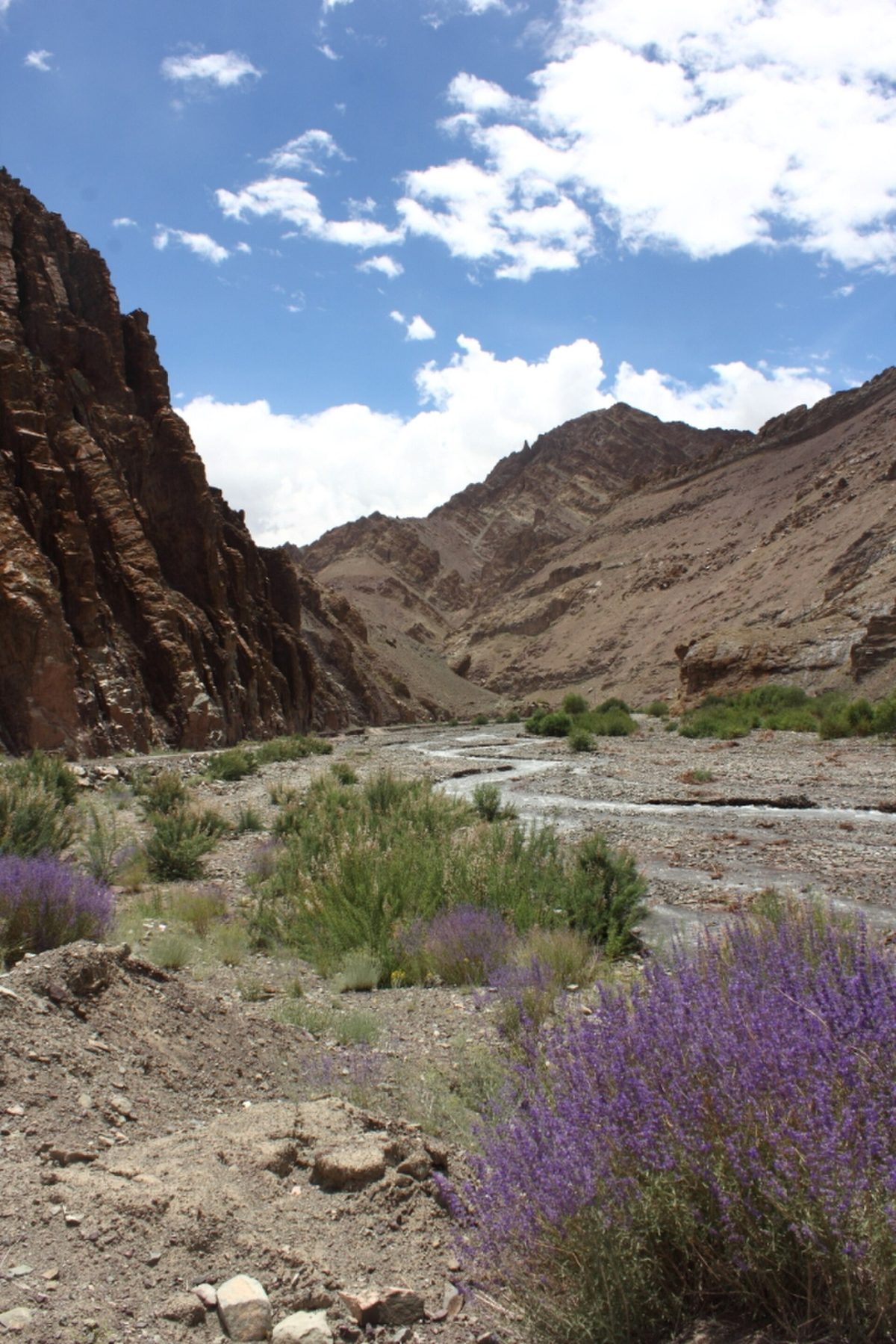
Photo: Khanasif36, CC BY-SA 4.0 via Wikimedia Commons

Quick facts
| Light: | Full sun12 |
|---|---|
| Water: | Dry to medium11 source |
| Soil: | Well drained and occasionally dry11 source |
| Hardiness: | Zones 5a–9b31 source |
| Size: | 2–3 ft (0.61–0.91 m) × 2–4 ft (0.61–1.22 m)411 source |
| Bloom: | Jun–Oct, Blue and purple1251 source |
| Cats: | Not documented by major sources |
| Dogs: | Not documented by major sources |
| Native range: | AFG, CHT, CHX, PAK, WHM6 |
| Family: | Lamiaceae |
How much light does a Russian Sage need?
Full sun is the right place for Russian sage. That means six or more hours of direct sunlight a day. Plant it in full sun and well-drained soil. Its preferred light is full sun, and no other light level is listed. The flowers are blue and purple, and they appear from June to October.
How often to water a Russian Sage
Dry to medium moisture suits this plant. The recorded range runs from dry at one end to medium at the other. Medium moisture is the upper end of what the record lists. Its preferred setting is full sun in well-drained soil that is occasionally dry. Look for soil that is well drained and dries out at times.
- Water: Dry to medium1
Best soil for a Russian Sage
Well-drained soil is what Russian sage grows best in. The record also describes the soil as occasionally dry. Plant it in full sun and well-drained soil. Its water range runs from dry to medium. The preferred setting pairs full sun with well-drained, occasionally dry soil. Root rot is the one disease recorded for this plant in the verified facts. No cited source gives a preferred soil pH.
- Soil drainage: Well drained and occasionally dry1
Hardiness and temperature
USDA zones 5a to 9b are the hardiness range on record. That span covers ten half-zone steps, from 5a through 9b. Zone 7a sits near the middle of that listed span. The coldest zone listed is 5a and the warmest is 9b. Russian sage is a deciduous plant. It is classed as a shrub. No cited source records a minimum temperature for it.
- Hardiness: Zones 5a–9b3
Pruning a Russian Sage
Cut the stems back to several inches above the ground in early spring. The pruning type recorded is hard renewal. The purpose of the cut, in the source's words, is to stimulate good seasonal growth. Early spring is the only pruning time recorded. Russian sage is classed as a shrub, and it is deciduous.
- Pruning: Hard renewal pruning (Mar–Apr)3
How to plant a Russian Sage
Choose a spot with full sun and well-drained soil. Russian sage suits USDA zones 5a to 9b. A mature plant spreads 2–4 ft (0.61–1.22 m). Its mature height is 2–3 ft (0.61–0.91 m). Full sun means six or more hours of direct sunlight a day. The flowers are blue and purple. They open from June to October.
- Hardiness: Zones 5a–9b3
Winter care
The coldest zone listed for Russian sage is 5a. The listed span runs from 5a at the cold end to 9b at the warm end. It is a deciduous shrub. Cut the stems back to several inches above the ground in early spring. That pruning type is hard renewal. Zone 9b is the warmest zone on record. No minimum temperature is documented for it.
- Hardiness: Zones 5a–9b3
Care calendar
| Task | Jan | Feb | Mar | Apr | May | Jun | Jul | Aug | Sep | Oct | Nov | Dec |
|---|---|---|---|---|---|---|---|---|---|---|---|---|
| Prune | Prune in Mar | Prune in Apr | ||||||||||
| Bloom | Bloom in Jun | Bloom in Jul | Bloom in Aug | Bloom in Sep | Bloom in Oct |
How to propagate a Russian Sage
You can propagate Russian sage by seed, stem cuttings or division. Stem cuttings and seeds both work for this sage. Division is possible, but slow. Expect slow results if you choose division. Division is the one method the record calls slow. That gives three methods in all: seed, stem cuttings and division.
Common problems
No serious insect or disease problems are recorded for Russian sage. No insect pests are listed for it. Another description calls it essentially free of disease and insect problems. Root rot is the one disease listed. The root rots named are phytophthora and pythium. Some cultivars have shown a fair amount of resistance to both.
| Problem | Kind |
|---|---|
| Root rot | Disease |
Is Russian Sage toxic to cats and dogs?
Recommended supplies
- Soil: a free-draining mix, and a pot with a drainage hole.
Questions and answers
- How much sun does Russian sage need?
- Russian sage needs full sun, which the source defines as six or more hours of direct sunlight a day. It is planted in full sun and well-drained soil.
- When should I prune Russian sage?
- Cut the stems back to several inches above the ground in early spring. The pruning type recorded is hard renewal. The cut is meant to stimulate good seasonal growth.
- How do you propagate Russian sage?
- You can use seed, stem cuttings or division. Division is possible, but slow. That makes three recorded methods in all. Stem cuttings and seed are the other two.
Sources
- NC State Extension Gardener Plant Toolbox. https://plants.ces.ncsu.edu/plants/salvia-yangii/. Accessed 21 October 2026.
- University of Wisconsin-Madison Division of Extension (Wisconsin Horticulture). https://hort.extension.wisc.edu/articles/russian-sage-perovskia-atriplicifolia/. Accessed 21 October 2026.
- NC State Extension Gardener Plant Toolbox. https://plants.ces.ncsu.edu/plants/all/perovskia-atriplicifolia. Accessed 21 October 2026.
- University of Illinois Extension. https://extension.illinois.edu/flowers/russian-sage. Accessed 1 November 2026.
- Chicago Botanic Garden. https://www.chicagobotanic.org/plant-information/plant-finder/salvia-yangii-russian-sage. Accessed 14 October 2026.
- Royal Botanic Gardens, Kew (World Checklist of Vascular Plants). https://sftp.kew.org/pub/data-repositories/WCVP/wcvp.zip. Accessed 4 June 2026.
How this page was made
- Written with AI assistance from the sources listed on this page. AI is never the source of a fact.