European Gooseberry (Ribes uva-crispa)
Formerly Ribes grossularia, Grossularia uva-crispa, Ribes reclinatum
Give European gooseberry, Ribes uva-crispa, full sun or part shade and soil that stays moist but not waterlogged. It grows as a shrub about 3 to 6 ft (0.9 to 1.8 m) tall when mature. Whether it is toxic to cats or dogs is not documented on this page.
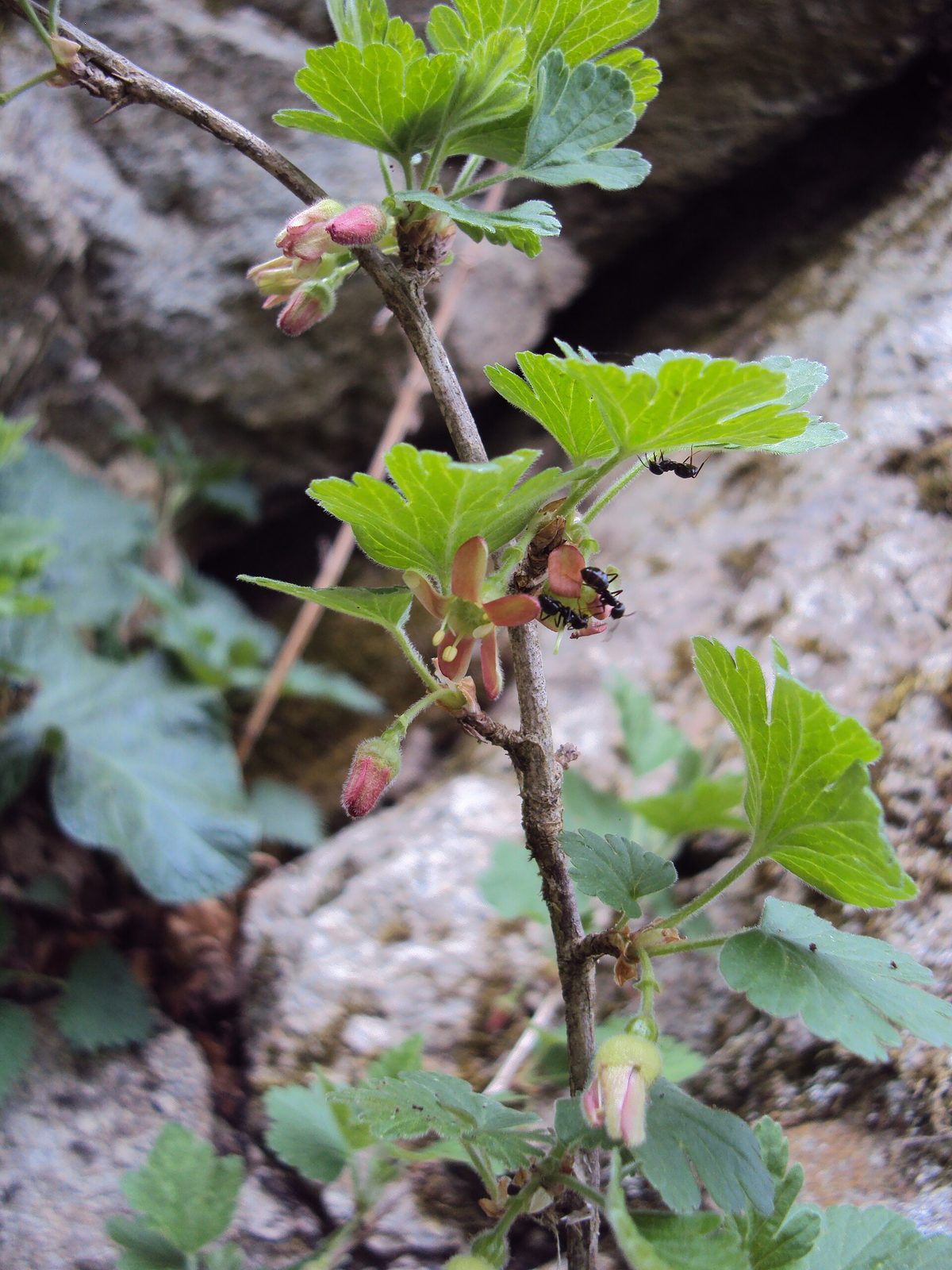
Photo: Dendrofil, CC0 via Wikimedia Commons

Quick facts
| Light: | Full sun and part shade (full sun preferred)11 source |
|---|---|
| Water: | Medium23 |
| Soil: | Well drained31 source |
| Size: | 3–6 ft (0.91–1.83 m)43 |
| Bloom: | May–Jun and Mar–Jun7891 source |
| Cats: | Not documented by major sources |
| Dogs: | Not documented by major sources |
| Native range: | ALB, ALG, AUT, BGM, BUL, CZE, FRA, GER, GRC, HUN, IRN, ITA, KRI, MOR, NET, POL, ROM, SPA, SWI, TCS, TUR, UKR, YUG10 |
| Family: | Grossulariaceae |
How much light does a European Gooseberry need?
Plant European gooseberry where it gets full sun, which is the preferred exposure. It will also grow in part shade, so a spot with less than full sun is still an option. Currants and gooseberries are described as growing in full sun to partial shade. Mature plants reach 3 to 6 ft (0.9 to 1.8 m), so choose a site that suits a shrub of that size.
- Light: Full sun and part shade (full sun preferred)1
How often to water a European Gooseberry
Keep the soil moist but not waterlogged around your gooseberry. Its water need is rated medium, with no separate low or high end recorded. A cool, moist, well drained site suits it. The plant also prefers a well-drained soil. No watering schedule in days is documented for it.
Best soil for a European Gooseberry
This shrub prefers a well-drained soil. Cool, moist, well drained sites are the ones described for currants and gooseberries. The soil should stay moist but not waterlogged. The water need is rated medium, which fits a soil that is neither dry nor soggy. Drainage is the soil trait that has a value on file for this plant.
- Soil drainage: Well drained3
Hardiness and temperature
Very winter hardy is how currants and gooseberries are described. They tolerate temperatures as low as -22 to -31 °F (-30 to -35 °C). European gooseberry is a shrub that reaches 3 to 6 ft (0.9 to 1.8 m) when mature. Its US native status is listed as introduced for the lower 48 states.
Fertilizing a European Gooseberry
A light feeding once a year is the pattern recorded for European gooseberry. The material named is composted manure, applied before snowfall. Remove fallen leaves and other plant debris before snowfall too. Once a year is the stated frequency, and the amount is described as light.
- Fertilizer: Light, once a year (Oct–Nov)1
Pruning a European Gooseberry
Hard renewal pruning is the type recorded for this shrub. Prune dormant plants in early spring, just before growth resumes. Do the work while the plant is dormant, not after growth has started. The shrub it is recorded for stands 3 to 6 ft (0.9 to 1.8 m) tall when mature.
- Pruning: Hard renewal pruning (Feb–Mar)4
Winter care
Hard winters are within this shrub's range, since currants and gooseberries tolerate temperatures as low as -22 to -31 °F (-30 to -35 °C). Before snowfall, clear away fallen leaves and other plant debris. Composted manure is also applied before snowfall. Pruning of dormant plants comes later, in early spring just before growth resumes.
Care calendar
| Task | Jan | Feb | Mar | Apr | May | Jun | Jul | Aug | Sep | Oct | Nov | Dec |
|---|---|---|---|---|---|---|---|---|---|---|---|---|
| Fertilize | Fertilize in Oct | Fertilize in Nov | ||||||||||
| Prune | Prune in Feb | Prune in Mar | ||||||||||
| Bloom | Bloom in Mar | Bloom in Apr | Bloom in May | Bloom in Jun |
How to propagate a European Gooseberry
You can propagate European gooseberry by layering or by stem cuttings. For layering, cover lower, drooping canes with soil to encourage rooting. This rooting can help maximize a plant's lifespan. Stem cuttings are the other method recorded for this plant. Choose lower, drooping canes for layering, since those are the canes named.
- Propagation: Stem cuttings and layering5
Common problems
Recorded pests include aphids, cane borers, spider mites, fruit worms, fruit flies and gooseberry gall mite. Two diseases are listed: powdery mildew and white pine blister rust. Powdery mildew on currants and gooseberries looks like a layer of soft powder on the top surface of leaves.
| Problem | Kind |
|---|---|
| Aphids | Pest |
| Cane borers | Pest |
| Spider mites | Pest |
| Fruit worms | Pest |
| Fruit flies | Pest |
| Gooseberry gall mite | Pest |
| Powdery mildew | Disease |
| White pine blister rust | Disease |
Is European Gooseberry toxic to cats and dogs?
Recommended supplies
- Soil: a free-draining mix, and a pot with a drainage hole.
Questions and answers
- How much sun does European gooseberry need?
- It grows in full sun to partial shade, and full sun is the preferred exposure. Keep the soil moist but not waterlogged, in a well drained spot. Its water need is rated medium.
- How cold can European gooseberry get in winter?
- Currants and gooseberries are described as very winter hardy. They tolerate temperatures as low as -22 to -31 °F (-30 to -35 °C). Before snowfall, remove fallen leaves and other plant debris.
- What pests and diseases affect European gooseberry?
- Recorded pests are aphids, cane borers, spider mites, fruit worms, fruit flies and gooseberry gall mite. The diseases listed are powdery mildew and white pine blister rust.
Sources
- University of Minnesota Extension. https://extension.umn.edu/garden-and-home/yard-and-garden/gardening-in-minnesota/growing-currants-and-gooseberries-in-the-home-garden. Accessed 14 October 2026.
- Iowa State University Extension and Outreach. https://yardandgarden.extension.iastate.edu/how-to/growing-currants-and-gooseberries-home-garden. Accessed 14 October 2026.
- Utah State University Extension. https://extension.usu.edu/yardandgarden/research/gooseberries-in-the-garden. Accessed 14 October 2026.
- Penn State Extension. https://extension.psu.edu/home-fruit-plantings-gooseberries-and-currants. Accessed 28 October 2026.
- University of Minnesota Extension. https://extension.umn.edu/fruit/growing-currants-and-gooseberries-home-garden. Accessed 14 October 2026.
- EPPO Global Database. https://gd.eppo.int/taxon/RIBUC/pests. Accessed 14 October 2026.
- Chicago Botanic Garden. https://www.chicagobotanic.org/plant-information/plant-finder/ribes-uva-crispa-pixwell-gooseberry. Accessed 21 October 2026.
- Chicago Botanic Garden. https://www.chicagobotanic.org/plant-information/plant-finder/ribes-uva-crispa-poorman-poorman-gooseberry. Accessed 21 October 2026.
- Chicago Botanic Garden. https://www.chicagobotanic.org/plant-information/plant-finder/ribes-uva-crispa-red-jacket-red-jacket-gooseberry. Accessed 21 October 2026.
- Royal Botanic Gardens, Kew (World Checklist of Vascular Plants). https://sftp.kew.org/pub/data-repositories/WCVP/wcvp.zip. Accessed 4 June 2026.
How this page was made
- Written with AI assistance from the sources listed on this page. AI is never the source of a fact.