Creosote Bush (Larrea tridentata)
Formerly Covillea tridentata, Neoschroetera tridentata, Schroeterella tridentata
Give creosote bush, Larrea tridentata, full sun and dry conditions. Part shade is also listed, and its water need is rated low. The ASPCA lists it as non-toxic to cats and to dogs. It is an evergreen shrub that grows slowly and reaches about 5 ft (1.52 m).
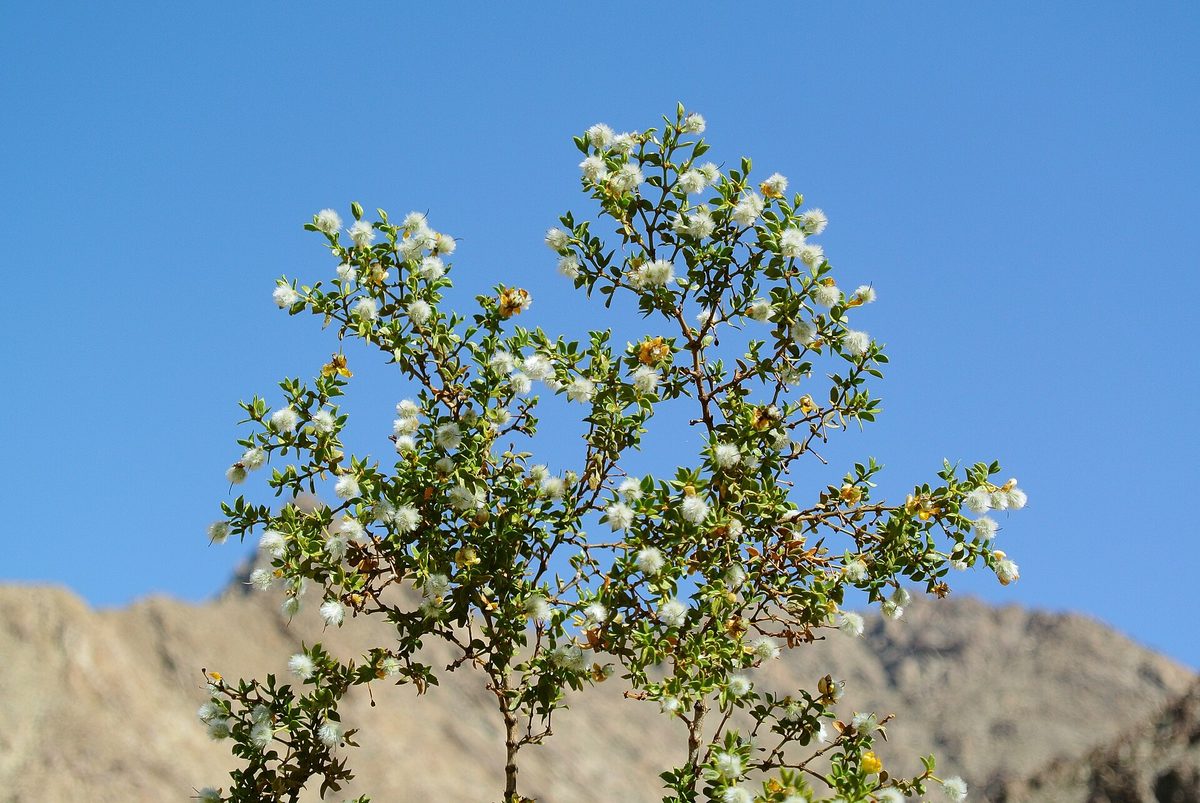
Photo: Adbar, CC BY-SA 3.0 via Wikimedia Commons

Quick facts
| Light: | Full sun and part shade (full sun preferred)12 |
|---|---|
| Water: | Dry21 source |
| Soil: | Well drained and occasionally dry; pH 6–812 |
| Hardiness: | Zones 7a–10b311 source |
| Size: | 5 ft (1.52 m)51 source |
| Growth rate: | Slow161 |
| Bloom: | Mar–Sep, Yellow7211 source |
| Cats: | Non-toxic to cats 41 |
| Dogs: | Non-toxic to dogs 41 |
| Native range: | ARI, CAL, MXE, MXG, MXN, MXS, NEV, NWM, TEX, UTA8 |
| Family: | Zygophyllaceae |
How much light does a Creosote Bush need?
Creosote bush prefers full sun, which one source defines as six or more hours of direct sunlight a day. Part shade is also listed as a setting it accepts. The outdoor light range therefore runs from full sun to part shade, with full sun as the preferred end. Aim for direct sun for six or more hours a day if you want the preferred setting.
How often to water a Creosote Bush
Creosote bush has a low water need, and its water category is dry. Dry is the only category on record, with no separate minimum or maximum beyond it. Its soil is listed as well drained and occasionally dry. One source describes the soil as loose, well-drained sand or loam.
- Water: Dry2
Best soil for a Creosote Bush
Creosote bush is listed for soil that is well drained and occasionally dry. One extension listing uses the wording good drainage. Another source describes loose, well-drained sand or loam, and names sandy, sandy loam, medium loam and caliche types. The listed soil pH runs from 6.0 to 8.0, which the source labels neutral. That band of pH 6 to 8 is the full listed range, and no other pH preference is recorded.
Hardiness and temperature
Creosote bush is listed for USDA hardiness zones 7a through 10b. The listing includes every half step between them: 7a, 7b, 8a, 8b, 9a, 9b, 10a and 10b. Zone 7a is the coldest zone on that list, and 10b is the warmest. Gardeners in zones 7 and warmer, up to zone 10, fall inside the listed range.
How to plant a Creosote Bush
Plant creosote bush in USDA zones 7a to 10b, the range listed for it. It matures to about 5 ft (1.52 m) high, and its growth rate is slow. It is a shrub, and its native status in the lower 48 US states is native. Its flowers are small, yellow and velvety. Full sun is the preferred light, with part shade also listed, and the soil should be well drained.
Winter care
Creosote bush is listed for USDA hardiness zones 7a through 10b, which covers eight half-zone steps. The coldest zone on its listing is 7a, and the warmest is 10b. Zones colder than 7a fall outside the listed range. It is an evergreen shrub.
How to propagate a Creosote Bush
Seed is the propagation method listed for creosote bush. A source describes the seed coat as hard and states that scarification of the coat induces germination. No cuttings, division or layering methods are listed for this shrub. Starting a new plant from seed is therefore the documented route.
Common problems
The one common pest on record for creosote bush is the creosote gall midge. NC State Extension notes that galls may form from the activity of that midge. The same listing says there are no known diseases or insect pests otherwise. The list of common diseases on record is empty.
| Problem | Kind |
|---|---|
| Creosote gall midge | Pest |
Is Creosote Bush toxic to cats and dogs?
The ASPCA lists creosote bush as non-toxic to cats. The ASPCA also lists it as non-toxic to dogs. NC State Extension's plant toolbox tags it as non-toxic for cats. The same toolbox tags it as non-toxic for dogs. The position for cats and the position for dogs are the same. The ASPCA entry is a direct listing of this plant, not a gap in its records. No severity level or affected plant part is recorded for either animal.
Recommended supplies
- Soil: a free-draining mix, and a pot with a drainage hole.
Questions and answers
- Is creosote bush toxic to cats and dogs?
- The ASPCA lists creosote bush as non-toxic to cats and non-toxic to dogs. NC State Extension's plant toolbox tags it as non-toxic for both animals as well.
- How much sun does creosote bush need?
- Creosote bush prefers full sun, meaning six or more hours of direct sunlight a day. Part shade is also listed as a setting it accepts.
- Which hardiness zones suit creosote bush?
- Creosote bush is listed for USDA hardiness zones 7a through 10b. Zone 7a is the coldest on that list, and 10b is the warmest.
Sources
- NC State Extension. https://plants.ces.ncsu.edu/plants/larrea-tridentata/. Accessed 14 October 2026.
- Lady Bird Johnson Wildflower Center. https://www.wildflower.org/plants/result.php?id_plant=latr2. Accessed 14 October 2026.
- NC State Extension. https://plants.ces.ncsu.edu/plants/larrea-tridentata. Accessed 14 October 2026.
- ASPCA Animal Poison Control Center. https://www.aspca.org/pet-care/aspca-poison-control/toxic-and-non-toxic-plants/chaparral. Accessed 14 October 2026.
- NC State Extension Gardener Plant Toolbox. https://plants.ces.ncsu.edu/plants/larrea-tridentata/common-name/creosote-bush/. Accessed 1 November 2026.
- Utah State University Extension. https://extension.usu.edu/ecorestore/assessment-tool?plant=163. Accessed 14 October 2026.
- Lady Bird Johnson Wildflower Center (Native Plant Database). https://www.wildflower.org/plants/result.php?id_plant=LATR2. Accessed 1 November 2026.
- Royal Botanic Gardens, Kew (World Checklist of Vascular Plants). https://sftp.kew.org/pub/data-repositories/WCVP/wcvp.zip. Accessed 4 June 2026.
How this page was made
- Written with AI assistance from the sources listed on this page. AI is never the source of a fact.