Lemon Beebrush (Aloysia citrodora)
Formerly Lippia citrodora, Verbena citrodora, Zappania citrodora
Give lemon beebrush full sun and medium moisture in well-drained soil to keep it healthy. It is a deciduous shrub that is rated for USDA zones 8a to 10b. The ASPCA lists it as toxic to both cats and dogs. Stem cuttings are the best way to propagate it.
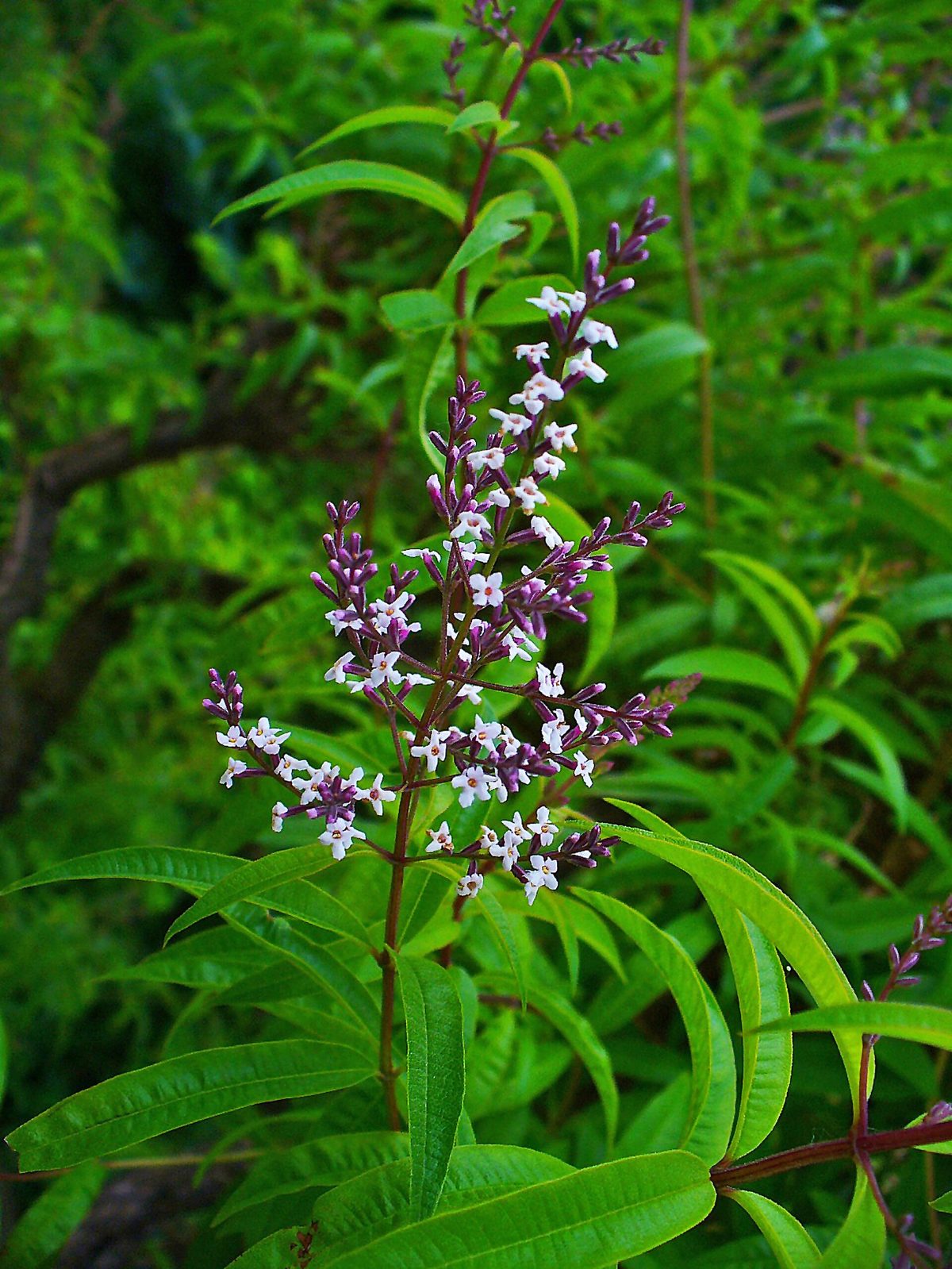
Photo: H. Zell, CC BY-SA 3.0 via Wikimedia Commons

Quick facts
| Light: | Full sun12 |
|---|---|
| Water: | Medium12 |
| Soil: | Well drained and moist13 |
| Hardiness: | Zones 8a–10b13 |
| Size: | 5.9–7.9 ft (1.8–2.4 m) × 5.9–7.9 ft (1.8–2.4 m)11 source |
| Bloom: | Jul–Sep, White and purple131 source |
| Cats: | Toxic to cats 41 |
| Dogs: | Toxic to dogs 41 |
| Native range: | AGW, BOL, PAR5 |
| Family: | Verbenaceae |
How much light does a Lemon Beebrush need?
Lemon beebrush prefers full sun, and full sun is the only outdoor light level listed for it. NC State pairs that preference with well-drained, moist soil. Give it an open spot that receives full sun rather than shade. Clemson Cooperative Extension also describes the plant as preferring moist soil and full sun.
How often to water a Lemon Beebrush
Expect medium water needs from this shrub, with no lower or higher range recorded. Clemson Cooperative Extension says it prefers moist soil. NC State describes moist soil that is also well drained. Wisconsin Extension names moist, well-drained soil as what the plant needs to thrive.
Best soil for a Lemon Beebrush
Soil for lemon beebrush should be well drained and moist. NC State describes well-drained, moist, fertile, light soils. Wisconsin Extension says the plant needs moist, well-drained soil to thrive, along with full sun in a cooler climate. Pair that soil with full sun, the light it prefers outdoors. Clemson Cooperative Extension also names moist soil alongside full sun. Medium is the water level listed for this shrub. No cited source records a preferred soil pH, so that value is not documented here.
Hardiness and temperature
Lemon beebrush is rated for USDA hardiness zones 8a through 10b, as listed by NC State Extension. Wisconsin Extension describes it as a tender deciduous woody shrub native to South and Central America, with the same zones 8a to 10b. Zone 8a is the coldest zone in that range, and zone 10b is the warmest.
Pruning a Lemon Beebrush
Light shaping in early spring is the pruning listed for this shrub. NC State says that pruning the branches in early spring encourages a bushier form. Pruning applies to a deciduous woody shrub that grows 5.9–7.9 ft (1.8–2.4 m) tall and wide in the ground.
- Pruning: Light shaping (Mar)1
How to plant a Lemon Beebrush
Plant lemon beebrush outdoors in USDA zones 8a to 10b. Give it full sun and moist, well-drained soil. Leave room for a mature size of 5.9–7.9 ft (1.8–2.4 m) in height and spread when it grows in the ground. In a pot it stays smaller, at 2 to 4 ft (0.6–1.2 m) tall and wide. Its US status is introduced in the lower 48 states and in Puerto Rico.
Winter care
In USDA zones 8a through 10b, lemon beebrush is a tender deciduous shrub, as Wisconsin Extension describes it. Zone 8a is the coldest zone in its recorded range. Zones colder than 8a fall outside that range. Light shaping in early spring is the only pruning recorded for it.
Care calendar
| Task | Jan | Feb | Mar | Apr | May | Jun | Jul | Aug | Sep | Oct | Nov | Dec |
|---|---|---|---|---|---|---|---|---|---|---|---|---|
| Prune | Prune in Mar | |||||||||||
| Bloom | Bloom in Jul | Bloom in Aug | Bloom in Sep |
How to propagate a Lemon Beebrush
Stem cuttings are the propagation method listed for lemon beebrush. NC State calls stem cuttings the best way to propagate it. The same source says seed set is variable in North America. The plant is recorded as a shrub, and stem cuttings are the only method on file.
- Propagation: Stem cuttings1
Common problems
NC State lists four pests as occasional problems for lemon beebrush: aphids, whiteflies, mealybugs and spider mites. Each of the four is described as an occasional problem rather than a constant one. These pests are recorded on a shrub that grows in full sun and moist, well-drained soil.
- Common pests: aphids, whiteflies, mealybugs and spider mites1
| Problem | Kind |
|---|---|
| Aphids | Pest |
| Whiteflies | Pest |
| Mealybugs | Pest |
| Spider mites | Pest |
Is Lemon Beebrush toxic to cats and dogs?
For cats, the ASPCA Animal Poison Control Center lists this plant as toxic. NC State Extension flags it as a problem for cats as well. For dogs, the ASPCA also lists the plant as toxic. NC State Extension likewise flags it as a problem for dogs. This page records the position for cats and for dogs separately, and the position is toxic for both.
Pet-safe alternatives
Recommended supplies
- Soil: a free-draining mix, and a pot with a drainage hole.
Questions and answers
- Is lemon beebrush toxic to cats and dogs?
- The ASPCA lists lemon beebrush as toxic to cats and toxic to dogs. NC State Extension also flags it as a problem for both cats and dogs.
- How much sun does lemon beebrush need?
- It prefers full sun. NC State pairs that with well-drained, moist, fertile, light soil. Clemson Cooperative Extension also describes it as liking moist soil and full sun.
- How do you propagate lemon beebrush?
- NC State says the best propagation is by stem cuttings. Seed set is variable in North America, according to the same source. Stem cuttings are the only propagation method recorded for this shrub.
Sources
- NC State Extension Gardener Plant Toolbox. https://plants.ces.ncsu.edu/plants/aloysia-citriodora/. Accessed 14 October 2026.
- Clemson Cooperative Extension HGIC. https://hgic.clemson.edu/factsheet/herbs/. Accessed 14 October 2026.
- University of Wisconsin-Madison Division of Extension (Wisconsin Horticulture). https://hort.extension.wisc.edu/articles/lemon-scented-plants/. Accessed 14 October 2026.
- ASPCA Animal Poison Control Center. https://www.aspca.org/pet-care/aspca-poison-control/toxic-and-non-toxic-plants/lemon-verbena. Accessed 14 October 2026.
- Royal Botanic Gardens, Kew (World Checklist of Vascular Plants). https://sftp.kew.org/pub/data-repositories/WCVP/wcvp.zip. Accessed 4 June 2026.
How this page was made
- Written with AI assistance from the sources listed on this page. AI is never the source of a fact.