Indianhemp (Apocynum cannabinum)
Formerly Apocynum suksdorfii, Cynopaema cannabinum, Apocynum album
Full sun is the preferred exposure for Indian hemp (Apocynum cannabinum), and part shade is also listed. Its water need is high, with the level recorded as wet. The ASPCA lists the plant as toxic to cats and toxic to dogs. Pet Poison Helpline says cardiac toxins are present within the entire plant.
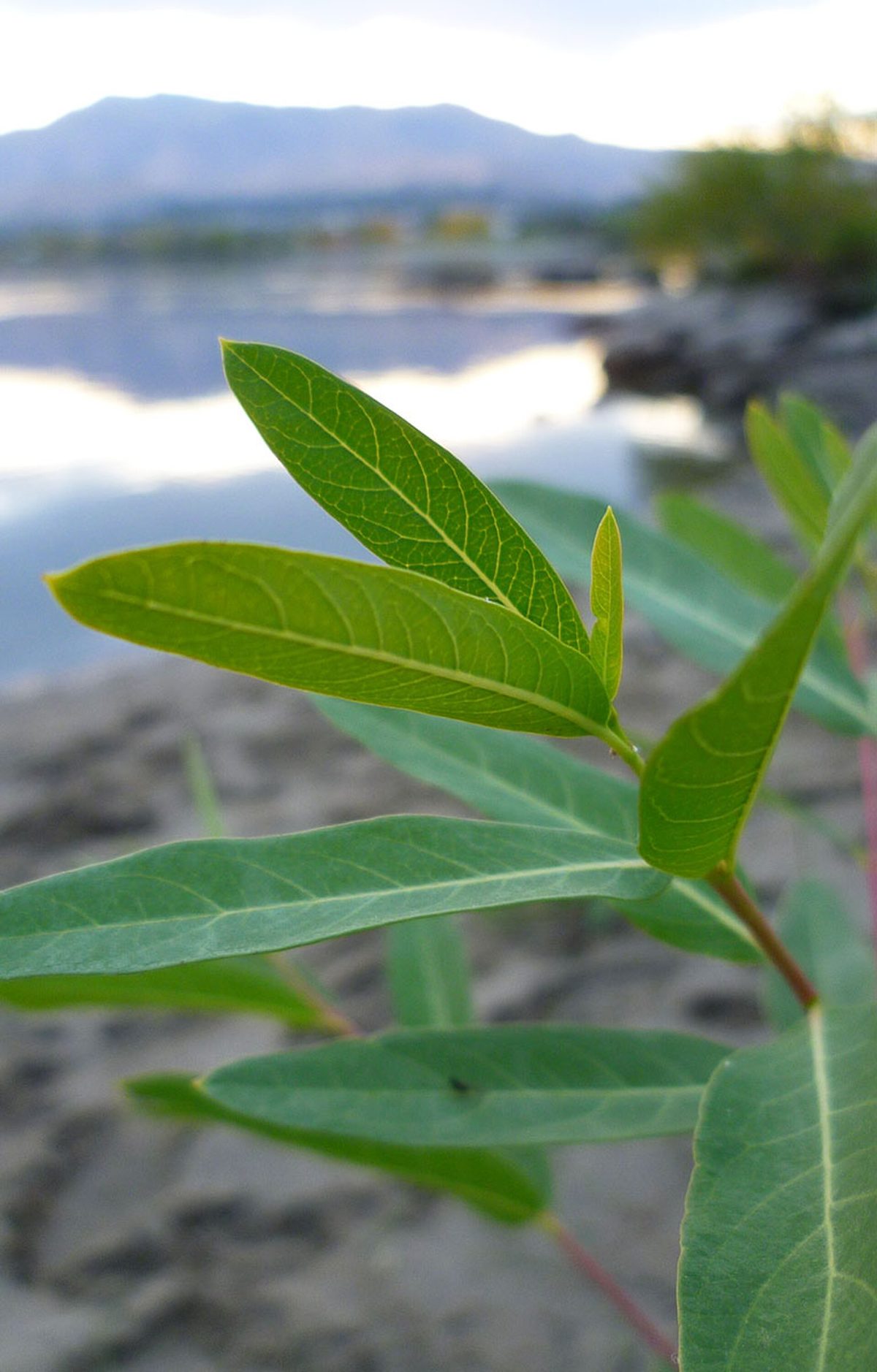
Photo: Thayne Tuason, CC BY-SA 4.0 via Wikimedia Commons

Quick facts
| Light: | Full sun and part shade (full sun preferred)12 |
|---|---|
| Water: | Wet21 source |
| Soil: | Moist and occasionally dry11 source |
| Hardiness: | Zones 3a–11b31 source |
| Size: | 3–4 ft (0.91–1.22 m) × 1–2.5 ft (0.3–0.76 m)211 source |
| Growth rate: | Rapid11 source |
| Bloom: | May–Aug, Green, pink, white and brown211 source |
| Cats: | Toxic to cats (1 source) 4 |
| Dogs: | Toxic to dogs 45 |
| Native range: | ABT, ALA, ARI, ARK, BRC, CAL, CNT, COL, DEL, FLA, GEO, IDA, ILL, INI, IOW, KAN, KTY, LOU, MAI, MAN, MAS, MIC, MIN, MNT, MRY, MSI, MSO, MXE, MXN, NBR, NCA, NDA, NEB, NEV, NFL, NSC, NWH, NWJ, NWM, NWT, NWY, OHI, OKL, ONT, ORE, PEN, QUE, RHO, SAS, SCA, SDA, TEN, TEX, UTA, VER, VRG, WAS, WDC, WIS, WVA, WYO6 |
| Family: | Apocynaceae |
How much light does an Indianhemp need?
Direct sunlight for six or more hours a day counts as full sun, and full sun is the preferred exposure. Part shade is also listed as an exposure the plant accepts.
Partial shade is described as direct sun for only part of the day, between 2 and 6 hours. The minimum sun recorded for Indian hemp is 2 hours a day.
How often to water an Indianhemp
Indian hemp has a high water need, and the recorded water level for the plant is wet. Its listed soil drainage conditions are moist and occasionally dry.
The plant also prefers sandy, well-drained soil in full sun. Full sun means six or more hours of direct sunlight a day.
- Water: Wet2
Best soil for an Indianhemp
Sandy soil that drains well is the preference named for a plant growing in full sun. The listed drainage conditions are moist and occasionally dry, and both appear in the record for this plant.
Full sun is the preferred exposure for this plant, and the sandy soil preference is given for that setting. That description also gives a size of 2 to 4 feet tall and 1 to 2 feet wide.
- Soil drainage: Moist and occasionally dry1
Hardiness and temperature
Zones 3a through 11b make up the hardiness range recorded for this plant. Every half-zone step from 3a to 11b appears in that list, with no gaps.
Zone 3a is the lowest zone in the list, and zone 11b is the highest. A herbaceous perennial, it is listed for this full span of zones.
- Hardiness: Zones 3a–11b3
How to plant an Indianhemp
Choose a spot in full sun, or in part shade, within zones 3a to 11b. Leave room for a mature spread of 1–2.5 ft (0.3–0.76 m).
The plant reaches 3–4 ft (0.91–1.22 m) tall, with an erect habit. Sandy, well-drained soil is the stated preference in full sun. Seed and division are the listed ways to get new plants started. Its growth rate is rapid.
- Hardiness: Zones 3a–11b3
Winter care
Zone 3a to zone 11b is the full hardiness range recorded for this plant. Every half-zone step in that range is listed, from 3a up to 11b.
The plant type recorded for Indian hemp is herbaceous perennial. Its US native status is listed as native in the lower 48 states.
- Hardiness: Zones 3a–11b3
How to propagate an Indianhemp
Two propagation methods are listed for Indian hemp: seed and division. You can start new plants from seed, and you can also divide an existing plant.
Both methods are listed for this species, and no other method appears in the record. The plant is a herbaceous perennial with an erect habit. Its growth rate is listed as rapid.
Common problems
The pest record for Indian hemp lists no significant problems, and no named pests. The disease record gives the same answer, with no significant problems and no named diseases.
Both lists are empty, so there are no named pests or diseases to look for.
Is Indianhemp toxic to cats and dogs?
The ASPCA Animal Poison Control Center lists Indian hemp as toxic to cats. It gives the same listing for dogs, which are also recorded as toxic.
Pet Poison Helpline adds that dogbane contains cardiac toxins, called cardenolides, within the entire plant. Those cardiac toxins are named for the entire plant rather than for one part. On this page, the position for cats is toxic, and the position for dogs is toxic.
Pet-safe alternatives
Recommended supplies
- Soil: a mix that holds moisture without staying wet.
Questions and answers
- Is Indian hemp toxic to cats and dogs?
- The ASPCA Animal Poison Control Center lists it as toxic to cats and toxic to dogs. Pet Poison Helpline says dogbane contains cardiac toxins, called cardenolides, within the entire plant.
- How much sun does Indian hemp need?
- Full sun is preferred, which means six or more hours of direct sunlight a day. Part shade is also listed, and the minimum sun recorded is 2 hours a day.
- How big does Indian hemp get?
- It reaches 3–4 ft (0.91–1.22 m) tall and spreads about 1–2.5 ft (0.3–0.76 m) wide. Its habit is erect and its growth rate is rapid.
Sources
- NC State Extension. https://plants.ces.ncsu.edu/plants/apocynum-cannabinum/. Accessed 14 October 2026.
- Lady Bird Johnson Wildflower Center. https://www.wildflower.org/plants/result.php?id_plant=APCA. Accessed 14 October 2026.
- NC State Extension. https://plants.ces.ncsu.edu/plants/apocynum-cannabinum. Accessed 14 October 2026.
- ASPCA Animal Poison Control Center. https://www.aspca.org/pet-care/aspca-poison-control/toxic-and-non-toxic-plants/dogbane-hemp. Accessed 14 October 2026.
- Pet Poison Helpline. https://www.petpoisonhelpline.com/poison/dogbane/. Accessed 14 October 2026.
- Royal Botanic Gardens, Kew (World Checklist of Vascular Plants). https://sftp.kew.org/pub/data-repositories/WCVP/wcvp.zip. Accessed 4 June 2026.
How this page was made
- Written with AI assistance from the sources listed on this page. AI is never the source of a fact.