Queen of the Meadow (Filipendula ulmaria)
Formerly Spiraea ulmaria, Ulmaria pentapetala, Ulmaria palustris
Queen of the meadow (Filipendula ulmaria) grows in full sun or part shade, and full sun is preferred. It is a herbaceous perennial that is hardy in USDA zones 3a to 9b. It reaches about 4 ft (1.22 m) tall. Watering needs and pet toxicity are not documented on this page.
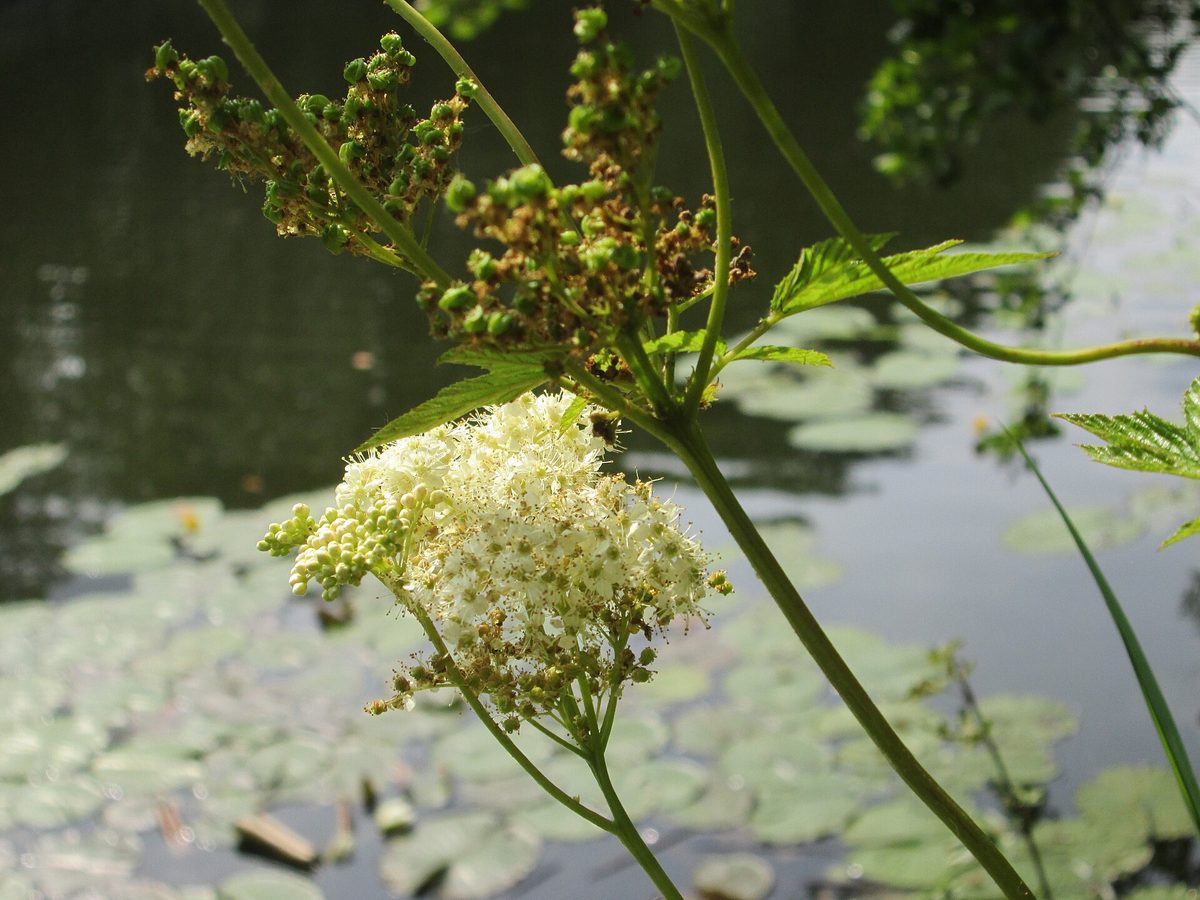
Photo: Wikimedia Commons contributor, CC0 via Wikimedia Commons

Quick facts
| Light: | Full sun and part shade (full sun preferred)11 source |
|---|---|
| Soil: | Well drained, moist and occasionally wet; pH 6–811 source |
| Hardiness: | Zones 3a–9b11 source |
| Size: | 4 ft (1.22 m) × 3 ft (0.91 m)21 source |
| Growth rate: | Moderate111 source |
| Bloom: | Jun–Aug, White and pink11 source |
| Cats: | Not documented by major sources |
| Dogs: | Not documented by major sources |
| Native range: | ALB, ALT, AUT, BGM, BLR, BLT, BRY, BUL, CHX, CZE, DEN, FIN, FRA, GER, GRB, GRC, HUN, ICE, IRE, IRK, IRN, ITA, KAZ, KGZ, KRA, KRY, MON, NCS, NET, NOR, POL, POR, PRM, ROM, RUC, RUE, RUN, RUS, RUW, SPA, SWE, SWI, TCS, TUR, TVA, UKR, WHM, WSB, YAK, YUG3 |
| Family: | Rosaceae |
How much light does a Queen of the Meadow need?
Full sun is the preferred exposure for this plant. It also accepts part shade, which the source describes as semi-shade. The source ties full sun to soil that is kept moist throughout the growing season. The minimum listed is 2 hours of direct sun a day, which is the low end of a partial shade range of 2 to 6 hours.
Best soil for a Queen of the Meadow
Humus-rich soil that is both moist and well drained suits this plant. Its listed drainage conditions are well drained, moist and occasionally wet. It grows well in heavy clay soils, and wet soil is among its listed tolerances. It does not tolerate dry soils or acid soils. Dry ground and acid ground are the two conditions to avoid. The listed pH range is 6 to 8, which the source describes as neutral.
Hardiness and temperature
Zones 3a to 9b are the hardiness range listed for this plant. Zone 3a is the coldest end of that range and zone 9b is the warmest. No cited source records a minimum temperature in degrees. Humidity needs are not documented on this page.
- Hardiness: Zones 3a–9b1
Pruning a Queen of the Meadow
You can cut the plant back hard when you want it to produce new growth. Deadheading the flowers is also best, because it prevents the plant from spreading. Hard renewal pruning and deadheading are the two pruning types listed for this plant. Deadheading is the step the source gives for preventing spread.
How to plant a Queen of the Meadow
Queen of the meadow is hardy in USDA zones 3a to 9b. Allow for a mature height of about 4 ft (1.22 m) and a spread of about 3 ft (0.91 m). Pick a spot with full sun or part shade, with at least 2 hours of direct sun a day. Soil that is moist and well drained, with a pH between 6 and 8, fits its listed needs. In the contiguous United States it is an introduced plant, not a native one.
- Hardiness: Zones 3a–9b1
Winter care
Hardiness is listed from zone 3a to zone 9b, which covers winter outdoors across that range. The plant is a herbaceous perennial. No cited source records a minimum temperature. Mulching, covering and winter watering are not documented for this plant. The sources do not say when to cut it back for winter.
- Hardiness: Zones 3a–9b1
How to propagate a Queen of the Meadow
Two propagation methods are listed for queen of the meadow, seed and division. No cited source gives sowing depth, timing or temperature for seed. The sources also leave out how to divide the plant. At maturity the plant is about 4 ft (1.22 m) tall and 3 ft (0.91 m) wide, which is useful to know when you plan space for new plants.
Common problems
The source reports no significant diseases or insect pests. Mildew can sometimes be a problem, though. Mildew is the only named issue, and the source does not describe its symptoms or any treatment. No pest is listed for this plant.
| Problem | Kind |
|---|---|
| Mildew | Disease |
Is Queen of the Meadow toxic to cats and dogs?
Recommended supplies
- Soil: a free-draining mix, and a pot with a drainage hole.
Questions and answers
- Does queen of the meadow need full sun?
- Full sun is preferred, but part shade is also listed. The source ties full sun to soil that is kept moist through the growing season. The minimum listed is 2 hours of direct sun a day.
- What soil does queen of the meadow like?
- It prefers humus-rich, moist, well-drained soil with a pH of 6 to 8. It grows well in heavy clay and tolerates wet soil. It does not tolerate dry or acid soils.
- How big does queen of the meadow get?
- It reaches about 4 ft (1.22 m) tall and 3 ft (0.91 m) wide at maturity. Its listed growth rate is moderate. The flowers are white and pink, and bees are listed as visitors.
Sources
- NC State Extension Gardener Plant Toolbox. https://plants.ces.ncsu.edu/plants/filipendula-ulmaria/. Accessed 14 October 2026.
- University of Minnesota Extension. https://extension.umn.edu/garden-and-home/yard-and-garden/gardening-in-minnesota/gardening-in-the-shade. Accessed 14 October 2026.
- Royal Botanic Gardens, Kew (World Checklist of Vascular Plants). https://sftp.kew.org/pub/data-repositories/WCVP/wcvp.zip. Accessed 4 June 2026.
How this page was made
- Written with AI assistance from the sources listed on this page. AI is never the source of a fact.