Common Wormwood (Artemisia vulgaris)
Formerly Artemisia virens, Artemisia affinis, Artemisia apetala
Common wormwood, Artemisia vulgaris, takes full sun or part shade outdoors. Full sun is preferred. It grows 2–6 ft (0.61–1.83 m) tall. It is an herbaceous perennial. It is hardy in zones 3a–8b. Watering needs and pet toxicity for cats and dogs are not documented on this page. Soil should drain well.
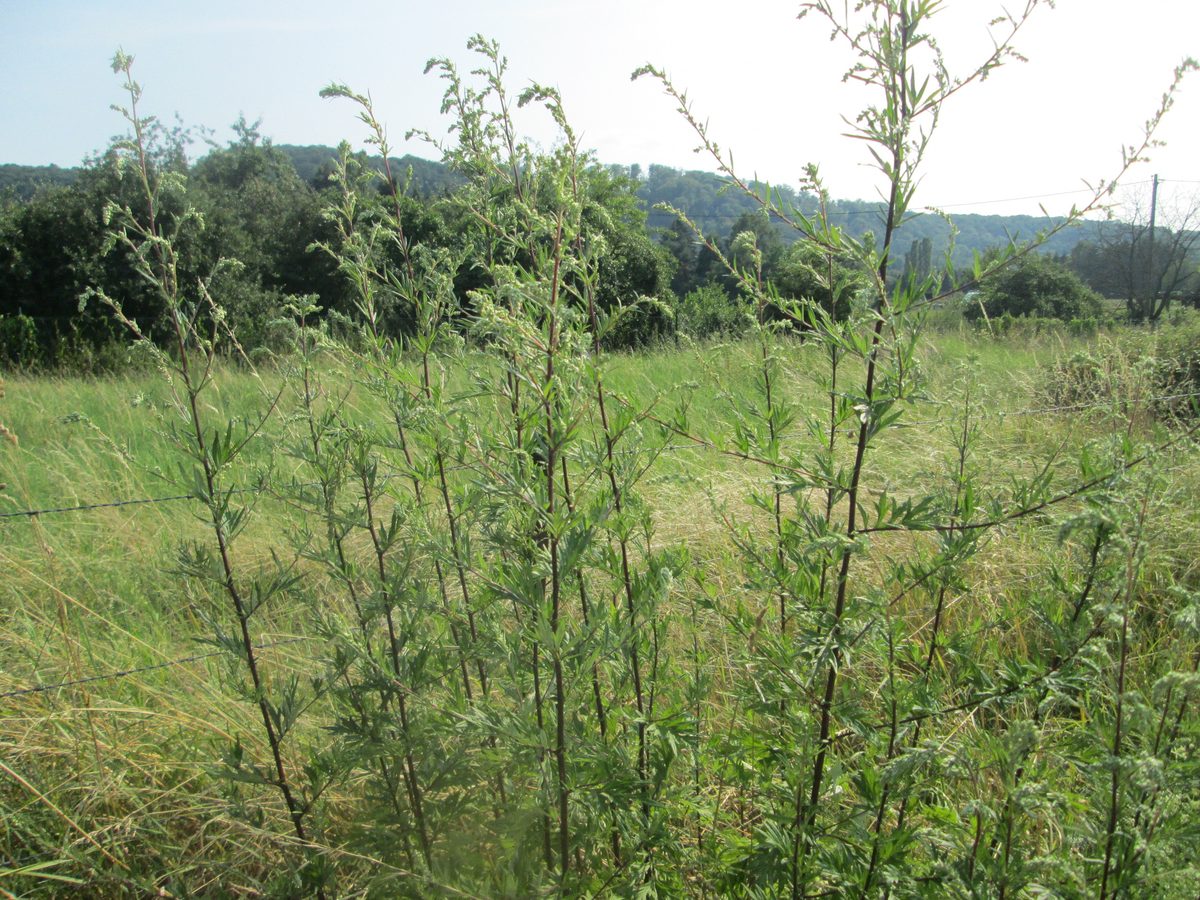
Photo: Wikimedia Commons contributor, CC0 via Wikimedia Commons

Quick facts
| Light: | Full sun and part shade (full sun preferred)11 source |
|---|---|
| Soil: | Well drained and occasionally dry; pH 6–811 source |
| Hardiness: | Zones 3a–8b11 source |
| Size: | 2–6 ft (0.61–1.83 m) × 3–6 ft (0.91–1.83 m)211 source |
| Growth rate: | Rapid11 source |
| Bloom: | Jul–Oct, Yellow, green and purple11 source |
| Cats: | Not documented by major sources |
| Dogs: | Not documented by major sources |
| Native range: | AFG, ALB, ALG, ALT, AMU, ASS, AUT, BGM, BLR, BLT, BRY, BUL, CHC, CHN, CHQ, CHT, CHX, COR, CTA, CZE, DEN, EAI, FIN, FRA, GER, GRC, HUN, IND, IRK, IRN, IRQ, ITA, JAP, KAM, KAZ, KGZ, KHA, KRA, KRY, KUR, LAO, MON, MYA, NCS, NET, NOR, PAK, POL, POR, PRM, ROM, RUC, RUE, RUN, RUS, RUW, SAK, SAR, SPA, SWE, SWI, TCS, THA, TUE, TUN, TUR, TVA, TZK, UKR, UZB, WHM, WSB, YAK, YUG3 |
| Family: | Asteraceae |
How much light does a Common Wormwood need?
Outdoors, common wormwood grows in full sun or part shade, and full sun is preferred. Full sun means 6 or more hours of direct sunlight a day. Part shade means direct sunlight for only part of the day, between 2 and 6 hours. The minimum listed is 2 hours of sun a day. Choose a spot that gets at least that much direct light.
Best soil for a Common Wormwood
Common wormwood is listed for well drained soil, and the listing includes soil that is occasionally dry. The listed drainage is good, and root rot can occur in soils that are too moist. The listed soil pH is neutral. Neutral here means a pH from 6.0 to 8.0. Pick a planting site that matches both the drainage and the pH range described here.
Hardiness and temperature
Common wormwood is hardy in USDA zones 3a to 8b. The listed zones are 3a, 3b, 4a, 4b, 5a, 5b, 6a, 6b, 7a, 7b, 8a and 8b. Zone 3a is the coldest listed and zone 8b is the warmest. Check your own zone against that range before you plant. The range spans twelve half-zone steps.
- Hardiness: Zones 3a–8b1
How to plant a Common Wormwood
Plant common wormwood where it can reach a spread of 3–6 ft (0.91–1.83 m). Its erect stems grow 2 to 6 ft (0.61 to 1.83 m) tall. Check that your USDA zone falls between 3a and 8b. Choose a spot in full sun or part shade, with full sun preferred. The site should have well drained soil with a pH from 6 to 8. The plant has a rapid growth rate.
- Hardiness: Zones 3a–8b1
Winter care
Outdoors, common wormwood is listed for USDA zones 3a to 8b. It is an herbaceous perennial. Herbaceous perennials die back to the ground each year. In the coldest listed zone, 3a, the plant is still rated hardy. In the warmest listed zone, 8b, it is rated hardy as well. Zones colder than 3a or warmer than 8b are outside that listing.
- Hardiness: Zones 3a–8b1
How to propagate a Common Wormwood
You can propagate common wormwood from seed or by root cuttings. Those are the two methods listed for this plant. Seed is the first method listed, and root cutting is the second. Artemisia vulgaris is propagated by both methods. Choose either seed or root cuttings to start new plants. No cited source gives timing, depth or rooting conditions for either method. The methods named are seed and root cutting, with no others recorded.
- Propagation: Seed and root cuttings1
Common problems
Common pests include aphids, mites, scale and leaf beetles. The fragrant leaves help deter these pests. Root rot is the disease listed, and it can occur in too moist soils. Scale and leaf beetles are on the same list as aphids and mites.
| Problem | Kind |
|---|---|
| Aphids | Pest |
| Mites | Pest |
| Scale insects | Pest |
| Leaf beetles | Pest |
| Root rot | Disease |
Is Common Wormwood toxic to cats and dogs?
Recommended supplies
- Soil: a free-draining mix, and a pot with a drainage hole.
Questions and answers
- How much sun does common wormwood need?
- Full sun is preferred, and part shade is also listed. A full sun site gets 6 or more hours of direct sunlight a day. Part shade means 2 to 6 hours of direct sun, and 2 hours a day is the minimum listed.
- Which zones can common wormwood grow in?
- It is listed as hardy in USDA zones 3a to 8b. That range runs from 3a, the coldest zone listed, to 8b, the warmest. Zones colder than 3a or warmer than 8b are outside the listing.
- How tall and wide does common wormwood grow?
- The erect stems are 2 to 6 ft (0.61 to 1.83 m) tall. The spread is 3 to 6 ft (0.91 to 1.83 m). The plant also has a rapid growth rate.
Sources
- NC State Extension Gardener Plant Toolbox. https://plants.ces.ncsu.edu/plants/artemisia-vulgaris/. Accessed 24 September 2026.
- Ohio State University Extension (CFAES / Ohio Perennial and Biennial Weed Guide). https://weedguide.cfaes.osu.edu/singlerecord.asp?id=75. Accessed 28 October 2026.
- Royal Botanic Gardens, Kew (World Checklist of Vascular Plants). https://sftp.kew.org/pub/data-repositories/WCVP/wcvp.zip. Accessed 4 June 2026.
How this page was made
- Written with AI assistance from the sources listed on this page. AI is never the source of a fact.