Common Beet (Beta vulgaris)
Formerly Beta maritima, Beta cicla, Beta alba
Beets grow best in full sun, though they also tolerate part shade, and they need medium, consistent soil moisture to produce a good root crop. The ASPCA and NC State Extension both list beets as non-toxic to cats and dogs.
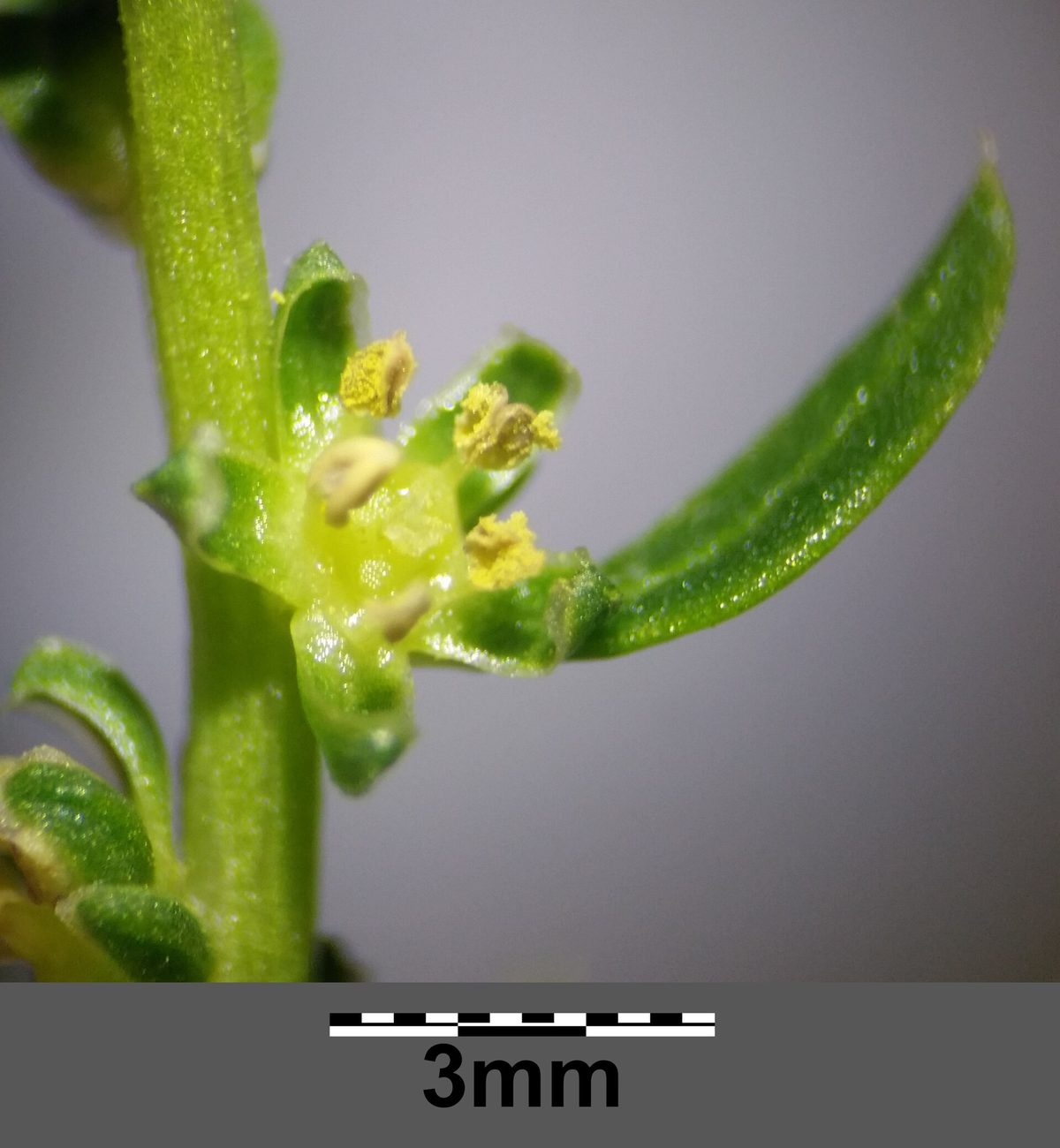
Photo: Stefan.lefnaer, CC BY-SA 4.0 via Wikimedia Commons

Quick facts
| Light: | Full sun and part shade (full sun preferred)12 |
|---|---|
| Water: | Medium11 source |
| Soil: | Well drained and moist; pH 6–811 source |
| Hardiness: | Zones 2a–11b11 source |
| Size: | 1–1.5 ft (0.3–0.46 m) × 0.7–1 ft (0.2–0.3 m)11 source |
| Growth rate: | Moderate11 source |
| Bloom: | Green11 source |
| Cats: | Non-toxic to cats 91 |
| Dogs: | Non-toxic to dogs 91 |
| Native range: | ALB, ALG, AZO, BAL, BGM, BUL, CNY, COR, CYP, EAI, EGY, FRA, GER, GRB, GRC, GST, IND, IRE, IRN, IRQ, ITA, KRI, KRY, KUW, LBS, LBY, MOR, NCS, NET, OMA, PAK, PAL, POR, SAR, SAU, SIC, SIN, SPA, TCS, TUE, TUN, TUR, YEM, YUG10 |
| Family: | Amaranthaceae |
How much light does a Common Beet need?
Beets need full sun outdoors, meaning at least six hours of direct light every single day. Part shade is also listed as a workable spot for growing this crop outdoors. Of the two conditions, full sun is the one that extension sources mark as preferred. NC State Extension describes full sun as six or more hours of direct sunlight a day, and Oregon State University Extension lists full or partial sun as suitable for this crop.
How often to water a Common Beet
Beets need medium, consistent moisture to produce a good crop. The soil should stay moist yet well drained, never left standing in water. Give the bed an even, steady level of moisture through the season. That medium, steady moisture level is what beets need most to grow well. NC State Extension specifically notes that beets need consistent moisture in order to produce a good crop. The same source also lists good drainage as part of what this plant's soil needs.
- Water: Medium1
Best soil for a Common Beet
Beets grow best in soil that drains well and stays moist. Avoid a spot where water collects and sits for long periods, since good drainage is part of what this crop needs. Aim for a soil pH between 6 and 8; extension sources describe this range as neutral. A pH anywhere in that 6-to-8 band is listed as suitable for growing beets. NC State Extension describes this pH band as neutral, spanning from 6.0 up to 8.0 on the pH scale. NC State Extension also separately lists good drainage as a requirement for growing this crop.
Hardiness and temperature
Beets are hardy from USDA zone 2a up to zone 11b. That hardiness range is recorded across a long run of zones: 2a, 2b, 3a, 3b, 4a, 4b, 5a, 5b, 6a, 6b, 7a, 7b, 8a, 8b, 9a, 9b, 10a, 10b, 11a, and 11b. Extension sources also classify beets as a cool-season vegetable. That listing groups beets with other cool-season crops such as cabbage, collards, and broccoli.
- Hardiness: Zones 2a–11b1
Fertilizing a Common Beet
Beets need only light feeding, applied once a year. One source recommends ¼ cup of a nitrogen fertilizer, such as a 21-0-0 blend, per 10 ft (3 m) of row. Apply it about six weeks after the seedlings emerge. Beyond that single light application, this crop does not call for repeated feeding through the season. This light, once-a-year feeding is what the frequency fact lists, rather than repeated fertilizing through the growing season.
- Fertilizer: Light, once a year3
How to plant a Common Beet
Beets grow across USDA hardiness zones 2a through 11b. Space plants about 0.7 to 1 ft (0.2-0.3 m) apart at maturity, matching the width this crop reaches when fully grown. At maturity, beets also reach a height of about 1 to 1.5 ft (0.3-0.46 m). Beets are started from seed, which is the only propagation method listed for growing this crop. From seeding, this crop reaches harvest size in roughly 50 to 60 days, following germination in 10 to 15 days.
- Hardiness: Zones 2a–11b1
Winter care
Beets are hardy across USDA zones 2a through 11b. This crop is also listed as a cool-season vegetable by extension sources. Cabbage, collards, and broccoli share that same cool-season classification with beets. Even at zone 2a, the lower end of that listed range, this crop is still rated as hardy there.
- Hardiness: Zones 2a–11b1
When and how to harvest Common Beet
Pull beetroots when they are 1 to 3 in (2.5-7.6 cm) in diameter. Expect a harvest about 50 to 60 days after direct seeding. Germination itself takes 10 to 15 days, with the rest of that window spent growing the root to harvest size. Diameter, not calendar days alone, is the indicator extension sources use to decide when beets are ready.
How to propagate a Common Beet
Beets are propagated from seed. What looks like a single beet seed is actually a small fruit that contains several true seeds inside it. Seed is the only propagation method listed for growing beets outdoors. That sown unit is technically a fruit rather than a single true seed, since it holds more than one seed inside.
- Propagation: Seed5
Common problems
Beets can attract leafminers, flea beetles, beet armyworm, and beet leafhopper. Beet armyworm can kill young seedlings, eat large portions of leaves, and stunt growth by feeding on buds. Common diseases include cercospora leaf spot, rhizomania, and curly top. Cercospora leaf spot can cause serious defoliation for processing crops, and rhizomania is described as one of the most destructive diseases a beet crop can have.
| Problem | Kind |
|---|---|
| Leafminers | Pest |
| Flea beetles | Pest |
| Beet armyworm | Pest |
| Beet leafhopper | Pest |
| Cercospora leaf spot | Disease |
| Rhizomania | Disease |
| Curly top | Disease |
Is Common Beet toxic to cats and dogs?
Beets are listed as non-toxic to cats and non-toxic to dogs. The ASPCA Animal Poison Control Center records beets as non-toxic to dogs, non-toxic to cats, and non-toxic to horses. NC State Extension separately lists this plant as non-toxic for both cats and dogs. No severity level is listed for beets, since the reported finding is a straightforward non-toxic rating rather than a toxic one. The ASPCA's rating for beets covers dogs, cats, and horses together, though this page focuses on cats and dogs. Because no toxic signs are listed for either animal, there is nothing on the record beyond this non-toxic finding.
Recommended supplies
- Soil: a free-draining mix, and a pot with a drainage hole.
Questions and answers
- Is beet toxic to cats or dogs?
- Beets are listed as non-toxic to both cats and dogs by the ASPCA and by NC State Extension. Neither the ASPCA nor NC State Extension lists a severity level, since each reports a straightforward non-toxic finding.
- How much light do beets need?
- Full sun is the light condition extension sources mark as best for beets, meaning six or more hours of direct sun each day. Part shade also works, and is listed as a suitable alternative for growing this crop outdoors. If your garden gets less than full sun, part shade is the other condition listed as acceptable for beets.
- When should you harvest beets?
- Beets are ready to pull once their roots reach 1 to 3 in (2.5-7.6 cm) across. You can usually expect that stage around 50 to 60 days from the day you sow direct seed. Gardeners typically see germination within 10 to 15 days of sowing, with full harvest size reached around 50 to 60 days total.
Sources
- NC State Extension Gardener Plant Toolbox. https://plants.ces.ncsu.edu/plants/beta-vulgaris-garden-beet-group/. Accessed 14 October 2026.
- Oregon State University Extension Service. https://extension.oregonstate.edu/imported-publication/beets. Accessed 14 October 2026.
- Utah State University Extension. https://extension.usu.edu/yardandgarden/research/beets-in-the-garden. Accessed 28 October 2026.
- University of Maryland Extension. https://extension.umd.edu/resource/growing-beets-home-garden. Accessed 14 October 2026.
- Iowa State University Extension and Outreach. https://yardandgarden.extension.iastate.edu/how-to/growing-beets-home-garden. Accessed 14 October 2026.
- UC Statewide Integrated Pest Management Program. https://ipm.ucanr.edu/PMG/r108301211.html. Accessed 14 October 2026.
- Penn State Extension. https://extension.psu.edu/cercospora-leaf-spot-on-table-beets. Accessed 14 October 2026.
- UC Statewide Integrated Pest Management Program. https://ipm.ucanr.edu/agriculture/sugarbeet/rhizomania/. Accessed 14 October 2026.
- ASPCA Animal Poison Control Center. https://www.aspca.org/pet-care/aspca-poison-control/toxic-and-non-toxic-plants/beets. Accessed 14 October 2026.
- Royal Botanic Gardens, Kew (World Checklist of Vascular Plants). https://sftp.kew.org/pub/data-repositories/WCVP/wcvp.zip. Accessed 4 June 2026.
How this page was made
- Written with AI assistance from the sources listed on this page. AI is never the source of a fact.