English Lavender (Lavandula angustifolia)
Formerly Lavandula officinalis, Lavandula spica, Lavandula vera
English lavender thrives outdoors in full sun, though it also tolerates part shade. It needs only light to moderate water, so let the soil dry out between waterings. This plant is toxic to both cats and dogs, so keep pets away from it.
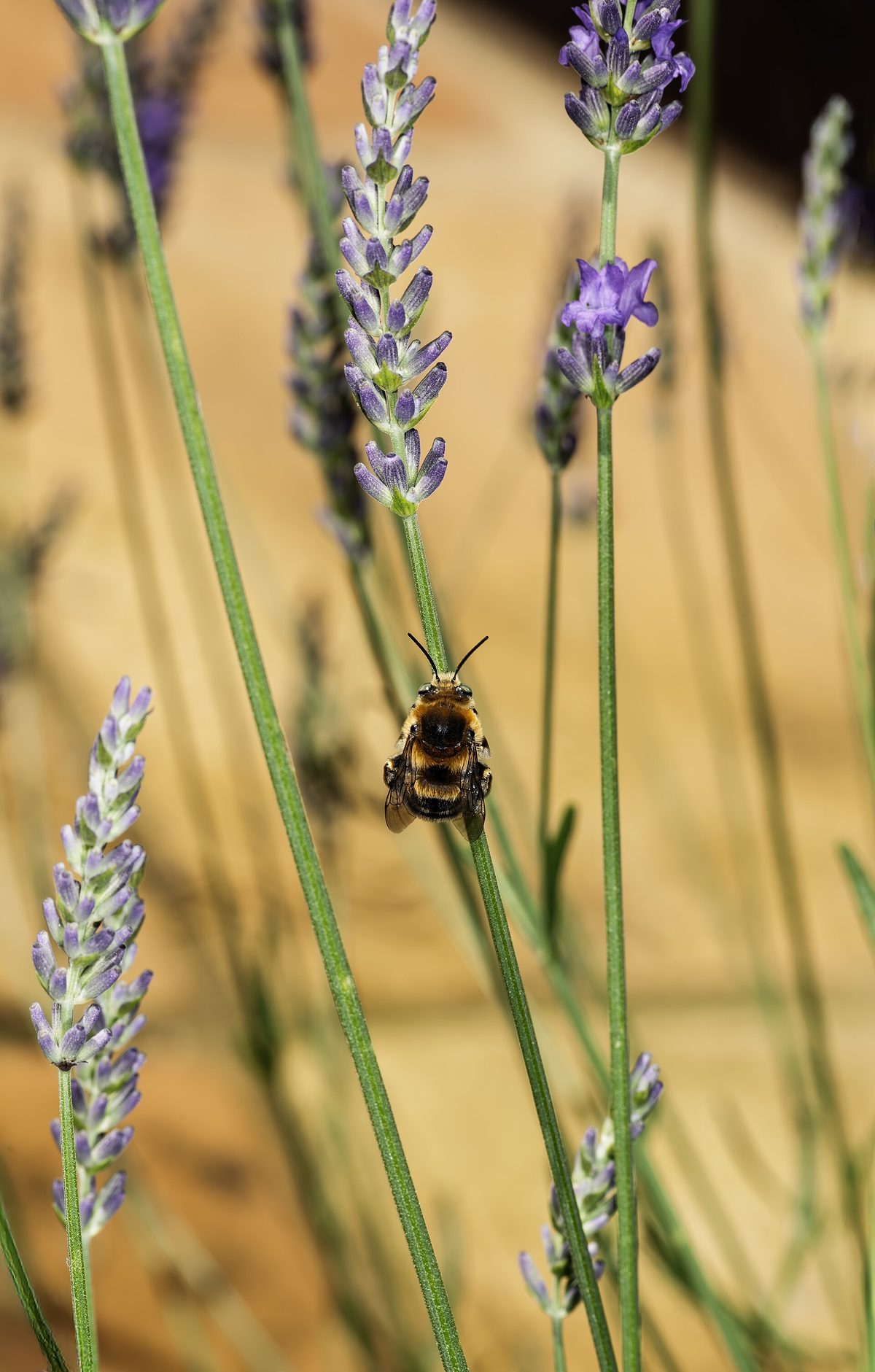
Photo: Didier Descouens, CC BY-SA 4.0 via Wikimedia Commons

Quick facts
| Light: | Full sun and part shade (full sun preferred)12 |
|---|---|
| Water: | Dry to medium11 source |
| Soil: | Well drained; pH 6–823141 source |
| Hardiness: | Zones 5a–9b11 source |
| Size: | 1–3 ft (0.3–0.91 m) × Sources differ: Utah State University Extension8219 |
| Growth rate: | Moderate11 source |
| Bloom: | Purple, pink and white81 |
| Cats: | Toxic to cats (1 source) 7 |
| Dogs: | Toxic to dogs (1 source) 7 |
| Native range: | FRA, ITA, SPA10 |
| Family: | Lamiaceae |
How much light does an English Lavender need?
Outdoors, English lavender does best in full sun, though it also tolerates part shade. Full sun suits it better than filtered or deep shade. Give it an open, sunny spot rather than a shaded corner, since full sun is its preferred condition. Outdoors, both full sun and part shade are listed as suitable light levels for this plant. This preference for full sun applies to beds, borders, and containers placed outdoors.
How often to water an English Lavender
This plant needs only light to moderate water outdoors, ranging from dry to medium moisture. Let the soil dry out between waterings rather than keeping it constantly moist. Well-drained soil helps prevent the roots from sitting in water after you irrigate. Check the top few inches of soil and water again once it feels dry. Avoid letting the plant sit in standing water after heavy rain, since that raises the risk of root rot.
- Water: Dry to medium1
Best soil for an English Lavender
Well-drained soil is essential for English lavender outdoors. Soggy soil around the roots quickly leads to rot, so good drainage matters more than fertility. Aim for a soil pH between 6 and 8, a range that covers slightly acidic to alkaline conditions. Sandy or gravelly soils that drain fast suit this plant better than dense clay. If your soil holds water, raised beds or added grit can improve drainage before you plant.
Hardiness and temperature
USDA zones 5a through 9b mark the hardiness range for English lavender outdoors. That span includes regions with cold winters and others with mild, nearly frost-free winters. Zone 5a marks about the coldest winter this plant reliably survives outdoors. Zone 9b marks the warm end of its outdoor range. No cited source here states a specific minimum temperature in degrees for this species. Instead, the hardiness zone range is the best guide to how much cold it can take. If you garden colder than zone 5a, grow it in a pot you can bring indoors for winter.
Fertilizing an English Lavender
Routine fertilizing is not necessary for English lavender. Rich or frequently fed soil tends to produce soft, leggy growth and fewer flowers. Skip the regular feeding schedule you might use for other garden shrubs. Lean, well-drained soil that matches this plant's native conditions is enough to keep it healthy.
- Fertilizer: Not needed4
Pruning an English Lavender
A hard prune once a year keeps English lavender from growing woody and sparse. Do this in early spring, about the time new growth starts to show. Cut the plant back to renew its shape, removing old wood as part of this hard prune. Skipping this yearly cut lets the plant become leggy with bare stems at the base.
- Pruning: Hard renewal pruning (Mar)5
How to plant an English Lavender
Gardeners in USDA zones 5a to 9b can expect English lavender to thrive outdoors. Outside that range, grow it in a container you can bring in for winter. This shrub reaches a mature height of about 1-3 ft (0.3-0.9 m), so give each plant enough room to fill out. Space new plants far enough apart that their mature width at that height doesn't crowd their neighbors.
- Hardiness: Zones 5a–9b1
Winter care
Winter hardiness for English lavender extends down to USDA zone 5a outdoors. Below zone 5a, grow it in a pot you can move indoors for winter. In zones 9b and warmer, winters are mild enough that it needs no extra protection outdoors. No cited source here gives an exact minimum temperature for this plant. Mulch over the root zone can buffer soil temperature swings in colder parts of its range. Keep that mulch light, since this plant still needs well-drained soil in winter. Wait until the coldest weeks of winter have passed before the yearly hard prune.
How to propagate an English Lavender
Seed, division, and stem cuttings are the three ways to start new English lavender plants. Division works well if you already have an established clump to split. Stem cuttings taken from healthy, non-flowering shoots root fairly reliably and grow into plants true to the parent. Seed-grown plants take longer to reach flowering size, but all three methods are documented ways to propagate this species.
- Propagation: Seed, division and stem cuttings1
Common problems
Several pests are reported on English lavender, including leafhoppers, spider mites, spittlebugs, whiteflies, and grasshoppers. An established plant usually shrugs off a light infestation from any of these. Leaf spot, root rot, phytophthora root rot, and powdery mildew are the diseases recorded for it. Good airflow and well-drained soil help keep these fungal problems in check.
| Problem | Kind |
|---|---|
| Leafhoppers | Pest |
| Spider mites | Pest |
| Spittlebugs | Pest |
| Whiteflies | Pest |
| Grasshoppers | Pest |
| Leaf spot | Disease |
| Root rot | Disease |
| Phytophthora root rot | Disease |
| Powdery mildew | Disease |
Is English Lavender toxic to cats and dogs?
Cats and dogs both face toxicity risk from English lavender. It is toxic to cats. It is also toxic to dogs. Keep both cats and dogs away from this plant, including fallen leaves and flowers in the garden. If your cat or dog chews or swallows part of this plant, contact your vet or a pet poison line right away. Treat any amount eaten as a reason to call, rather than waiting to see if signs appear.
Pet-safe alternatives
Recommended supplies
- Soil: a free-draining mix, and a pot with a drainage hole.
Questions and answers
- Is English lavender toxic to cats or dogs?
- English lavender is toxic to both cats and dogs. Keep pets from chewing on the leaves or flowers, and contact your vet or a pet poison line if they eat any part of the plant.
- How much sun does English lavender need?
- English lavender grows best outdoors in full sun, though it also tolerates part shade. Give it the sunniest spot you have for the healthiest growth and heaviest bloom.
- How often should I water English lavender?
- This plant's water needs range from dry to medium, so let the soil dry out between waterings rather than keeping it constantly wet. Well-drained soil also helps prevent root problems like rot.
Sources
- NC State Extension. https://plants.ces.ncsu.edu/plants/lavandula-angustifolia/. Accessed 13 October 2026.
- Utah State University Extension. https://extension.usu.edu/yardandgarden/research/english-lavender-in-the-garden. Accessed 13 October 2026.
- Utah State University Extension. https://extension.usu.edu/yardandgarden/research/english-lavender-in-the-garden.pdf. Accessed 13 October 2026.
- Penn State Extension. https://extension.psu.edu/agritourism-diversification-lavender-production. Accessed 13 October 2026.
- Oregon State University Extension Service. https://extension.oregonstate.edu/ask-extension/featured/when-best-time-prune-lavender. Accessed 13 October 2026.
- UC Statewide Integrated Pest Management Program. https://ipm.ucanr.edu/home-and-landscape/lavender/. Accessed 13 October 2026.
- ASPCA Animal Poison Control Center. https://www.aspca.org/pet-care/aspca-poison-control/toxic-and-non-toxic-plants/lavender. Accessed 13 October 2026.
- University of Florida IFAS Extension (EDIS). https://ask.ifas.ufl.edu/publication/FP337. Accessed 13 October 2026.
- University of Florida IFAS Extension (EDIS). https://ask.ifas.ufl.edu/fp337. Accessed 11 October 2026.
- Royal Botanic Gardens, Kew (World Checklist of Vascular Plants). https://sftp.kew.org/pub/data-repositories/WCVP/wcvp.zip. Accessed 4 June 2026.
How this page was made
- Written with AI assistance from the sources listed on this page. AI is never the source of a fact.