Common Rue (Ruta graveolens)
Formerly Ruta altera, Ruta ciliata, Ruta hortensis
Common rue prefers full sun and also accepts part shade. Its water needs run from dry to medium. It is a shrub that stands 2–3 ft (0.61–0.91 m) tall. Good drainage is the listed soil need. It is hardy in USDA zones 4a–10b. Toxicity to cats and dogs is not documented on this page. Root rot may occur in poorly drained soils.
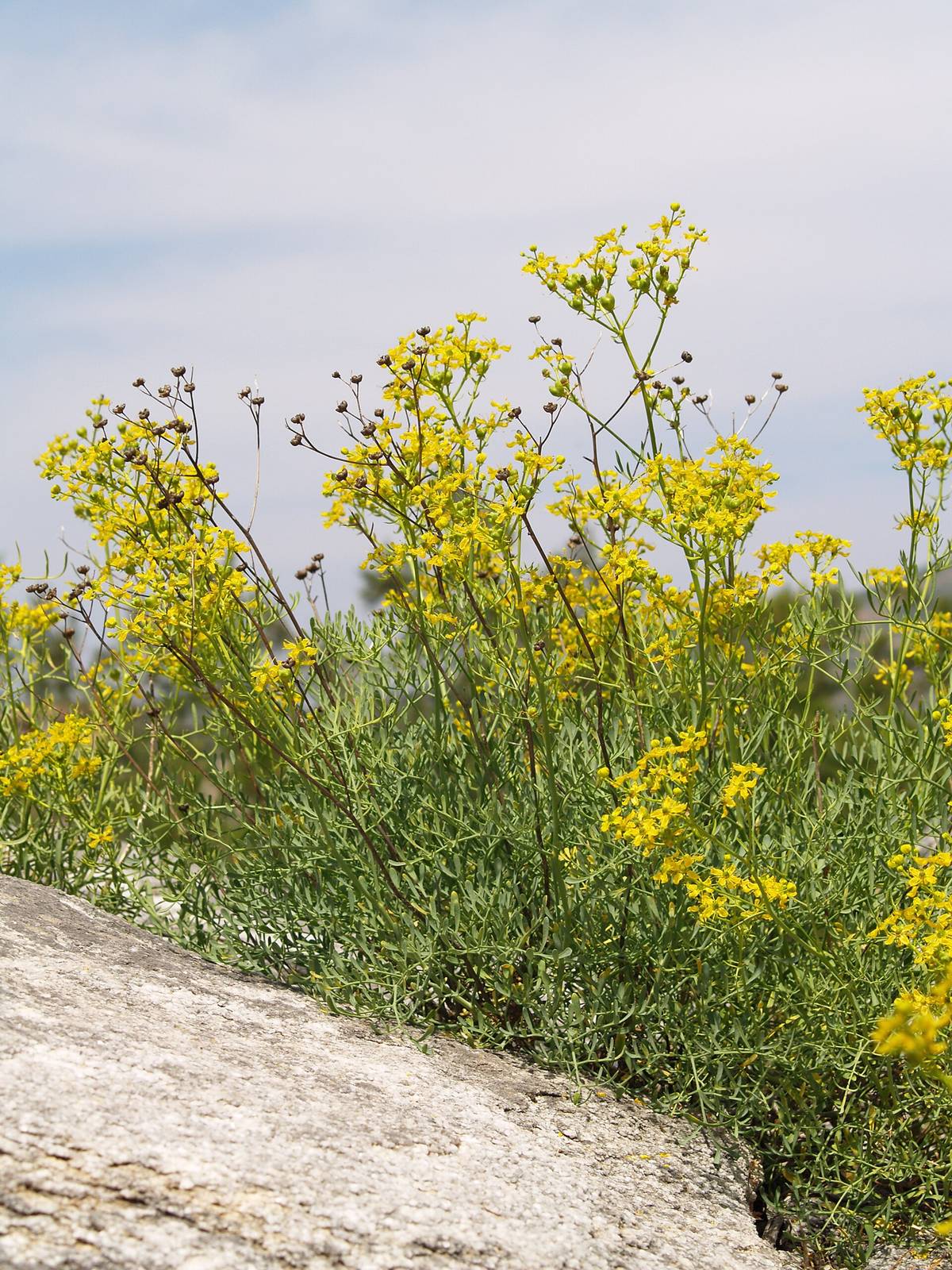
Photo: Jörg Hempel, CC BY-SA 3.0 via Wikimedia Commons

Quick facts
| Light: | Full sun and part shade (full sun preferred)11 source |
|---|---|
| Water: | Dry to medium11 source |
| Soil: | Well drained and occasionally dry11 source |
| Hardiness: | Zones 4a–10b11 source |
| Size: | 2–3 ft (0.61–0.91 m) × 2–3 ft (0.61–0.91 m)12 |
| Growth rate: | Moderate11 source |
| Bloom: | May–Jun and Jul–Aug, Yellow211 source |
| Cats: | Not documented by major sources |
| Dogs: | Not documented by major sources |
| Native range: | ALB, BUL, KRY, TUE, YUG3 |
| Family: | Rutaceae |
How much light does a Common Rue need?
Full sun is the preferred exposure, which means 6 or more hours of direct sunlight a day. Part shade is also listed as an exposure the plant accepts. Aim for a spot that gets those six hours, and use part shade only when full sun is not available.
- Light: Full sun and part shade (full sun preferred)1
How often to water a Common Rue
This plant's water needs run from dry to medium, and wet conditions are not part of the listed range. It tolerates drought, as well as dry and rocky soil. Soil drainage is listed as well drained and occasionally dry. Root rot may occur, particularly in poorly drained soils. Rue is also described as a hardy plant that tolerates drought.
- Water: Dry to medium1
Best soil for a Common Rue
Well drained and occasionally dry are the drainage conditions listed for this plant. The source's own wording for the drainage need is simply good drainage. It tolerates drought. Its water needs run from dry to medium. Root rot may occur, particularly in poorly drained soils. A soil pH range is not documented for this plant. Dry and rocky soil is also named as a tolerated condition.
- Soil drainage: Well drained and occasionally dry1
Hardiness and temperature
The hardiness range for this plant is USDA zones 4a to 10b. Zone 4a is the coldest zone in that range. Zone 10b is the warmest zone in that range. The plant is described as hardy. It also tolerates drought. No cited source records a minimum temperature. Its fern-like leaves are described as aromatic and evergreen.
- Hardiness: Zones 4a–10b1
Pruning a Common Rue
Pruning for common rue is listed as light shaping. In spring, you can cut the stems back and remove old foliage. Do not cut the stems all the way to the base. The plant becomes woody with age. Overall maintenance is listed as low.
- Pruning: Light shaping2
How to plant a Common Rue
You can plant it in USDA zones 4a to 10b. Allow for a mature spread of 2–3 ft (0.61–0.91 m). Mature height is also 2–3 ft (0.61–0.91 m). Pick a spot with full sun, which means 6 or more hours of direct sunlight a day. The soil should be well drained. Growth rate is moderate. It is a shrub.
- Hardiness: Zones 4a–10b1
Winter care
Winter hardiness is listed as USDA zones 4a to 10b. The leaves are aromatic, fern-like and evergreen. Stems can be cut back in spring, with old foliage removed. Do not cut them to the base. Root rot may occur, particularly in poorly drained soils. A minimum temperature is not documented for this plant. It tolerates drought and dry and rocky soil.
- Hardiness: Zones 4a–10b1
How to propagate a Common Rue
Three propagation methods are listed for common rue: division, seed and stem cuttings. Division is the first method on the list. Seed is the second method on the list. Stem cuttings are the third method on the list. Each of these methods applies to this shrub. A mature plant spreads 2–3 ft (0.61–0.91 m) wide. Timing and technique for each method are not documented.
- Propagation: Division, seed and stem cuttings1
Common problems
Root rot is the one disease listed for common rue. It may occur, particularly in poorly drained soils. No pests are listed for this plant. It is also described as having no serious insect or disease problems. Soil drainage is listed as well drained and occasionally dry. Deer resistance is reported for this plant.
| Problem | Kind |
|---|---|
| Root rot | Disease |
Is Common Rue toxic to cats and dogs?
Recommended supplies
- Soil: a free-draining mix, and a pot with a drainage hole.
Questions and answers
- Does common rue need full sun?
- Full sun is preferred, which means 6 or more hours of direct sunlight a day. Part shade is also listed as an exposure it accepts. Its water needs run from dry to medium.
- Which hardiness zones suit common rue?
- It is listed as hardy in USDA zones 4a to 10b. It is also described as a hardy plant that tolerates drought. Its fern-like leaves are evergreen.
- What color are the flowers of common rue?
- Common rue has yellow flowers. They are described as clusters of pale yellow flowers that top the plants. The foliage is aromatic and evergreen, and the plant is a shrub.
Sources
- NC State Extension Gardener Plant Toolbox. https://plants.ces.ncsu.edu/plants/ruta-graveolens/. Accessed 14 October 2026.
- Chicago Botanic Garden. https://www.chicagobotanic.org/plant-information/plant-finder/ruta-graveolens-common-rue. Accessed 30 October 2026.
- Royal Botanic Gardens, Kew (World Checklist of Vascular Plants). https://sftp.kew.org/pub/data-repositories/WCVP/wcvp.zip. Accessed 4 June 2026.
How this page was made
- Written with AI assistance from the sources listed on this page. AI is never the source of a fact.