Giant Hogweed (Heracleum mantegazzianum)
Formerly Heracleum circassicum, Heracleum grossheimii, Pastinaca mantegazziana
Give giant hogweed full sun and soil that stays medium to wet. The ASPCA lists it as toxic to cats and toxic to dogs. It reaches 15–20 ft (4.57–6.1 m) tall and is listed for zones 3a–9b. It is propagated by seed, and plants die after flowering.
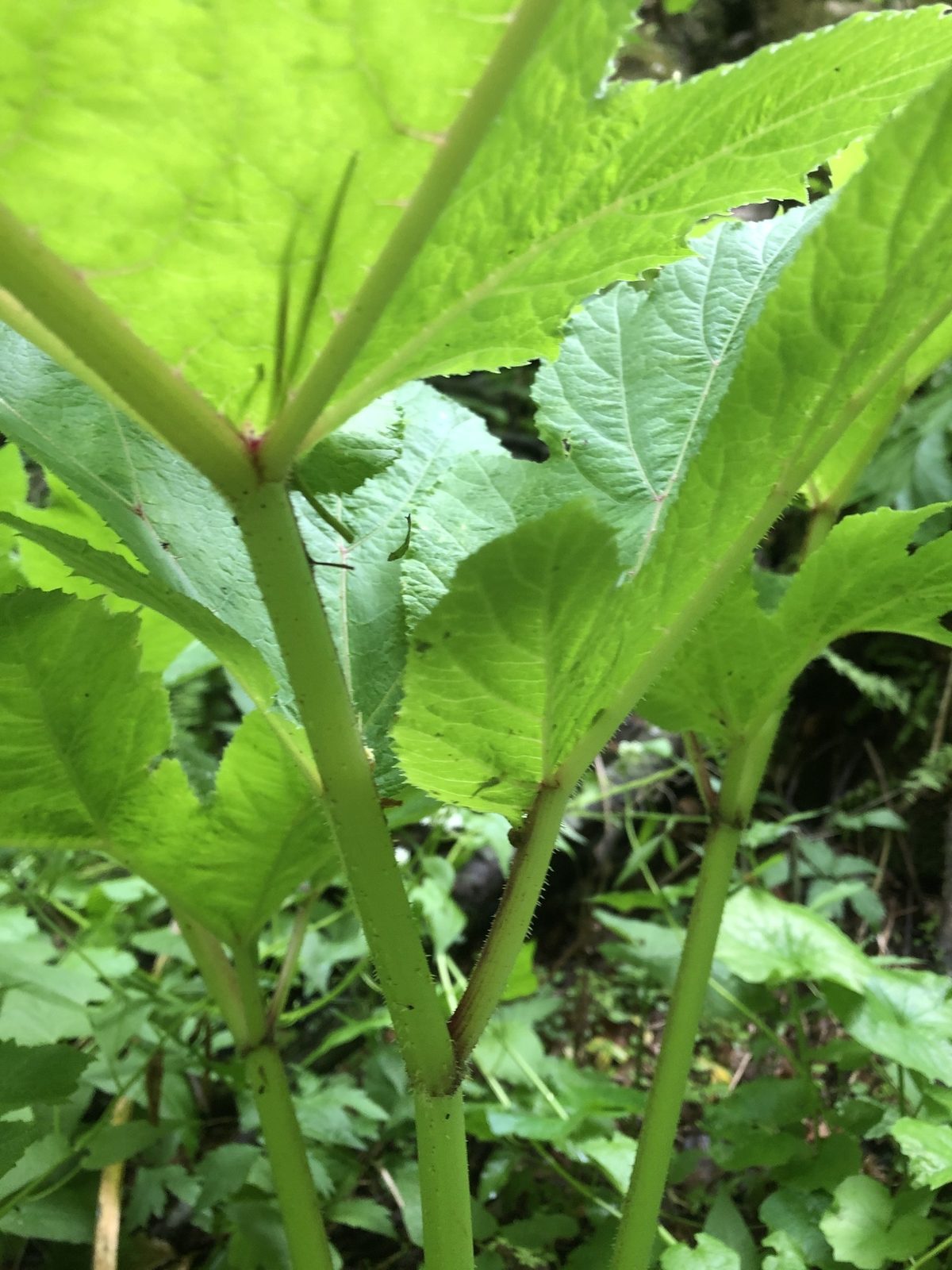
Photo: anastasiiamerkulova, CC BY 4.0 via Wikimedia Commons

Quick facts
| Light: | Full sun11 source |
|---|---|
| Water: | Medium to wet21 source |
| Soil: | Well drained and moist; pH 5.34–6.68341 source |
| Hardiness: | Zones 3a–9b31 source |
| Size: | 15–20 ft (4.57–6.1 m) × 5 ft (1.52 m)752 |
| Growth rate: | Rapid31 source |
| Bloom: | Jun–Jul, White31 source |
| Cats: | Toxic to cats (1 source) 6 |
| Dogs: | Toxic to dogs (1 source) 6 |
| Native range: | NCS, TCS8 |
| Family: | Apiaceae |
How much light does a Giant Hogweed need?
Giant hogweed is listed for full sun. The University of Minnesota Extension describes it as found in moist, sunny areas such as streams, rivers, fields, forests, yards and roadsides. Those places are described as moist as well as sunny. Full sun is the preferred exposure on record, and no other light level is listed.
- Light: Full sun1
How often to water a Giant Hogweed
Giant hogweed prefers medium to wet conditions. The University of Illinois Extension says it prefers moist soils like those along riverbanks. The water range has medium wet as its lower limit and wet as its upper limit. Moist soil also appears in the plant's recorded drainage profile.
- Water: Medium to wet2
Best soil for a Giant Hogweed
The soil for giant hogweed is recorded as well drained and moist. The North Carolina Extension Gardener Plant Toolbox gives its drainage as good drainage and moist soil. Drainage and moisture are both part of that record. The University of Minnesota Extension notes the plant growing along streams and rivers. Its recorded water range is medium wet to wet. No cited source records a soil pH range, so that detail is not documented here.
Hardiness and temperature
Giant hogweed is listed for USDA hardiness zones 3a through 9b. The North Carolina Extension Gardener Plant Toolbox names each half zone in that span: 3a, 3b, 4a, 4b, 5a, 5b, 6a, 6b, 7a, 7b, 8a, 8b, 9a and 9b. The span covers fourteen half zones in all. Zone 3a is the coldest end of the listed range and 9b is the warmest.
How to plant a Giant Hogweed
Zones 3a through 9b are the zones in which giant hogweed is listed. Its mature height is 15–20 ft (4.57–6.1 m). Its growth rate is rapid. Full sun and well drained, moist soil are the conditions recorded for it. In the contiguous United States its status is introduced. Its native range is recorded as NCS and TCS.
- Hardiness: Zones 3a–9b3
Winter care
Gardeners in zones 3a through 9b are inside the range listed for giant hogweed. A zone 3a winter is the coldest the listing covers, and a zone 9b winter is the mildest. Compare your own zone with the 3a to 9b range listed here. That listing is the only cold-hardiness information recorded for this page.
How to propagate a Giant Hogweed
Giant hogweed is propagated by seed. The USDA Forest Service Fire Effects Information System says it reproduces by seed, and plants die after flowering. No other propagation method, such as cuttings or division, is recorded for it. The listed propagation methods contain a single entry, seed. The same record notes that plants die once they have flowered.
- Propagation: Seed5
Is Giant Hogweed toxic to cats and dogs?
The ASPCA Animal Poison Control Center lists giant hogweed as toxic to cats. The same ASPCA listing marks it as toxic to dogs. For cats the position on this page is toxic, and for dogs it is also toxic. The ASPCA entry reads: Toxic to Dogs, Toxic to Cats, Toxic to Horses. The listing applies to cats and dogs alike. Keep this plant away from both cats and dogs.
Pet-safe alternatives
Recommended supplies
- Soil: a free-draining mix, and a pot with a drainage hole.
Questions and answers
- Is giant hogweed toxic to cats and dogs?
- The ASPCA lists giant hogweed as toxic to cats and toxic to dogs. That listing is the toxicity position recorded for both animals on this page. Keep both animals away from it.
- How tall does giant hogweed grow?
- Giant hogweed can grow between 15 and 20 feet (4.57–6.1 m) tall. The USDA Forest Service gives a height of 20 feet (5 m). Its growth rate is rapid.
- Which zones suit giant hogweed?
- Giant hogweed is listed for USDA zones 3a through 9b. It prefers full sun and moist, well drained soil. Its water range is medium wet to wet. It is propagated by seed.
Sources
- University of Minnesota Extension. https://extension.umn.edu/identify-invasive-species/giant-hogweed. Accessed 23 September 2026.
- University of Illinois Extension. https://extension.illinois.edu/invasives/invasive-giant-hogweed. Accessed 24 September 2026.
- North Carolina Extension Gardener Plant Toolbox. https://plants.ces.ncsu.edu/plants/heracleum-mantegazzianum/. Accessed 24 September 2026.
- EPPO Global Database. https://gd.eppo.int/taxon/HERMZ/datasheet. Accessed 11 October 2026.
- USDA Forest Service Fire Effects Information System. https://www.fs.usda.gov/database/feis/plants/forb/herman/all.html. Accessed 23 September 2026.
- ASPCA Animal Poison Control Center. https://www.aspca.org/pet-care/aspca-poison-control/toxic-and-non-toxic-plants/giant-hogweed. Accessed 23 September 2026.
- University of Minnesota Extension. https://extension.umn.edu/natural-resources/forestry-and-wildlife/invasive-species/giant-hogweed. Accessed 23 September 2026.
- Royal Botanic Gardens, Kew (World Checklist of Vascular Plants). https://sftp.kew.org/pub/data-repositories/WCVP/wcvp.zip. Accessed 4 June 2026.
How this page was made
- Written with AI assistance from the sources listed on this page. AI is never the source of a fact.