Redroot Amaranth (Amaranthus retroflexus)
Formerly Galliaria scabra, Amaranthus delilei, Amaranthus rigidus
Give redroot amaranth full sun. It is an annual that grows rapidly. Plants reach 1–6.6 ft (0.3–2 m) tall. It suits soil with a pH of 6 to 8. You can grow it from seed. It is listed for zones 3a–11b. Pet toxicity for cats and dogs is not documented here.
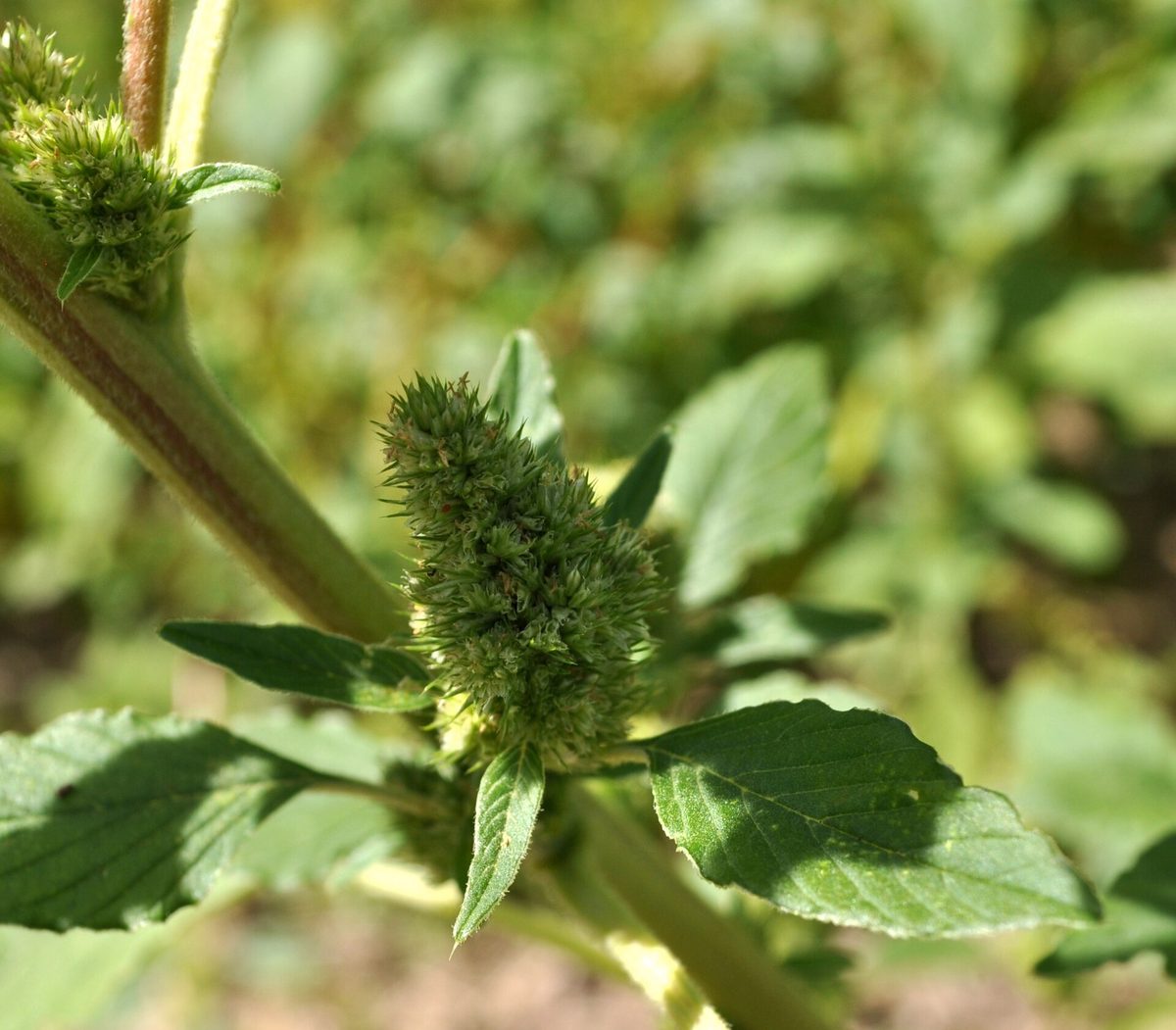
Photo: NY State IPM Program at Cornell University from New York, USA, CC BY 2.0 via Wikimedia Commons

Quick facts
| Light: | Full sun11 source |
|---|---|
| Soil: | pH 6–811 source |
| Hardiness: | Zones 3a–11b11 source |
| Size: | 1–6.6 ft (0.3–2 m)23 |
| Growth rate: | Rapid11 source |
| Bloom: | Jul–Sep, White and green141 source |
| Cats: | Not documented by major sources |
| Dogs: | Not documented by major sources |
| Native range: | MXC, MXE, MXG, MXS, MXT5 |
| Family: | Amaranthaceae |
How much light does a Redroot Amaranth need?
Redroot amaranth grows best in full sun. Full sun means 6 or more hours of direct sunlight a day. Full sun is the only outdoor light level listed for this plant. Choose a spot where direct sun reaches it for at least that long each day. The plant is an annual with a rapid growth rate, reaching 1–6.6 ft (0.3–2 m) tall. Keep that mature height in mind when you pick a bright location.
- Light: Full sun1
Best soil for a Redroot Amaranth
Redroot amaranth suits neutral soil. The listed range runs from pH 6.0 to pH 8.0. A pH of 7 sits in the middle of that range. Soil below pH 6 or above pH 8 falls outside the range listed for this plant. Soil at pH 8 is still inside the listed range.
- Soil pH: pH 6–81
Hardiness and temperature
Redroot amaranth is listed for USDA hardiness zones 3a through 11b. That list includes each half zone from 3a, 3b, 4a and 4b up to 11a and 11b. Zone 3a is the coldest zone in that list, and zone 11b is the warmest. The plant type is annual.
- Hardiness: Zones 3a–11b1
How to plant a Redroot Amaranth
Plant redroot amaranth in a place within USDA zones 3a through 11b. Choose a site with full sun, meaning 6 or more hours of direct sunlight a day. Aim for soil with a pH between 6 and 8. Start the plant from seed, which is the recommended method. Leave room for a plant that can reach 1–6.6 ft (0.3–2 m) tall. It is an annual with a rapid growth rate. In the United States, it is native to the lower 48 states and introduced in Alaska and Hawaii. The flowers are white and green.
- Hardiness: Zones 3a–11b1
Winter care
Redroot amaranth is listed as an annual. It is listed for USDA zones 3a through 11b. Zone 3a is the coldest zone in that list. Zone 11b is the warmest zone in that list. Seed is the listed propagation method for this plant.
- Hardiness: Zones 3a–11b1
How to propagate a Redroot Amaranth
The recommended way to propagate redroot amaranth is by seed. Seed is the only propagation method listed for this plant. The plant is an annual, and its growth rate is rapid. Mature plants reach 1–6.6 ft (0.3–2 m) tall. Cuttings, division and other methods are not listed.
- Propagation: Seed1
Common problems
No common pests are listed for redroot amaranth. The listing says that plant-damaging insects are not attracted to this plant. In other words, the pest list for this species is empty. The statement is about insects that damage plants. That is the only pest information on file.
- Common pests: 1
Is Redroot Amaranth toxic to cats and dogs?
Questions and answers
- How much sun does redroot amaranth need?
- It grows best in full sun, which means 6 or more hours of direct sunlight a day. Full sun is the only outdoor light level listed for the plant. It is an annual with a rapid growth rate.
- How do you start redroot amaranth?
- The recommended method is to grow it from seed. It is listed for USDA zones 3a through 11b. Mature plants reach 1–6.6 ft (0.3–2 m) tall, so leave room for them.
- When does redroot amaranth flower?
- The flowers are white and green. The plant flowers from July through September. In the United States, it is native to the lower 48 states and introduced in Alaska and Hawaii.
Sources
- NC State Extension Gardener Plant Toolbox. https://plants.ces.ncsu.edu/plants/amaranthus-retroflexus/. Accessed 14 October 2026.
- USDA Forest Service Fire Effects Information System (FEIS). https://www.fs.usda.gov/database/feis/plants/forb/amaret/all.html. Accessed 21 October 2026.
- Utah State University Extension. https://extension.usu.edu/planthealth/ipm/ornamental-pest-guide/weeds/w_redroot-pigweed. Accessed 21 October 2026.
- Lady Bird Johnson Wildflower Center. https://www.wildflower.org/plants/result.php?id_plant=amre. Accessed 14 October 2026.
- Royal Botanic Gardens, Kew (World Checklist of Vascular Plants). https://sftp.kew.org/pub/data-repositories/WCVP/wcvp.zip. Accessed 4 June 2026.
How this page was made
- Written with AI assistance from the sources listed on this page. AI is never the source of a fact.