Garden Cucumber (Cucumis sativus)
Formerly Cucumis rumphii, Cucumis muricatus, Cucumis esculentus
Give garden cucumber full sun and keep its water needs in the medium to wet range. The ASPCA lists *Cucumis sativus* as non-toxic to cats and non-toxic to dogs. It is a warm season annual that grows at a rapid rate, and you sow seed outdoors after your last frost.
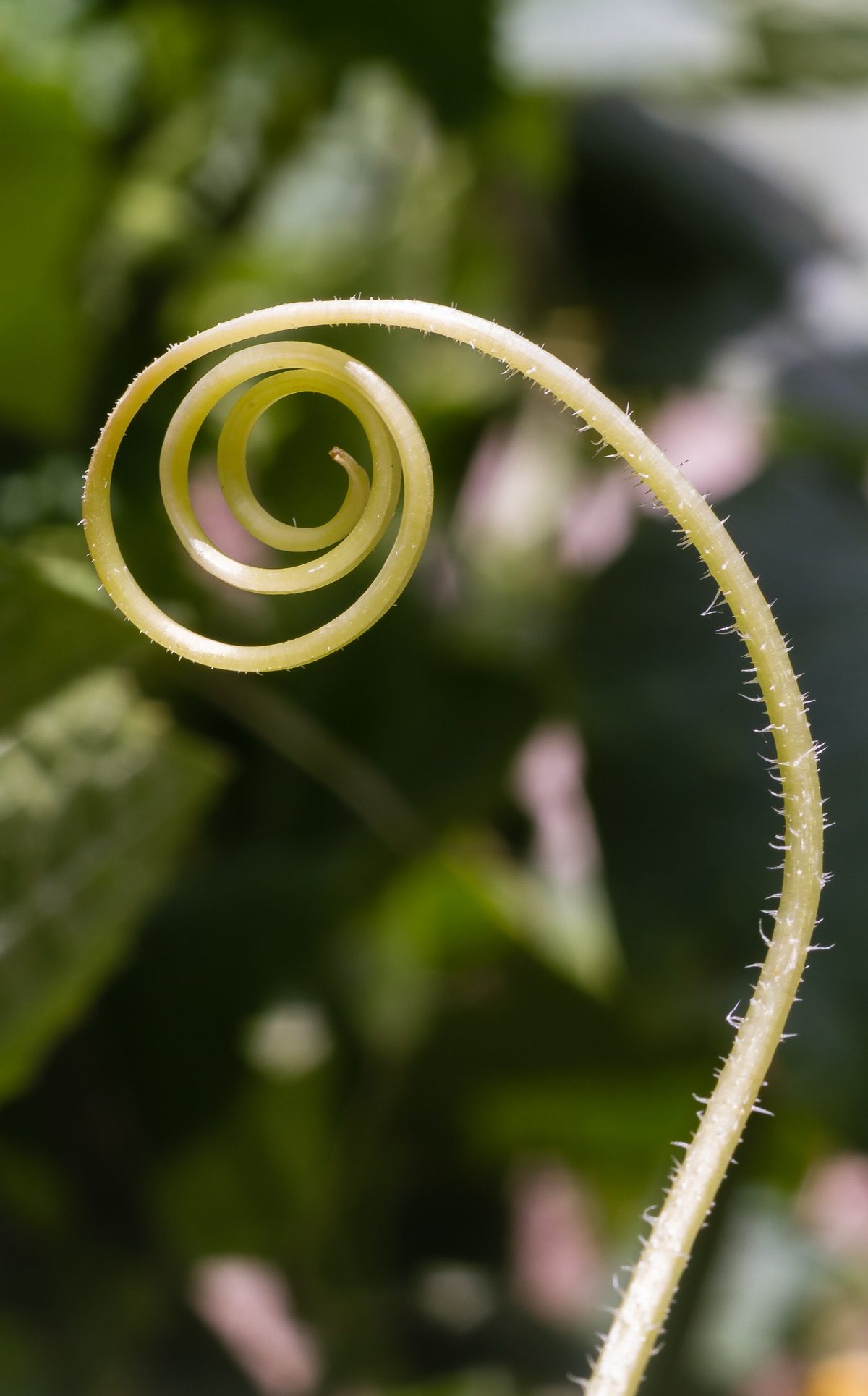
Photo: Friedrich Haag, CC BY-SA 4.0 via Wikimedia Commons

Quick facts
| Light: | Full sun11 source |
|---|---|
| Water: | Medium to wet11 source |
| Soil: | Well drained and moist; pH 6–6.51234 |
| Hardiness: | Zones 2a–11b11 source |
| Size: | 0.7–1.5 ft (0.2–0.46 m) × 3–8 ft (0.91–2.44 m)11 source |
| Growth rate: | Rapid191 source |
| Bloom: | Yellow191 source |
| Cats: | Non-toxic to cats 89 |
| Dogs: | Non-toxic to dogs 89 |
| Native range: | ASS, BAN, CHC, CHS, EHM, MYA, NEP, THA, WHM10 |
| Family: | Cucurbitaceae |
How much light does a Garden Cucumber need?
Full sun is the light garden cucumber prefers outdoors. That means 6 or more hours of direct sunlight a day. As a warm season crop, it is listed with conditions of 80 to 85 °F (27 to 29 °C) and plenty of sunlight. Choose a site that gets at least six hours of direct sun before you sow.
- Light: Full sun1
How often to water a Garden Cucumber
Medium to wet describes the water needs of garden cucumber. It has high water needs and requires consistent moisture for proper growth. Its soil is listed as both well drained and moist. No cited source gives a watering schedule in days. Consistent moisture is the condition the listed water needs call for.
- Water: Medium to wet1
Best soil for a Garden Cucumber
Garden cucumber soil should be well drained and moist. Clemson Cooperative Extension Home & Garden Information Center lists well-drained sandy loam to clay loam for this crop. University of Minnesota Extension says the soil pH should be between 6.0 and 6.5, which is slightly acidic. A bed that is both well drained and moist matches the record for this plant. Its water needs are also listed as medium to wet.
Hardiness and temperature
Hardiness zones 2a to 11b are listed for garden cucumber. It is a warm season crop with required growing conditions of 80 to 85 °F (27 to 29 °C). Sowing outdoors calls for soil at least 70 °F (21 °C) at the one-inch depth. That soil temperature applies after the last frost date. The plant is recorded as an annual and as a rapid grower. Its growing conditions also include plenty of sunlight. No cited source records a minimum temperature or a humidity range, so those values are not documented here.
- Hardiness: Zones 2a–11b1
How to plant a Garden Cucumber
Zones 2a to 11b are the hardiness zones listed for this plant. Plan for plants that reach 8 to 18 inches (20 to 46 cm) high and 3 to 8 feet (0.91 to 2.44 m) wide. Choose a spot with full sun, at least 6 hours of direct sunlight a day. Sow outdoors once the last frost has passed and the soil is at least 70 °F (21 °C). The plant grows at a rapid rate, and its maintenance is rated medium.
- Hardiness: Zones 2a–11b1
Winter care
No cited source records a minimum temperature for garden cucumber. The hardiness listing runs from zone 2a to zone 11b. The plant is recorded as an annual. It is also a warm season crop. Its required growing conditions are 80 to 85 °F (27 to 29 °C). Outdoor sowing waits until the last spring frost has passed, with soil at 70 °F (21 °C) or warmer. Seed can be started indoors 2 to 3 weeks before that last frost.
- Hardiness: Zones 2a–11b1
When to plant Garden Cucumber
Indoor sowing runs 2 to 3 weeks before the last spring frost. For direct sowing, plan on the last spring frost date itself, with soil at least 70 °F (21 °C). Measure that soil temperature at the one-inch depth. Plants then take 50 to 65 days from seed to reach maturity.
| Step | When |
|---|---|
| Start indoors | 2–3 weeks before last frost |
| Direct sow | at last spring frost, soil at least 69.8 °F (21 °C) |
When and how to harvest Garden Cucumber
From seed, expect maturity in 50 to 65 days. Harvest before the flesh becomes bitter, seeds harden, or skin begins to yellow. Pickling types are typically picked between 2 and 6 inches (5 to 15 cm) long. Bitter flesh, hard seeds and yellowing skin are the three signs the harvest guidance names.
How to propagate a Garden Cucumber
Seed is the recorded propagation method for garden cucumber. Sow seeds after the last frost date, once the soil is at least 70 °F (21 °C) at the one-inch depth. You can also start seed indoors 2 to 3 weeks before the last spring frost. Plants grown from seed reach maturity in 50 to 65 days.
Common problems
Recorded pests include aphids, cucumber beetles, spider mites, squash bugs, thrips and whiteflies. Diseases on record include powdery mildew, downy mildew, damping off, root rot and verticillium wilt. Nematodes, cutworms and wireworms also appear on the pest list. The disease list also includes angular leaf spot, cucurbit viruses, curly top and white mold.
- Common pests: aphids, armyworms, crickets, cucumber beetles, cutworms, darkling beetles, driedfruit and sap beetles, earwigs, flea beetles, grasshoppers, leafhoppers, loopers, nematodes, seedcorn maggot, snails and slugs, spider mites, squash bugs, stink bugs, thrips, vegetable leafminers, whiteflies and wireworms727
- Common diseases: angular leaf spot, cucurbit viruses, curly top, damping off, downy mildew, powdery mildew, root rot, verticillium wilt and white mold72
| Problem | Kind |
|---|---|
| Aphids | Pest |
| Armyworms | Pest |
| Crickets | Pest |
| Cucumber beetles | Pest |
| Cutworms | Pest |
| Darkling beetles | Pest |
| Driedfruit and sap beetles | Pest |
| Earwigs | Pest |
| Flea beetles | Pest |
| Grasshoppers | Pest |
| Leafhoppers | Pest |
| Loopers | Pest |
| Nematodes | Pest |
| Seedcorn maggot | Pest |
| Snails and slugs | Pest |
| Spider mites | Pest |
| Squash bugs | Pest |
| Stink bugs | Pest |
| Thrips | Pest |
| Vegetable leafminers | Pest |
| Whiteflies | Pest |
| Wireworms | Pest |
| Angular leaf spot | Disease |
| Cucurbit viruses | Disease |
| Curly top | Disease |
| Damping off | Disease |
| Downy mildew | Disease |
| Powdery mildew | Disease |
| Root rot | Disease |
| Verticillium wilt | Disease |
| White mold | Disease |
Is Garden Cucumber toxic to cats and dogs?
The ASPCA Animal Poison Control Center lists garden cucumber as non-toxic to cats. The NC State Extension Gardener Plant Toolbox also gives it as non-toxic for cats. For dogs, the ASPCA entry reads non-toxic as well. NC State Extension likewise lists it as non-toxic for dogs. In the ASPCA's own words, the entry reads Non-Toxic to Dogs, Non-Toxic to Cats. This site covers cats and dogs only for pet toxicity.
Recommended supplies
- Soil: a free-draining mix, and a pot with a drainage hole.
Questions and answers
- Is garden cucumber toxic to cats or dogs?
- The ASPCA lists garden cucumber as non-toxic to cats and non-toxic to dogs. The NC State Extension Gardener Plant Toolbox gives the same position for both animals.
- How much sun does garden cucumber need?
- It prefers full sun, which means 6 or more hours of direct sunlight a day. As a warm season crop, it also lists plenty of sunlight among its growing conditions.
- When can I sow garden cucumber seed outdoors?
- Sow outdoors after the last frost date, once the soil is at least 70 °F (21 °C) at the one-inch depth. Indoors, start seed 2 to 3 weeks before the last spring frost. The plant takes 50 to 65 days from seed to reach maturity.
Sources
- NC State Extension Gardener Plant Toolbox. https://plants.ces.ncsu.edu/plants/cucumis-sativus/common-name/cucumber/. Accessed 14 October 2026.
- Clemson Cooperative Extension Home & Garden Information Center. https://hgic.clemson.edu/factsheet/cucumber/. Accessed 14 October 2026.
- Penn State Extension. https://extension.psu.edu/cucumber-production. Accessed 14 October 2026.
- University of Minnesota Extension. https://extension.umn.edu/garden-and-home/yard-and-garden/gardening-in-minnesota/growing-cucumbers. Accessed 14 October 2026.
- University of Maryland Extension. https://extension.umd.edu/resource/growing-cucumbers-home-garden. Accessed 14 October 2026.
- University of Minnesota Extension. https://extension.umn.edu/vegetables/growing-cucumbers. Accessed 14 October 2026.
- UC Statewide Integrated Pest Management Program. https://ipm.ucanr.edu/home-and-landscape/cucumber/. Accessed 14 October 2026.
- ASPCA Animal Poison Control Center. https://www.aspca.org/pet-care/aspca-poison-control/toxic-and-non-toxic-plants/cucumber. Accessed 14 October 2026.
- NC State Extension Gardener Plant Toolbox. https://plants.ces.ncsu.edu/plants/cucumis-sativus/. Accessed 14 October 2026.
- Royal Botanic Gardens, Kew (World Checklist of Vascular Plants). https://sftp.kew.org/pub/data-repositories/WCVP/wcvp.zip. Accessed 4 June 2026.
How this page was made
- Written with AI assistance from the sources listed on this page. AI is never the source of a fact.