Fragrant Dracaena (Dracaena fragrans)
Formerly Dracaena deremensis, Dracaena broomfieldii, Draco fragrans
Give dracaena fragrans bright, indirect light indoors and water it so the soil stays evenly moist but never soggy. It tolerates medium or low light spots too, so it adapts well to most rooms. This plant is toxic to both cats and dogs, so keep it out of reach of pets.
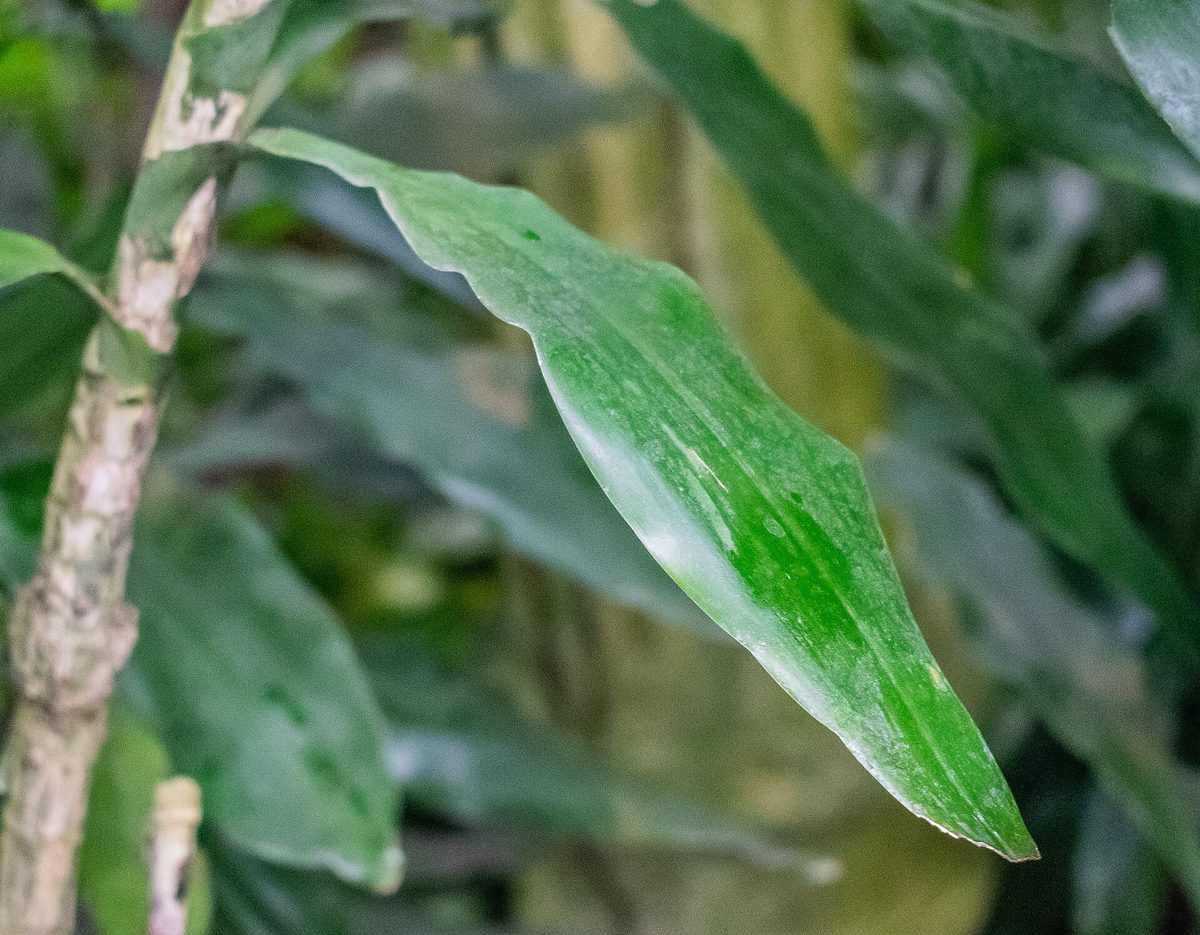
Photo: Tournasol7, CC BY 4.0 via Wikimedia Commons

Quick facts
| Light: | Bright, indirect light; tolerates medium light and low light12 |
|---|---|
| Water: | Medium to wet11 source |
| Soil: | Well drained and moist; pH 6–6.5121 source |
| Minimum temperature: | 50 °F (10 °C)11 source |
| Size: | 3–14.5 ft (0.91–4.42 m) × 1–3 ft (0.3–0.91 m)11 source |
| Growth rate: | Slow11 source |
| Bloom: | Pink and white11 source |
| Cats: | Toxic to cats (1 source) Severity reported: Mild 4 |
| Dogs: | Toxic to dogs (1 source) 4 |
| Native range: | ANG, BEN, CAF, CMN, CON, EQG, ETH, GAM, GGI, GHA, GUI, IVO, KEN, LBR, MLW, MOZ, NGA, RWA, SIE, SUD, TAN, TOG, UGA, ZAI, ZAM, ZIM5 |
| Family: | Asparagaceae |
How much light does a Fragrant Dracaena need?
Place this plant where it gets bright, indirect light for most of the day indoors. It also tolerates medium light and even low light, though growth slows down in dimmer spots. If you move it outdoors, choose a part-shade spot, since it can also handle full shade.
How often to water a Fragrant Dracaena
This plant needs moisture levels between medium and medium-wet, so the soil should stay damp rather than dry. Water enough to keep it in that range, and do not let it dry out completely. That range means you water somewhat more than plants that prefer to dry out between waterings. Because it likes moist soil, plant it in a well-drained mix so water does not pool around the roots.
- Water: Medium to wet1
Best soil for a Fragrant Dracaena
Good drainage matters here: the soil should drain well but still hold some moisture. That balance keeps water from pooling around the roots while still giving them steady access to it. Aim for a slightly acidic soil, with a pH between 6 and 6.5. Test your soil's pH before planting, since a mix outside that narrow band may not suit it as well. A loose, well-drained mix also helps stop the soggy conditions that can lead to root rot. Pairing that drainage with the medium to medium-wet moisture this plant prefers gives roots what they need without letting them sit wet.
Temperature and humidity
Cold weather is a real risk for this plant outdoors. It cannot tolerate temperatures below 50°F (10°C). Move potted plants indoors before nights drop that low. Outdoors, it grows reliably only in USDA zones 10a to 11b. Those zones stay warm enough year-round to match its minimum temperature need. No cited source records a humidity preference for this plant. Gardeners outside that zone range should keep it as a container plant they bring inside each year. Even a brief cold snap below that threshold can damage or kill the plant, so bring containers inside well ahead of frost.
- Minimum temperature: 50 °F (10 °C)1
Fertilizing a Fragrant Dracaena
Monthly feeding during the growing season keeps this plant going. That active period runs from spring into late summer, when the plant is putting out new growth. Skip fertilizer for the rest of the year. The plant is not actively growing then, so it does not need the extra nutrients. Always water the soil first, then apply fertilizer, so you do not feed roots that are dry. Because growth is slow, a missed month will not set it back much.
- Fertilizer: Monthly in the growing season (Mar–Aug)2
Pruning a Fragrant Dracaena
Hard renewal pruning suits this plant well: cut stems back hard to spark fresh, lower growth. Because dracaena fragrans grows slowly, recovery after a hard cutback takes patience. Prune while it is actively growing, sometime between spring and late summer, so new shoots have time to develop before growth slows again. Hold off on pruning outside the growing season, since the plant is not producing new growth then. Slow growth means pruning cuts take longer to fill back in.
- Pruning: Hard renewal pruning2
How to propagate a Fragrant Dracaena
You can propagate this plant from stem cuttings or by layering. For stem cuttings, take a healthy section of stem and let it root before potting it on its own. Layering works by encouraging roots to form on a stem while it is still attached to the parent plant. Once roots form, you cut that section free and pot it separately. Both methods work best during the plant's active growing season, from spring into late summer. Pruned stem sections root just as well as cuttings taken for that purpose alone.
Common problems
Mites, thrips, and scale insects are the pests most often reported on this plant. Root rot is the main disease risk it faces. Root rot sets in when soil stays too wet instead of draining well. Well-drained soil is the simplest way to guard against it. Because root rot is tied to soggy soil, the same well-drained mix that helps your watering routine also helps stop it.
| Problem | Kind |
|---|---|
| Mites | Pest |
| Thrips | Pest |
| Scale insects | Pest |
| Root rot | Disease |
Is Fragrant Dracaena toxic to cats and dogs?
Dracaena fragrans is toxic to cats. It is also toxic to dogs. Because it carries a toxic rating for both pets, place it somewhere cats and dogs cannot reach. If a cat or dog chews on this plant, treat it as a real risk rather than a minor accident. Contact your vet or a pet poison line right away if that happens. Acting quickly matters more than trying to identify every symptom at home. Keep this plant away from spots pets can easily reach. If you keep this plant on a high shelf out of a pet's reach, you also get the bright, indirect light it needs indoors.
Pet-safe alternatives
Recommended supplies
- Light: bright, indirect light, such as near an east window; a full-spectrum grow light substitutes where no window does.
- Soil: a free-draining mix, and a pot with a drainage hole.
Questions and answers
- Is dracaena fragrans toxic to cats or dogs?
- Yes, this plant is toxic to both cats and dogs. If your pet chews on it, contact your vet or a pet poison line right away. Because it is unsafe for pets, choose a planter stand or shelf pets cannot climb to.
- How much light does dracaena fragrans need indoors?
- It grows best in bright, indirect light, but it also tolerates medium or low light. Just expect slower growth in dimmer spots. Outdoors, this plant prefers part shade and also tolerates full shade.
- How do I propagate dracaena fragrans?
- You can propagate it from stem cuttings or by layering. Both methods work best during its active growing season, from spring into late summer. This plant grows slowly, so new roots take patience to form either way.
Sources
- NC State Extension Gardener Plant Toolbox. https://plants.ces.ncsu.edu/plants/dracaena-fragrans/. Accessed 14 October 2026.
- Clemson Cooperative Extension HGIC. https://hgic.clemson.edu/factsheet/dracaena/. Accessed 14 October 2026.
- University of Florida IFAS Extension (EDIS). https://ask.ifas.ufl.edu/publication/FP184. Accessed 14 October 2026.
- ASPCA Animal Poison Control Center. https://www.aspca.org/pet-care/aspca-poison-control/toxic-and-non-toxic-plants/cornstalk-plant. Accessed 14 October 2026.
- Royal Botanic Gardens, Kew (World Checklist of Vascular Plants). https://sftp.kew.org/pub/data-repositories/WCVP/wcvp.zip. Accessed 4 June 2026.
How this page was made
- Written with AI assistance from the sources listed on this page. AI is never the source of a fact.