Yaupon (Ilex vomitoria)
Formerly Ilex ligustrina, Ilex cassena, Ilex floridana
Yaupon (Ilex vomitoria) is an evergreen shrub that tolerates water conditions from dry to wet. It grows in full sun to full shade, with full sun preferred, and in USDA zones 7a to 9b. Toxicity for cats and dogs is not documented in the facts for this page.
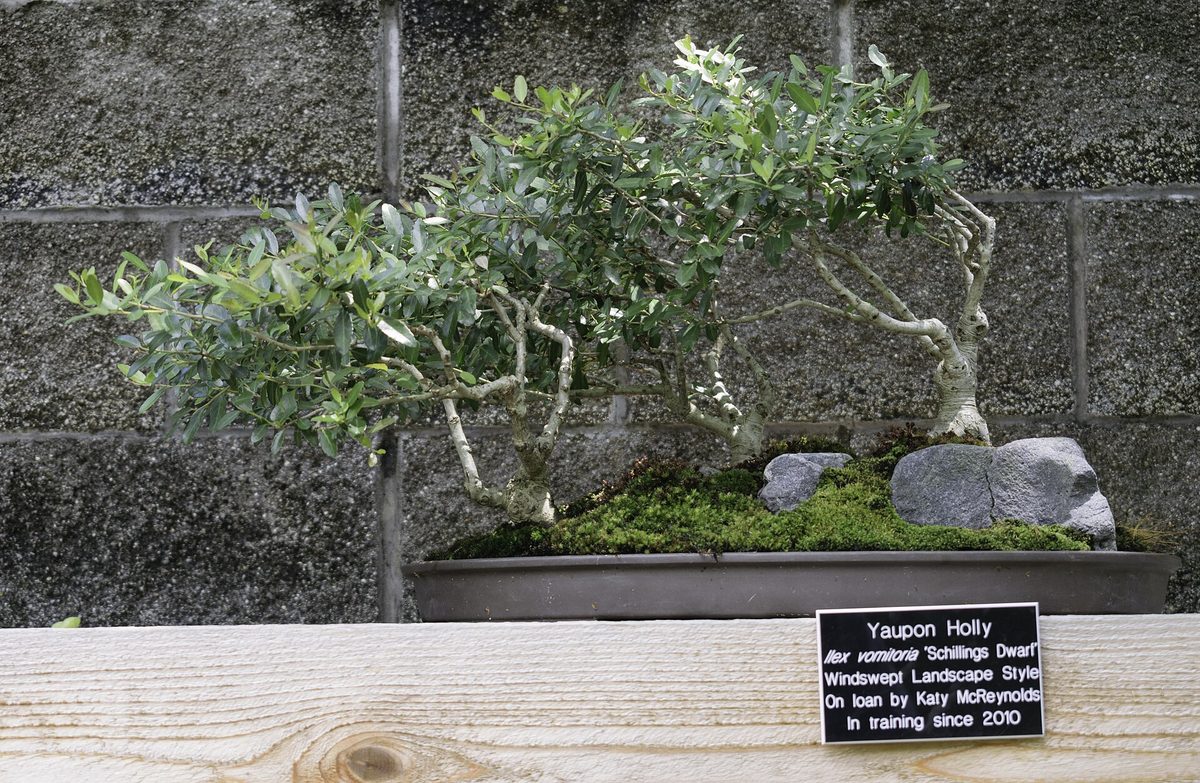
Photo: PumpkinSky, CC BY-SA 4.0 via Wikimedia Commons

Quick facts
| Water: | Dry to wet12 |
|---|---|
| Soil: | Well drained, moist, occasionally dry, occasionally wet and poorly drained; pH 7–7.9341 source |
| Size: | 10–20.5 ft (3.05–6.25 m) × 15–20 ft (4.57–6.1 m)121 source |
| Growth rate: | Rapid12 |
| Bloom: | Mar–May, White and green131 source |
| Cats: | Not documented by major sources |
| Dogs: | Not documented by major sources |
| Native range: | ALA, ARK, CUB, FLA, GEO, LOU, MSI, MXT, NCA, OKL, SCA, TEX, VRG5 |
| Family: | Aquifoliaceae |
How often to water a Yaupon
The water range for yaupon runs from dry to wet. It can withstand drought, salt spray and occasional flooding. One source lists the range as wet to well-drained. Its soil drainage can be well drained, moist, occasionally dry, occasionally wet or poorly drained. It also tolerates drought and poor drainage.
Best soil for a Yaupon
Yaupon accepts drainage that is well drained, moist, occasionally dry, occasionally wet or poorly drained. A source notes that it tolerates drought and poor drainage. The recorded pH range is 7 to 7.9. One source says it will grow in soil with a pH in the 7's. Its listed water range runs from dry to wet, and one source gives wet to well-drained.
Pruning a Yaupon
Yaupon can take heavy pruning. The recorded pruning type is hard renewal pruning. Mature height is 10 to 20.5 ft (3.05 to 6.25 m), and mature spread is 15 to 20 ft (4.57 to 6.1 m). One source says this holly can rapidly reach 10 to 20 feet tall. Its habit is erect and spreading.
- Pruning: Hard renewal pruning1
How to propagate a Yaupon
Seed and stem cuttings are the recorded propagation methods. One source advises that you propagate by seed or stem cutting. Semi-hardwood cuttings can be made to root, according to another source. Cuttings are taken from stems, while seed is the other route. Yaupon, Ilex vomitoria, is a shrub, and these two methods are the ones recorded for it.
Common problems
Occasional pest problems include holly leafminer, spider mites, whiteflies and scale, and aphids also appear. One source says these problems form a long list but none are normally serious. Disease problems that may occur are leaf spot, leaf rot, tar spot and powdery mildew. It is also highly resistant to damage from deer.
| Problem | Kind |
|---|---|
| Holly leafminer | Pest |
| Spider mites | Pest |
| Whiteflies | Pest |
| Scale insects | Pest |
| Aphids | Pest |
| Leaf spot | Disease |
| Leaf rot | Disease |
| Tar spot | Disease |
| Powdery mildew | Disease |
Is Yaupon toxic to cats and dogs?
Recommended supplies
- Soil: a free-draining mix, and a pot with a drainage hole.
Questions and answers
- How much sun does yaupon need?
- Full sun is preferred, and it also grows in part shade or full shade. One source says to plant it in full sun to deep shade. It is a broadleaf evergreen.
- Where is yaupon hardy?
- It is listed for USDA zones 7a to 9b. Its native status in the lower 48 states is native. Its native range includes the regions coded ALA, FLA, LOU and TEX. It can withstand drought, salt spray and occasional flooding.
- How big does yaupon get?
- Mature height is 10 to 20.5 ft (3.05 to 6.25 m). Mature spread is 15 to 20 ft (4.57 to 6.1 m). Its growth rate is recorded as rapid, and its habit is erect and spreading.
Sources
- NC State Extension Gardener Plant Toolbox. https://plants.ces.ncsu.edu/plants/ilex-vomitoria/. Accessed 21 October 2026.
- University of Florida IFAS Extension (EDIS). https://ask.ifas.ufl.edu/publication/ST311. Accessed 21 October 2026.
- Lady Bird Johnson Wildflower Center. https://www.wildflower.org/plants/result.php?id_plant=ILVO. Accessed 21 October 2026.
- University of Florida IFAS Extension (EDIS). https://ask.ifas.ufl.edu/st311. Accessed 21 October 2026.
- Royal Botanic Gardens, Kew (World Checklist of Vascular Plants). https://sftp.kew.org/pub/data-repositories/WCVP/wcvp.zip. Accessed 4 June 2026.
How this page was made
- Written with AI assistance from the sources listed on this page. AI is never the source of a fact.