Jade Plant (Crassula ovata)
Formerly Cotyledon ovata, Toelkenia ovata, Crassula lucens
Jade plant thrives outdoors in full sun to part shade and needs soil that dries out between waterings. This slow growing succulent tolerates light drought once established. It is toxic to both cats and dogs, so keep it out of reach of pets.
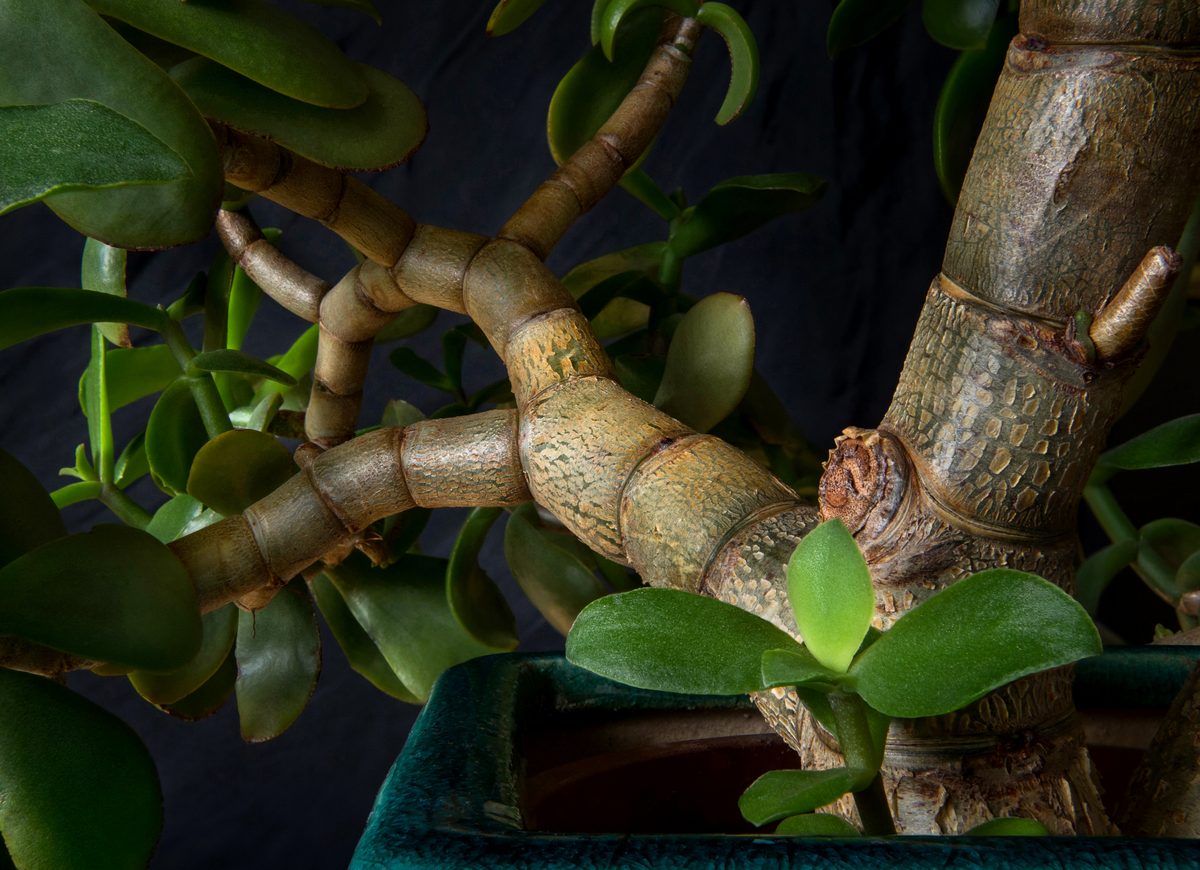
Photo: W.carter, CC0 via Wikimedia Commons

Quick facts
| Light: | Full sun and part shade (full sun preferred)11 source |
|---|---|
| Water: | Dry to medium1234 |
| Soil: | Well drained and occasionally dry51 source |
| Hardiness: | Zones 11a–12b16 |
| Size: | 2–4 ft (0.61–1.22 m) × Sources differ: UF/IFAS Extension (EDIS); University of Florida IFAS Extension (EDIS/Ask IFAS); University of Florida IFAS Extension (EDIS); University of Florida IFAS Extension (EDIS)211 source |
| Growth rate: | Slow2221 source |
| Bloom: | Pink and white13 |
| Cats: | Toxic to cats (1 source) Severity reported: Mild 7 |
| Dogs: | Toxic to dogs (1 source) 7 |
| Native range: | CPP, MOZ, NAT8 |
| Family: | Crassulaceae |
How much light does a Jade Plant need?
Outdoors, this succulent wants plenty of direct sun through most of the day. Full sun is the preferred exposure, though it also tolerates part shade when that is all you have. Choose the brightest outdoor spot available for the strongest, most compact growth. Plants kept in part shade still grow, just more slowly than ones in full sun. Rotate the pot every few weeks so light reaches all sides evenly. A spot with at least some direct sun each day supports the plant's natural, sturdy shape. If leaves start to look pale or stretched, the spot likely needs more sun, not less.
- Light: Full sun and part shade (full sun preferred)1
How often to water a Jade Plant
Let the soil dry out before you water this plant again. Its ideal moisture ranges from fully dry to just lightly moist, never soggy. The soil also needs to drain well, and occasional dry spells between waters are fine. Outdoors, this matches the plant's low humidity preference, since both point to drier conditions overall. In containers, water until it runs from the drainage holes, then wait for the top few inches to dry before the next drink. Checking the soil with a finger tells you more than a fixed schedule, since actual dryness is what this plant's watering needs depend on.
Best soil for a Jade Plant
This plant needs soil that drains fast and does not stay wet for long. It also tolerates soil that goes occasionally dry between waterings. Heavy, water-retentive soil is the opposite of what this plant's roots want. Pick a container with drainage holes so excess water can escape after each watering. Check drainage by watching how fast water moves through the pot after a soak. A sandy or gritty texture in the mix supports the fast drainage this species needs. No cited source for this page gives a preferred soil pH range.
- Soil drainage: Well drained and occasionally dry5
Hardiness and temperature
The lowest temperature this plant tolerates outdoors is about 50°F (10°C). Nights colder than that can damage or kill the leaves and stems. That cold limit maps roughly to USDA zones 11a to 12b for year-round outdoor growing. Outside that range, bring it indoors or into a greenhouse before frost threatens. This plant also prefers low humidity, so damp, muggy air outdoors is not an issue for it the way cold is.
Fertilizing a Jade Plant
Only light feeding suits this plant outdoors. A single light application once a year covers its needs for the growing season. Heavy or frequent feeding pushes soft, leggy growth instead of the plant's naturally slow, compact habit. Apply it during the plant's active growing period rather than when growth has stalled.
- Fertilizer: Light, once a year5
Pruning a Jade Plant
Light shaping is the only pruning this plant usually needs. Do the work in spring, once new growth has started. Pinch or snip leggy stems back to a healthy leaf joint to keep the shape tight and compact. Save any hard cuts for the same spring window, since the plant heals and regrows fastest then.
- Pruning: Light shaping (Mar–May)6
How to plant a Jade Plant
USDA zones 11a to 12b are warm enough to keep this plant outdoors through the year. In cooler zones, grow it in a container you can move indoors before the cold arrives. Give it a spot with full sun to part shade and soil that drains fast. It grows slowly to a mature height of about 2 to 4 ft (0.6 to 1.2 m), so plan for that eventual size even if the young plant looks small. It is native to parts of South Africa and Mozambique.
Winter care
Bring container plants indoors once nights approach 50°F (10°C), the lowest temperature this species tolerates. Outside zones 11a to 12b, winter cold outdoors will damage or kill it, so treat it as a houseplant for that season. Indoors for winter, give it the brightest window you have, since it still wants strong light. Keep checking that the soil has dried out before you water it, the same rule that applies the rest of the year.
How to propagate a Jade Plant
Leaf cuttings root easily for this plant and are the most common method gardeners use. Let a leaf or a stem cutting callus over for a day or two before setting it on or in dry soil. Stem cuttings work the same way and often establish a bit faster than single leaves. Seed is also listed as a propagation option, though it is slower than cuttings.
- Propagation: Leaf cuttings, stem cuttings and seed3
Common problems
Watch for mealybugs, spider mites, and scale. Mealybugs look like small white, cottony clumps in leaf joints. Spider mites leave fine webbing or pale speckles on leaves. Scale shows up as small brown bumps on stems. Check the plant often to catch any of these early. Mealybugs tend to be the most persistent once they take hold. No cited source on this page lists specific diseases for this species.
| Problem | Kind |
|---|---|
| Mealybugs | Pest |
| Spider mites | Pest |
| Scale insects | Pest |
| Root rot | Disease |
| Bacterial soft rot | Disease |
| Powdery mildew | Disease |
Is Jade Plant toxic to cats and dogs?
Cats that chew on this plant are at risk of poisoning, since it is classed as toxic to cats. The same is true for dogs, which are also listed as being poisoned by it. Keep the whole plant, including any fallen or trimmed pieces, out of reach of both pets. If a cat or dog chews or swallows any part of it, contact your vet or a pet poison line right away.
Pet-safe alternatives
Recommended supplies
- Soil: a free-draining mix, and a pot with a drainage hole.
Questions and answers
- Is jade plant toxic to cats and dogs?
- Yes, it is listed as toxic to both cats and dogs. Keep it out of reach of pets, and contact your vet or a pet poison line if one chews on it.
- How much sun does jade plant need outdoors?
- It does best in full sun outdoors, and it also tolerates part shade. A spot with several hours of direct light each day keeps growth sturdy and compact.
- How cold can jade plant tolerate outdoors?
- This plant tolerates outdoor temperatures down to about 50°F (10°C). It grows outdoors year-round only in USDA zones 11a to 12b, and needs to come indoors elsewhere before frost.
Sources
- NC State Extension Gardener Plant Toolbox. https://plants.ces.ncsu.edu/plants/crassula-ovata/. Accessed 23 September 2026.
- University of Florida IFAS Extension (EDIS). https://ask.ifas.ufl.edu/publication/FP153. Accessed 24 September 2026.
- University of Wisconsin-Madison Division of Extension (Wisconsin Horticulture). https://hort.extension.wisc.edu/articles/jade-plant-crassula-ovata/. Accessed 24 September 2026.
- Iowa State University Extension and Outreach (Yard and Garden). https://yardandgarden.extension.iastate.edu/faq/how-often-should-i-water-my-jade-plant. Accessed 24 September 2026.
- Clemson Cooperative Extension Home & Garden Information Center. https://hgic.clemson.edu/factsheet/jade-plant/. Accessed 23 September 2026.
- Penn State Extension. https://extension.psu.edu/jade-plant-a-no-fuss-houseplant. Accessed 23 September 2026.
- ASPCA Animal Poison Control Center. https://www.aspca.org/pet-care/aspca-poison-control/toxic-and-non-toxic-plants/jade-plant. Accessed 23 September 2026.
- Royal Botanic Gardens, Kew (World Checklist of Vascular Plants). https://sftp.kew.org/pub/data-repositories/WCVP/wcvp.zip. Accessed 4 June 2026.
How this page was made
- Written with AI assistance from the sources listed on this page. AI is never the source of a fact.