Barbados Aloe (Aloe vera)
Formerly Aloe barbadensis, Aloe flava, Aloe indica
Keep Barbados aloe (Aloe vera) in full sun to part shade, and let the soil dry completely between waterings. Outdoors, full sun is preferred, and part shade is also listed. Indoors, it needs bright, indirect light. The ASPCA lists Barbados aloe as toxic to both cats and dogs.
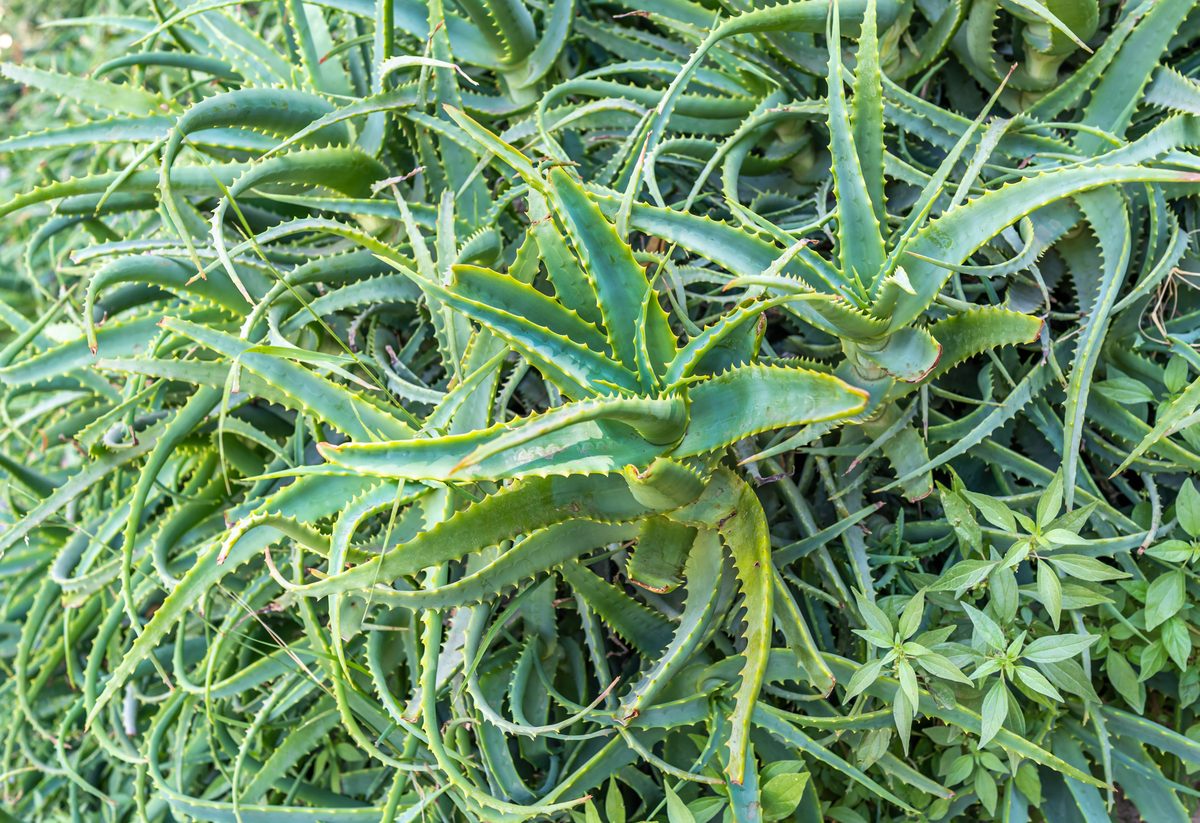
Photo: Rjcastillo, CC BY-SA 4.0 via Wikimedia Commons

Quick facts
| Light: | Full sun and part shade (full sun preferred)12 |
|---|---|
| Water: | Dry11 source |
| Soil: | Well drained and occasionally dry11 source |
| Hardiness: | Zones 10a–12b11 source |
| Size: | 1–2 ft (0.3–0.6 m) × 1–2.5 ft (0.3–0.76 m)11 source |
| Growth rate: | Moderate11 source |
| Bloom: | Flower Bloom Time listed as Spring and Winter; converted to meteorological month ranges (Mar-May, Dec-Feb)., Yellow, orange and red13Not documented by major sources |
| Cats: | Toxic to cats (1 source) 4 |
| Dogs: | Toxic to dogs (1 source) 4 |
| Native range: | OMA5 |
| Family: | Asphodelaceae |
How much light does a Barbados Aloe need?
Outdoors, Barbados aloe is listed for full sun and part shade, with full sun preferred. Full sun means 6 or more hours of direct sunlight a day. It grows best, keeps its color and flowers in full to partial sun. Indoors, the plant needs bright, indirect light. Without it, the leaves may droop instead of standing erect.
How often to water a Barbados Aloe
Allow the soil to dry completely between waterings. The listed water need for this plant is dry. Check that the soil has dried out all the way before you water again. Its soil is described as well drained and occasionally dry. The listing also gives good drainage as a soil condition.
- Water: Dry1
Best soil for a Barbados Aloe
The soil for Barbados aloe should be well drained and occasionally dry. Good drainage is the soil condition its listing names. That soil should also dry completely between waterings. Replanting your aloe every two years can help refresh the soil and reduce crowding of the roots. That is the listed repotting interval for this plant. The record gives two years as both the shortest and the longest interval.
- Soil drainage: Well drained and occasionally dry1
Hardiness and temperature
Barbados aloe is listed for USDA hardiness zones 10a through 12b. The zone range runs from 10a at the cold end to 12b at the warm end. It overwinters best in a heated greenhouse or other indoor space with temperatures above 59 °F (15 °C). It is well adapted to living in houses where relative humidity is low, at 10 to 30 percent. The listed humidity preference is low.
How to plant a Barbados Aloe
Outdoor planting suits USDA zones 10a through 12b, according to the hardiness listing. Choose a spot with full sun, which means 6 or more hours of direct sunlight a day. Plan for a plant 1–2 ft (0.3–0.6 m) tall and 1–2.5 ft (0.3–0.76 m) wide. Its habit is erect and mounding. The soil should be well drained and occasionally dry.
- Hardiness: Zones 10a–12b1
Winter care
The hardiness listing runs from zone 10a to zone 12b. Barbados aloe overwinters best in a heated greenhouse or other indoor space above 59 °F (15 °C). It is well adapted to low relative humidity of 10 to 30 percent indoors. Bright, indirect light is the listed indoor level. Allow the soil to dry completely between waterings.
How to propagate a Barbados Aloe
You can propagate Barbados aloe by division. Offsets are the second listed method. Division and offsets are the two propagation methods recorded for this plant. Division is the method the extension listing states directly. Replanting every two years is also listed for this plant.
- Propagation: Division and offsets1
Common problems
Mealybugs and aphids are insects that may affect the health of your aloe plant. Its listed problems also include scale, leaf spot, aloe rust and sooty mold. That makes two pests and four diseases listed for Barbados aloe. Scale appears in the disease list, not the pest list, in the record.
| Problem | Kind |
|---|---|
| Mealybugs | Pest |
| Aphids | Pest |
| Scale insects | Pest |
| Leaf spot | Disease |
| Aloe rust | Disease |
| Sooty mold | Disease |
Is Barbados Aloe toxic to cats and dogs?
The ASPCA Animal Poison Control Center lists Barbados aloe as toxic to cats. It lists the plant as toxic to dogs as well. The entry reads, Toxic to Dogs, Toxic to Cats. Cats and dogs share the same listed position, which is toxic. Neither the cat entry nor the dog entry is listed as non-toxic or as not documented. Both animals are covered by the same ASPCA entry.
Pet-safe alternatives
Recommended supplies
- Soil: a free-draining mix, and a pot with a drainage hole.
Questions and answers
- Is Barbados aloe toxic to cats and dogs?
- The ASPCA Animal Poison Control Center lists Barbados aloe as toxic to cats and as toxic to dogs. The listing reads, Toxic to Dogs, Toxic to Cats. Both animals share the same listed position.
- How often should I water Barbados aloe?
- Allow the soil to dry completely between waterings. Check that the soil has dried out all the way before you water again. Its soil should be well drained and occasionally dry.
- How much light does Barbados aloe need?
- Outdoors, it is listed for full sun and part shade, with full sun preferred. Full sun means 6 or more hours of direct sunlight a day. Indoors, it needs bright, indirect light.
Sources
- NC State Extension Gardener Plant Toolbox. https://plants.ces.ncsu.edu/plants/aloe-vera/. Accessed 24 September 2026.
- Penn State Extension. https://extension.psu.edu/aloe-a-hardy-houseplant. Accessed 24 September 2026.
- Chicago Botanic Garden. https://www.chicagobotanic.org/plant-information/plant-finder/aloe-vera-medicine-plant. Accessed 30 October 2026.
- ASPCA Animal Poison Control Center. https://www.aspca.org/pet-care/aspca-poison-control/toxic-and-non-toxic-plants/true-aloe. Accessed 23 September 2026.
- Royal Botanic Gardens, Kew (World Checklist of Vascular Plants). https://sftp.kew.org/pub/data-repositories/WCVP/wcvp.zip. Accessed 4 June 2026.
How this page was made
- Written with AI assistance from the sources listed on this page. AI is never the source of a fact.