American Century Plant (Agave americana)
Formerly Aloe americana, Agave picta, Agave felina
Give this succulent direct sun indoors, ideally from a south- or west-facing window for several hours a day, and let the soil dry out completely between waterings. It does best in dry, sandy soil and does not need frequent watering. It is toxic to both cats and dogs.
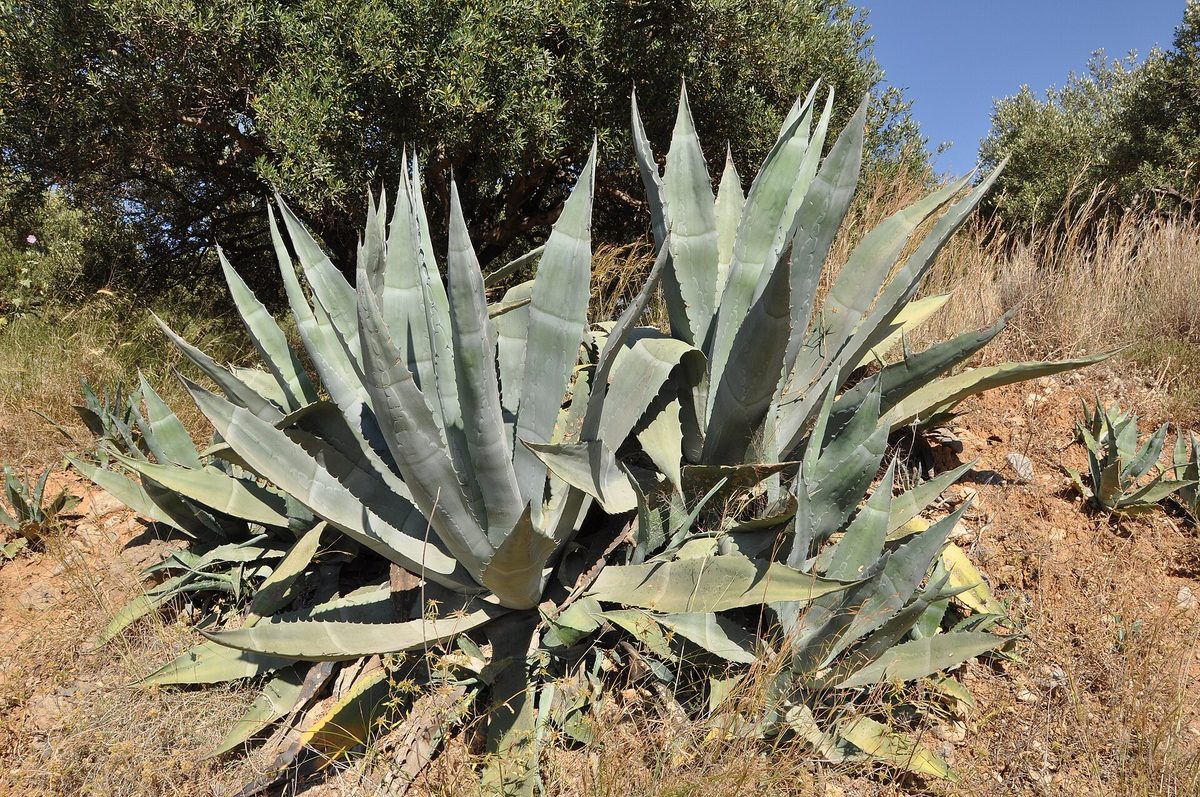
Photo: Marc Ryckaert (MJJR), CC BY-SA 3.0 via Wikimedia Commons

Quick facts
| Light: | Direct sun11 source |
|---|---|
| Water: | Dry21 source |
| Soil: | Well drained21 source |
| Size: | 6 ft (1.83 m) × 6–10 ft (1.83–3.05 m)6271 source |
| Growth rate: | Slow21 source |
| Bloom: | Yellow and green21 source |
| Cats: | Toxic to cats (1 source) 4 |
| Dogs: | Toxic to dogs (1 source) 5 |
| Native range: | ARI, MXC, MXE, MXG, MXN, MXS, TEX8 |
| Family: | Asparagaceae |
How much light does an American Century Plant need?
Indoors, this succulent needs direct sun to do well. A south- or west-facing window that gets several hours of direct sunlight each day is the best spot for it. Outdoors, it prefers full sun but can also handle light shade. Full sun outdoors means six or more hours of direct sunlight.
- Light: Direct sun1
How often to water an American Century Plant
Dry soil suits this plant best. Let the soil dry out fully before you water again. It is suited to dry, sandy soil, and extra moisture is not something it needs. Water sparingly, and avoid letting the soil stay wet for long periods. Overall, this is a low-water plant.
- Water: Dry2
Best soil for an American Century Plant
Good drainage is essential for this plant's soil. It is a succulent, and it prefers conditions on the dry side. In the wild, it is typically found growing in dry, sandy soil. Poorly drained or overly wet soil can lead to root rot. No cited source on this page states a soil pH range for it. A dry, sandy mix suits it well. Drainage like this is one of its most basic soil needs.
- Soil drainage: Well drained2
Temperature and humidity
No cited source on this page gives a minimum temperature for this plant. It is hardy outdoors in USDA zones 8a through 11b. Indoors, it thrives in the low humidity typical of most homes, especially in winter. It does not need extra humidity from a humidifier. Zone 8a marks roughly the coldest conditions it is listed as hardy for outdoors. Zone 11b marks the warmest end of that hardiness range. Many homes naturally have the kind of low humidity this plant is comfortable with.
- Humidity: Low3
Fertilizing an American Century Plant
Feed this plant once a month during the growing season. Use a low-nitrogen fertilizer, such as a 5-10-5 blend. Stop feeding once the growing season ends, and start again only when the next growing season begins. A monthly feeding schedule matches its active growing period.
- Fertilizer: Monthly in the growing season1
How to propagate an American Century Plant
You can propagate this plant from seed. It can also be propagated by division. Removing and replanting its offsets is a third method. All three are documented ways to start a new plant from this species. Seed, division, and offsets each work as a propagation method for it. No single method is named as the only option for this plant.
Common problems
Agave weevil can be a problem for this plant. Slugs and snails may also damage its foliage. Root rot can occur, especially in soil that stays poorly drained or overly wet. Watch for agave weevil activity, along with slug and snail damage to the leaves.
| Problem | Kind |
|---|---|
| Agave weevil | Pest |
| Slugs and snails | Pest |
| Snails | Pest |
| Root rot | Disease |
Is American Century Plant toxic to cats and dogs?
This plant is toxic to both cats and dogs, though their signs are not quite the same. In cats, it is linked to a bad taste in the mouth or a mild stomach upset. In dogs, the expected signs are skin irritation along with an upset stomach. Both reactions involve the digestive system, even though the exact symptoms differ between the two pets.
Pet-safe alternatives
Recommended supplies
- Light: direct sun for several hours; indoors that means an unobstructed south window or a grow light.
- Soil: a free-draining mix, and a pot with a drainage hole.
Questions and answers
- How much light does this plant need?
- It needs direct sun indoors, so a spot with several hours of bright, direct light each day is ideal, like a window facing south or west.
- How often should you water this plant?
- Let the soil dry out completely before watering again, since this plant prefers dry conditions. Make sure the soil drains well, because wet soil can lead to root rot.
- Is this plant toxic to cats and dogs?
- This plant is toxic to both cats and dogs. In cats, signs include a bad taste in the mouth and a mild stomach upset, while dogs are more likely to show skin irritation and stomach upset.
Sources
- Clemson Cooperative Extension Home & Garden Information Center. https://hgic.clemson.edu/factsheet/indoor-cacti/. Accessed 12 October 2026.
- NC State Extension Gardener Plant Toolbox. https://plants.ces.ncsu.edu/plants/agave-americana/. Accessed 12 October 2026.
- Iowa State University Extension and Outreach (Yard and Garden). https://yardandgarden.extension.iastate.edu/how-to/growing-succulents-indoors. Accessed 12 October 2026.
- Pet Poison Helpline. https://www.petpoisonhelpline.com/pet-safety-tips/safe-plants-for-your-furry-friend/. Accessed 12 October 2026.
- Pet Poison Helpline. https://www.petpoisonhelpline.com/toxintails/a-severely-swollen-face-with-no-tequila-high/. Accessed 12 October 2026.
- Lady Bird Johnson Wildflower Center. https://www.wildflower.org/plants/result.php?id_plant=agam. Accessed 12 October 2026.
- Chicago Botanic Garden. https://www.chicagobotanic.org/plant-information/plant-profiles/century-plant. Accessed 12 October 2026.
- Royal Botanic Gardens, Kew (World Checklist of Vascular Plants). https://sftp.kew.org/pub/data-repositories/WCVP/wcvp.zip. Accessed 4 June 2026.
How this page was made
- Written with AI assistance from the sources listed on this page. AI is never the source of a fact.