Desert-rose (Adenium obesum)
Formerly Adenium somalense, Nerium obesum, Adenium honghel
Desert-rose, Adenium obesum, does best in full sun and should dry between waterings. The watering range runs from dry to medium. The ASPCA lists it as toxic to both cats and dogs. It is rated for USDA zones 11a to 12b. Its listed minimum temperature is 32 °F (0 °C).
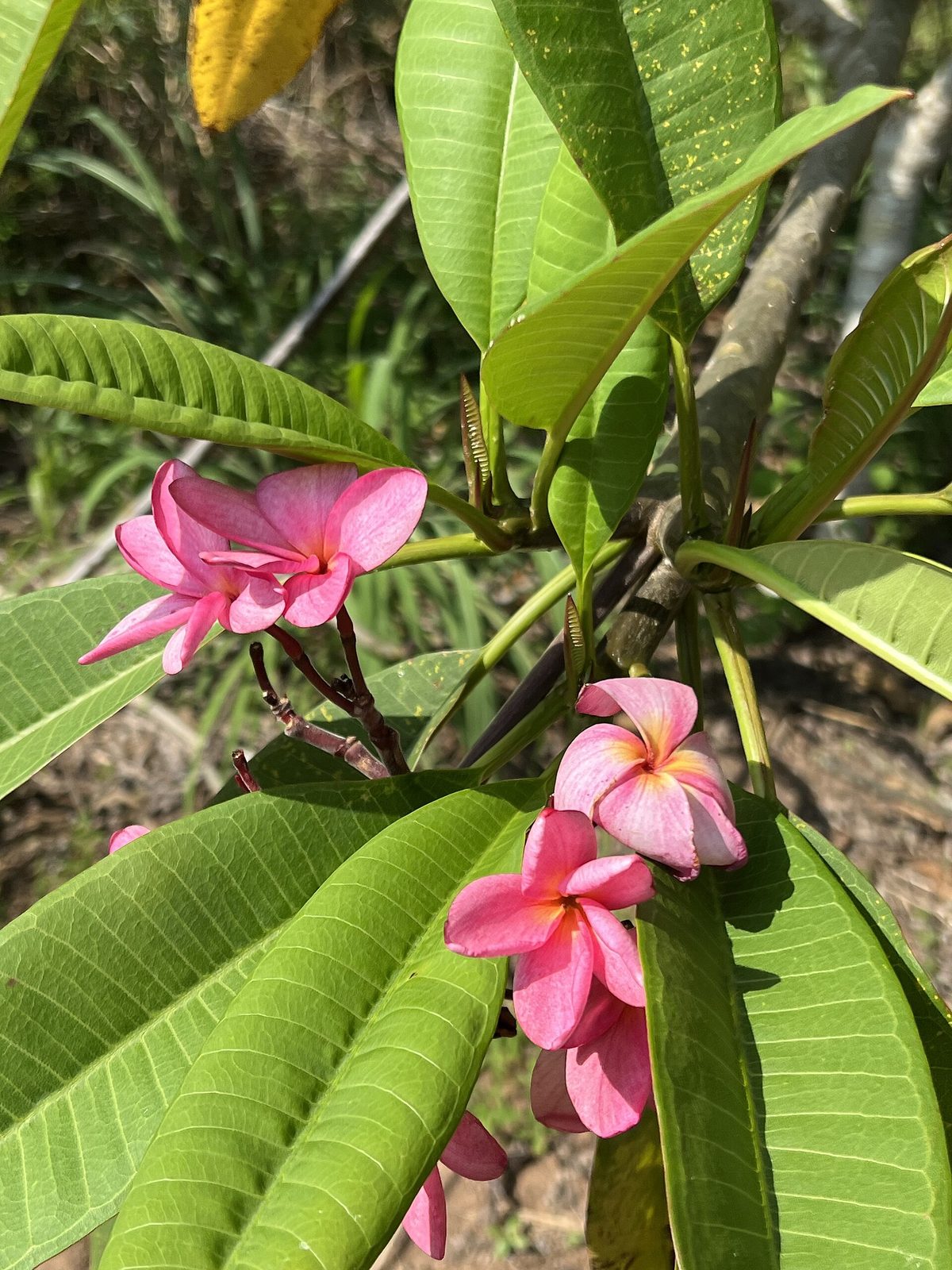
Photo: Tohinde, CC0 via Wikimedia Commons

Quick facts
| Light: | Full sun12 |
|---|---|
| Water: | Dry to medium11 source |
| Soil: | Well drained and occasionally dry13 |
| Hardiness: | Zones 11a–12b11 source |
| Size: | 3–9 ft (0.91–2.74 m) × 3–5 ft (0.91–1.52 m)16 |
| Growth rate: | Slow111 source |
| Bloom: | Jan–Feb and Mar–Apr, Pink, red, white and yellow611 source |
| Cats: | Toxic to cats 51 |
| Dogs: | Toxic to dogs 51 |
| Native range: | BEN, BKN, BUR, CHA, CMN, ETH, GHA, GNB, GUI, IVO, KEN, MLI, MTN, NGA, NGR, OMA, SAU, SEN, SOC, SOM, SUD, TAN, TOG, UGA, YEM7 |
| Family: | Apocynaceae |
How much light does a Desert-rose need?
Desert-rose prefers full sun, meaning six or more hours of direct sunlight a day. Bright sunlight is also listed for maximum flowering. Full sun is the only outdoor light level on record for this plant. Indoors, the listed light is direct sun. It will not flower under low light conditions. No lower indoor light level is listed as tolerated.
How often to water a Desert-rose
Allow the plant to dry between waterings, but water during growing periods. Desert-rose is quite drought tolerant. The listed water range runs from dry to medium. Well drained soil is listed, and so is soil that is occasionally dry. Feel whether the soil has dried out before you water again. Soils that are too wet will produce rots.
- Water: Dry to medium1
Best soil for a Desert-rose
Good drainage is listed for desert-rose. The soil is described as well drained and occasionally dry. Soils that are too wet will produce rots. Root rot is among the diseases recorded for the plant. The plant is allowed to dry between waterings. Drainage is the main soil trait on record here. A soil pH range, texture or fertility level is not documented for this page.
Hardiness and temperature
Desert-rose is rated for USDA hardiness zones 11a to 12b. The hardiness entry spans 11a, 11b, 12a and 12b. Zones colder than 11a fall outside that listed range. The listed minimum temperature is 32 °F (0 °C). The plant is not freeze tolerant below 32 °F. The temperature entry gives one number, a minimum, and no maximum. No cited source records a humidity preference for this plant.
How to plant a Desert-rose
Outdoor planting suits USDA zones 11a to 12b. Pick a spot with full sun, six or more hours of direct sunlight a day. The soil there should be well drained. Leave room for a mature spread of 3–5 ft (0.91–1.52 m). Mature height runs 3–9 ft (0.91–2.74 m). Growth is slow, and the habit is erect. Blooms come in pink, red, white and yellow.
- Hardiness: Zones 11a–12b1
Winter care
Desert-rose is not freeze tolerant below 32 °F (0 °C). That figure is the minimum temperature on record for the plant. Its hardiness rating covers USDA zones 11a to 12b. A pot kept indoors falls under the indoor light rating, which is direct sun. Low light indoors rules out flowering. Winter conditions outside zones 11a to 12b are beyond the listed hardiness range.
Common problems
Possible insect pests include aphids, scales and mealybugs. Mites and mulberry scale are also recorded. Fungal leaf spot is an occasional disease problem. Soils that are too wet will produce rots, and root rot is listed. Southern blight, impatiens necrotic spot virus and tomato spotted wilt virus are also listed.
| Problem | Kind |
|---|---|
| Aphids | Pest |
| Mealybugs | Pest |
| Scale insects | Pest |
| Mites | Pest |
| Mulberry scale | Pest |
| Fungal leaf spot | Disease |
| Root rot | Disease |
| Southern blight | Disease |
| Impatiens necrotic spot virus | Disease |
| Tomato spotted wilt virus | Disease |
Is Desert-rose toxic to cats and dogs?
The ASPCA lists desert-rose as toxic to cats. It also lists the plant as toxic to dogs. NC State Extension Gardener Plant Toolbox marks it as a problem for cats. It marks it as a problem for dogs as well. Cats and dogs are each listed as toxic, so the position is the same for both animals. Neither listing places the plant in a non-toxic category for cats or dogs. The facts on this page state no severity and name no plant parts.
Pet-safe alternatives
Recommended supplies
- Soil: a free-draining mix, and a pot with a drainage hole.
Questions and answers
- Is desert-rose toxic to cats and dogs?
- The ASPCA lists it as toxic to cats and toxic to dogs. NC State Extension also marks it as a problem for both cats and dogs. Neither animal is listed as non-toxic here.
- How much sun does desert-rose need?
- Outdoors it needs full sun, which means six or more hours of direct sunlight a day. Indoors, the listed light is direct sun. It will not flower under low light conditions.
- Can desert-rose survive a freeze?
- The listing says it is not freeze tolerant below 32 °F (0 °C). Its hardiness rating is USDA zones 11a to 12b. Colder zones fall outside that range.
Sources
- NC State Extension Gardener Plant Toolbox. https://plants.ces.ncsu.edu/plants/adenium-obesum/. Accessed 14 October 2026.
- University of Florida IFAS Extension (EDIS). https://ask.ifas.ufl.edu/ep474. Accessed 14 October 2026.
- University of Florida IFAS Extension (EDIS). https://ask.ifas.ufl.edu/publication/EP474. Accessed 14 October 2026.
- EPPO Global Database. https://gd.eppo.int/taxon/ADFOB/pests. Accessed 14 October 2026.
- ASPCA Animal Poison Control Center. https://www.aspca.org/pet-care/aspca-poison-control/toxic-and-non-toxic-plants/desert-azalea. Accessed 14 October 2026.
- Chicago Botanic Garden. https://www.chicagobotanic.org/plant-information/plant-finder/adenium-obesum-desert-rose. Accessed 30 October 2026.
- Royal Botanic Gardens, Kew (World Checklist of Vascular Plants). https://sftp.kew.org/pub/data-repositories/WCVP/wcvp.zip. Accessed 4 June 2026.
How this page was made
- Written with AI assistance from the sources listed on this page. AI is never the source of a fact.