Canada Goldenrod (Solidago canadensis)
Formerly Aster canadensis, Doria canadensis, Solidago nutans
Canada goldenrod does best in full sun with medium water. It is a herbaceous perennial with yellow flowers. The flowers open from August to October. It is rated for USDA zones 5a to 9b. Mature plants reach 2–4 ft (0.61–1.22 m) tall. They can spread 4–6 ft (1.22–1.83 m) wide. Pet toxicity for cats and dogs is not documented here.
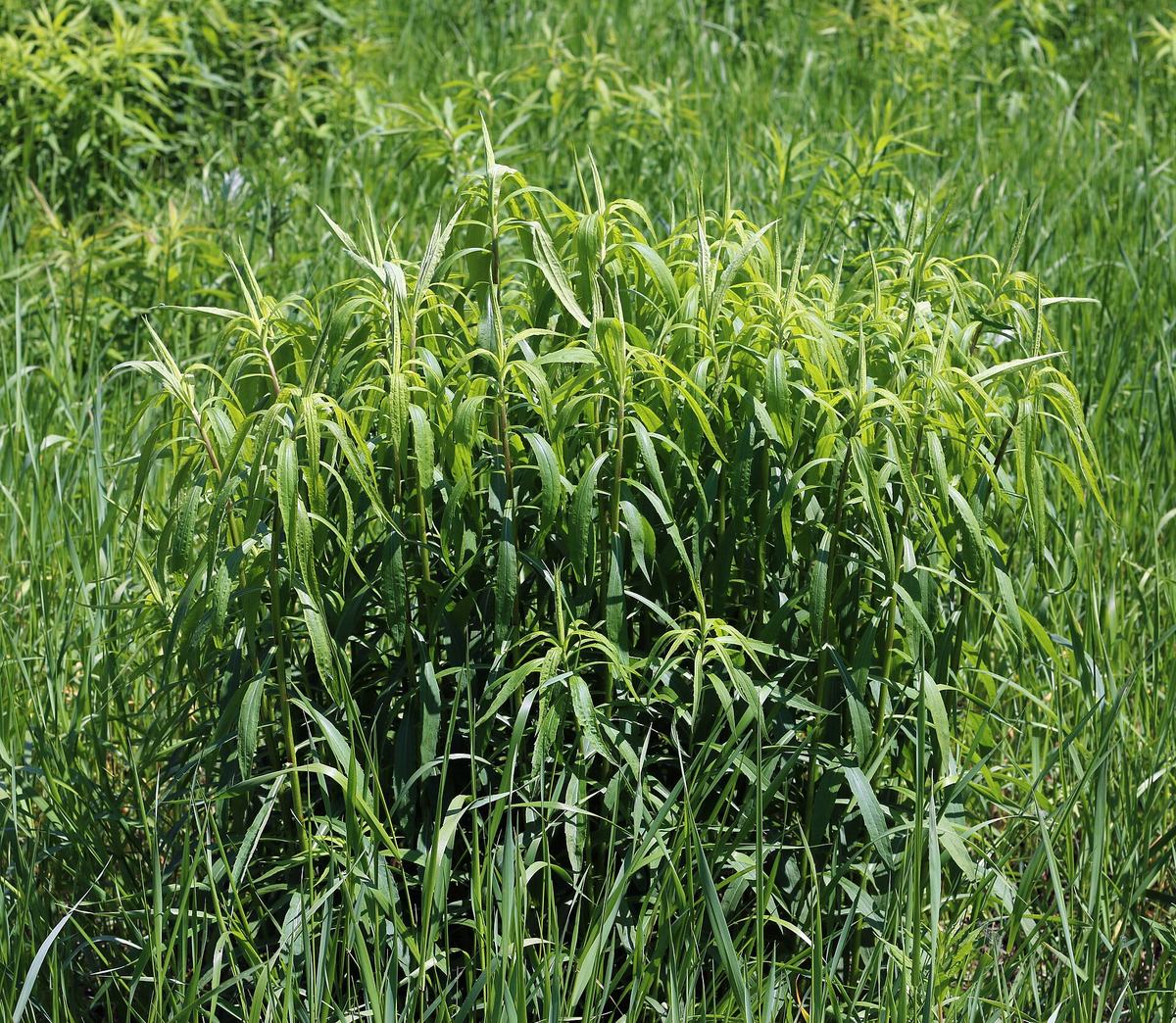
Photo: George Chernilevsky, Public domain via Wikimedia Commons

Quick facts
| Light: | Full sun and part shade (full sun preferred)12 |
|---|---|
| Water: | Medium21 |
| Soil: | Well drained and moist11 source |
| Hardiness: | Zones 5a–9b11 source |
| Size: | 2–4 ft (0.61–1.22 m) × 4–6 ft (1.22–1.83 m)311 source |
| Growth rate: | Moderate131 |
| Bloom: | Aug–Oct, Yellow121 source |
| Cats: | Not documented by major sources |
| Dogs: | Not documented by major sources |
| Native range: | ABT, ARI, ARK, ASK, BRC, CAL, CNT, COL, DEL, IDA, ILL, INI, IOW, KAN, KTY, MAI, MAN, MAS, MIC, MIN, MNT, MRY, MSI, NBR, NCA, NDA, NEB, NEV, NSC, NUN, NWH, NWJ, NWM, NWY, OHI, OKL, ONT, PEI, PEN, QUE, RHO, SAS, SCA, SDA, TEN, TEX, UTA, VER, VRG, WAS, WDC, WIS, WVA, WYO4 |
| Family: | Asteraceae |
How much light does a Canada Goldenrod need?
Canada goldenrod prefers full sun, which means six or more hours of direct sunlight a day. Another listing records its light range as sun to part shade. Part shade is an accepted condition, but full sun is the preferred one. Aim for six hours or more of direct sun each day wherever you can.
How often to water a Canada Goldenrod
Water needs for this plant are rated medium. It prefers a soil with some clay and moist but not wet conditions in full sun. Check that the soil feels moist rather than soggy before you add more water. The plant also tolerates drought, and its drought tolerance is rated high. It tolerates clay soil as well.
Best soil for a Canada Goldenrod
Soil drainage for Canada goldenrod is listed as well drained and moist. It prefers a soil with some clay that is moist but not wet, in full sun. Clay soil is also among the conditions it tolerates. Its drought tolerance is rated high. Both well drained and moist soils suit this plant. These two drainage conditions are the ones recorded. No soil pH range is documented for this plant.
Hardiness and temperature
Canada goldenrod is listed for USDA hardiness zones 5a to 9b. The listing names zones 5a, 6a, 6b, 7a, 7b, 8a, 8b, 9a and 9b. No minimum temperature or humidity preference is documented for this plant. Zone 5a is the coldest zone in the listing. Zone 9b is the warmest zone in the listing. The plant is an herbaceous perennial. Check your own USDA zone against this range before you plant.
- Hardiness: Zones 5a–9b1
How to plant a Canada Goldenrod
Check that your USDA zone falls between 5a and 9b before you plant. Choose a spot with full sun, meaning six or more hours of direct sunlight a day. Allow for a mature spread of 4–6 ft (1.22–1.83 m). Plants reach 2–4 ft (0.61–1.22 m) tall. They can spread extensively if they are not weeded or contained. Pick a well drained, moist soil.
- Hardiness: Zones 5a–9b1
Winter care
Winter hardiness for this plant is given as USDA zones 5a to 9b. Zone 5a is the coldest zone in the listing. Zone 9b is the warmest. It is a herbaceous perennial. Its listed bloom season runs from August to October. Winter protection, cutting back and minimum temperature are not documented for this plant. Check your own zone against the listed range.
- Hardiness: Zones 5a–9b1
How to propagate a Canada Goldenrod
Canada goldenrod propagates by seed and by division. Goldenrods spread by seed and rhizomes. Some people consider goldenrods weedy. It can spread extensively if it is not weeded or contained. Its growth rate is moderate, and in optimal conditions it can spread quickly. A mature plant reaches a spread of 4–6 ft (1.22–1.83 m).
- Propagation: Seed and division1
Common problems
Pests recorded for Canada goldenrod include aphids, beetles and gall forming insects. Aphids, beetles and gall-forming insects feed on goldenrod. The common diseases are rust, powdery mildew and leaf spot. The listed rust is Coleosporium asterum. Both pests and diseases are recorded as problems for this plant.
| Problem | Kind |
|---|---|
| Aphids | Pest |
| Beetles | Pest |
| Gall forming insects | Pest |
| Rust | Disease |
| Powdery mildew | Disease |
| Leaf spot | Disease |
Is Canada Goldenrod toxic to cats and dogs?
Recommended supplies
- Soil: a free-draining mix, and a pot with a drainage hole.
Questions and answers
- How much sun does Canada goldenrod need?
- It prefers full sun, meaning six or more hours of direct sunlight a day. Part shade is also listed as an accepted condition, with full sun preferred.
- How tall and wide does Canada goldenrod grow?
- Plants reach 2–4 ft (0.61–1.22 m) tall. The spread is 4–6 ft (1.22–1.83 m). It can spread extensively if it is not weeded or contained.
- Which pests and diseases affect Canada goldenrod?
- Aphids, beetles and gall forming insects are the pests listed. The diseases listed are rust, powdery mildew and leaf spot. The rust is recorded as Coleosporium asterum.
Sources
- NC State Extension Gardener Plant Toolbox. https://plants.ces.ncsu.edu/plants/solidago-canadensis/. Accessed 14 October 2026.
- Lady Bird Johnson Wildflower Center. https://www.wildflower.org/plants/result.php?id_plant=soca6. Accessed 14 October 2026.
- Oregon State University Extension Service. https://extension.oregonstate.edu/pub/em-9363. Accessed 14 October 2026.
- Royal Botanic Gardens, Kew (World Checklist of Vascular Plants). https://sftp.kew.org/pub/data-repositories/WCVP/wcvp.zip. Accessed 4 June 2026.
How this page was made
- Written with AI assistance from the sources listed on this page. AI is never the source of a fact.