American Beautyberry (Callicarpa americana)
Formerly Johnsonia americana, Burchardia americana, Callicarpa serrata
Give American beautyberry full sun, with part shade also accepted. Its soil should be well drained, moist or occasionally dry. It is a deciduous shrub that reaches 5–9 ft (1.52–2.74 m) tall. Hardiness zones run from 6a to 10b. It is native to the lower 48 US states. It grows at a moderate rate. Watering needs and pet toxicity are not documented on this page.
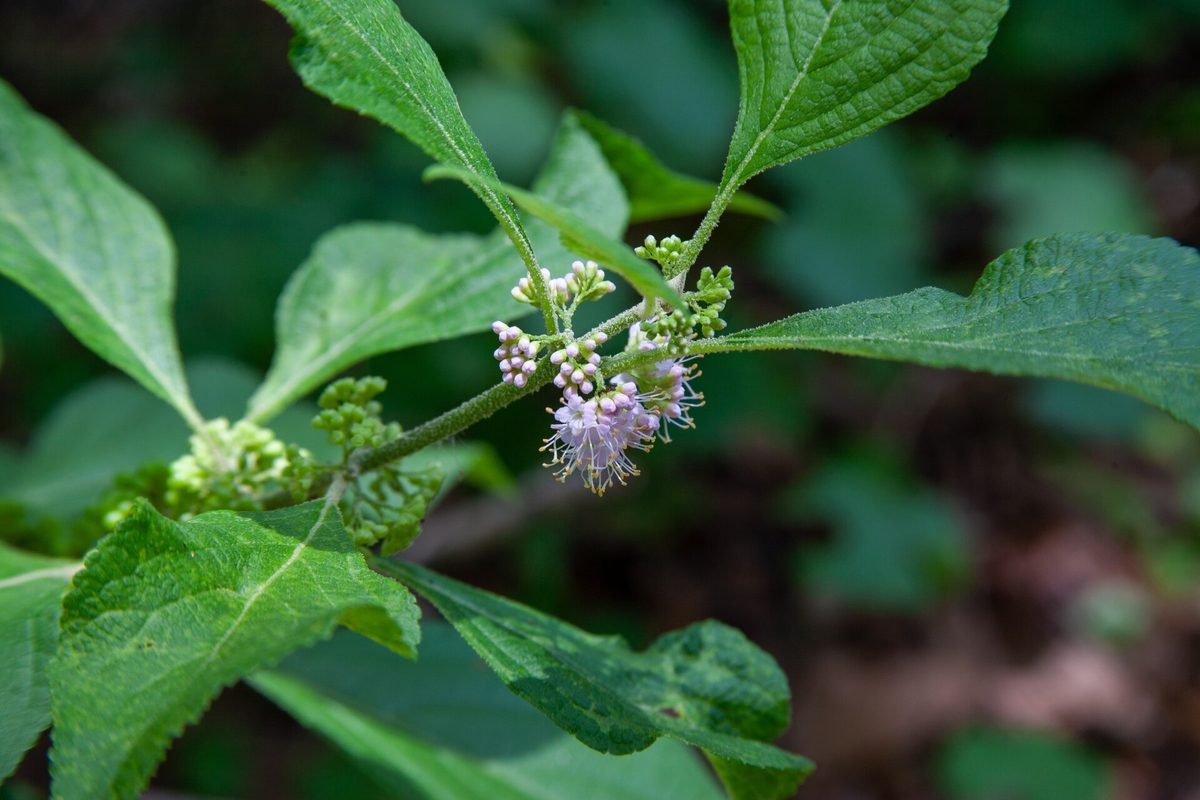
Photo: Bailey Duncan, CC BY-SA 4.0 via Wikimedia Commons

Quick facts
| Light: | Full sun and part shade (full sun preferred)11 source |
|---|---|
| Soil: | Well drained, moist and occasionally dry21 source |
| Hardiness: | Zones 6a–10b11 source |
| Size: | 5–9 ft (1.52–2.74 m) × 5–9 ft (1.52–2.74 m)51 source |
| Growth rate: | Moderate131 |
| Bloom: | Jun–Jul, Blue, purple, pink and white156 |
| Cats: | Not documented by major sources |
| Dogs: | Not documented by major sources |
| Native range: | ALA, ARK, BAH, BER, CUB, FLA, GEO, KTY, LOU, MRY, MSI, MSO, NCA, OKL, SCA, TEN, TEX, VRG7 |
| Family: | Lamiaceae |
How much light does an American Beautyberry need?
American beautyberry does best in full sun, which the source defines as 6 or more hours of direct sunlight a day. Part shade is also listed as a suitable light level. Full sun is the preferred setting of the two. This is a deciduous shrub, and these light levels apply to it outdoors.
- Light: Full sun and part shade (full sun preferred)1
Best soil for an American Beautyberry
Plant it in soil that is fertile, loose and well drained. The drainage record for this shrub lists three conditions: well drained, moist and occasionally dry. You can treat each of those as an acceptable condition for the plant. Moist soil is on the list, as is soil that is occasionally dry. Fertile, loose soil is the texture and richness the source names. Both fertility and looseness are named alongside drainage in the same description.
- Soil drainage: Well drained, moist and occasionally dry2
Hardiness and temperature
American beautyberry is listed for USDA hardiness zones 6a to 10b. That range runs from zone 6a at one end to zone 10b at the other. Zone 6a is the coldest zone in the listed range, and zone 10b is the warmest. It is a deciduous shrub that grows at a moderate rate. It is also native to the lower 48 US states.
- Hardiness: Zones 6a–10b1
How to plant an American Beautyberry
Plant American beautyberry where your USDA hardiness zone falls between 6a and 10b. The shrub reaches 5–9 ft (1.52–2.74 m) in both height and spread. Leave room for that spread when you choose a spot. Give it full sun, with part shade as an alternative. Choose soil that is well drained. It is a woody, deciduous shrub.
- Hardiness: Zones 6a–10b1
Winter care
American beautyberry is a woody, deciduous, perennial shrub. It is listed for hardiness zones 6a through 10b. Zone 6a is the coldest zone in that range, and zone 10b is the warmest. It produces showy purple fruits in the fall. Places in zones colder than 6a fall outside the listed range.
- Hardiness: Zones 6a–10b1
How to propagate an American Beautyberry
You can propagate American beautyberry in four ways, according to the propagation record. Those ways are seed, stem cuttings, root cuttings and division. The University of Florida IFAS Extension names seed or softwood cuttings. The other two methods, root cuttings and division, are listed in the propagation record without further detail.
- Propagation: Seed, stem cuttings, root cuttings and division3
Common problems
Entries for American beautyberry list four pests: Aleurodicus dugesii, Homalodisca vitripennis, Oncometopia nigricans and Pseudaulacaspis pentagona. One disease is listed alongside them, Xylella fastidiosa. Together that makes five named problems for this shrub. Pests and diseases are listed here by their Latin names only.
| Problem | Kind |
|---|---|
| Aleurodicus dugesii | Pest |
| Homalodisca vitripennis | Pest |
| Oncometopia nigricans | Pest |
| Pseudaulacaspis pentagona | Pest |
| Xylella fastidiosa | Disease |
Is American Beautyberry toxic to cats and dogs?
Recommended supplies
- Soil: a free-draining mix, and a pot with a drainage hole.
Questions and answers
- How much sun does American beautyberry need?
- It does best in full sun, which means 6 or more hours of direct sunlight a day. Part shade is also listed as a suitable light level. Full sun is the preferred setting.
- What color are the flowers of American beautyberry?
- The flowers may be blue, violet, pink or white. They bloom from June through July. The shrub also produces showy purple fruits in the fall.
- How big does American beautyberry get?
- A mature plant reaches 5–9 ft (1.52–2.74 m) in height. Its spread is also 5–9 ft (1.52–2.74 m). It grows at a moderate rate.
Sources
- NC State Extension Gardener Plant Toolbox. https://plants.ces.ncsu.edu/plants/callicarpa-americana/. Accessed 13 October 2026.
- Clemson Cooperative Extension Home & Garden Information Center. https://hgic.clemson.edu/factsheet/beautyberry/. Accessed 14 October 2026.
- University of Florida IFAS Extension (EDIS). https://ask.ifas.ufl.edu/publication/FP090. Accessed 13 October 2026.
- EPPO Global Database. https://gd.eppo.int/taxon/CLIAM/pests. Accessed 13 October 2026.
- Clemson Cooperative Extension Home & Garden Information Center. https://hgic.clemson.edu/factsheet/rain-garden-plants-callicarpa-americana/. Accessed 31 October 2026.
- Lady Bird Johnson Wildflower Center. https://www.wildflower.org/plants/result.php?id_plant=caam2. Accessed 13 October 2026.
- Royal Botanic Gardens, Kew (World Checklist of Vascular Plants). https://sftp.kew.org/pub/data-repositories/WCVP/wcvp.zip. Accessed 4 June 2026.
How this page was made
- Written with AI assistance from the sources listed on this page. AI is never the source of a fact.