Feverfew (Tanacetum parthenium)
Formerly Pyrethrum parthenium, Leucanthemum parthenium, Chrysanthemum parthenium
Feverfew is a fast-growing perennial that does best in full sun, though it also tolerates part shade. It produces clusters of white, yellow-centered flowers from June through September. This plant is toxic to both cats and dogs, and it grows in USDA hardiness zones 5a through 8b.
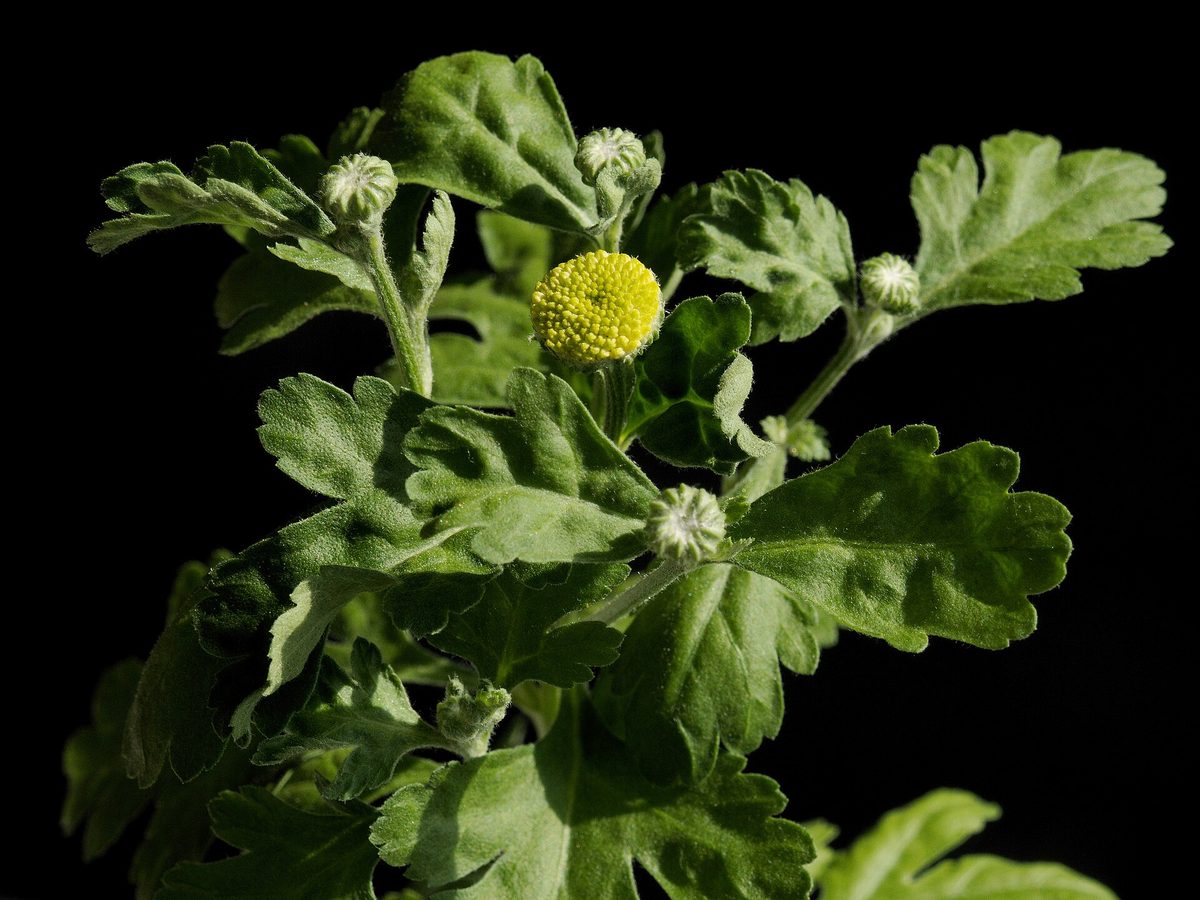
Photo: Bff, CC BY-SA 4.0 via Wikimedia Commons

Quick facts
| Light: | Full sun and part shade (full sun preferred)11 source |
|---|---|
| Soil: | Well drained and moist11 source |
| Hardiness: | Zones 5a–8b11 source |
| Size: | 1–3 ft (0.3–0.91 m) × 1–2 ft (0.3–0.61 m)11 source |
| Growth rate: | Rapid11 source |
| Bloom: | Jun–Sep, White and yellow11 source |
| Cats: | Toxic to cats (1 source) 1 |
| Dogs: | Toxic to dogs (1 source) 1 |
| Native range: | AFG, ALB, BUL, EAI, GRC, IRN, IRQ, KRY, PAK, TCS, TUE, TUR, WHM, YUG3 |
| Family: | Asteraceae |
How much light does a Feverfew need?
Feverfew grows best in full sun, which means six or more hours of direct sunlight each day. It also tolerates part shade, so a spot with some afternoon shade still works. Between the two, full sun is the preferred option for this plant. If you are deciding where to plant it, favor the sunniest spot you have, since full sun is listed as preferred and part shade as tolerated.
- Light: Full sun and part shade (full sun preferred)1
Best soil for a Feverfew
Feverfew grows best in soil that drains well, and it also tolerates soil that stays moist rather than bone dry. Ordinary garden soil that is neither waterlogged nor completely dried out satisfies both of those conditions. Soil that drains well while still holding some moisture matches the description given for this plant's needs. A well-drained, moist mix works well in garden beds.
- Soil drainage: Well drained and moist1
Hardiness and temperature
This plant is hardy in USDA zones 5a through 8b. Those are the zones where this plant is rated to survive winter outdoors. Zone 5a sits at the coldest end of that range, while zone 8b sits at the warmest end, so your local zone tells you how this plant will handle winter where you live.
- Hardiness: Zones 5a–8b1
Pruning a Feverfew
Deadhead feverfew by removing spent blooms as soon as they fade. Shearing off the old flowers right away also helps control how much it self-seeds. Doing this promptly, rather than waiting, is what the guidance recommends for keeping seeding in check. This is the main pruning task recommended for this plant.
- Pruning: Deadheading1
How to plant a Feverfew
Feverfew grows well outdoors in USDA zones 5a through 8b. Give each plant about 1 to 2 ft (0.3-0.61 m) of space, since that is the mature spread this plant typically reaches. Plants generally grow 1 to 3 ft (0.3-0.91 m) tall at maturity, so plan your spacing with that height in mind.
- Hardiness: Zones 5a–8b1
Winter care
Feverfew is rated to survive winter outdoors in USDA zones 5a through 8b. Outside of that zone range, winter conditions fall beyond what this plant is rated to handle. Zone 5a is the coldest zone where it is expected to survive, and zone 8b is the warmest limit listed.
- Hardiness: Zones 5a–8b1
Common problems
Watch feverfew for spider mites and leafminers, two pests recorded on this plant. Southern blight, tomato spotted wilt virus, and chrysanthemum stunt viroid are diseases recorded for feverfew as well. No other pests or diseases are documented for feverfew beyond this list.
| Problem | Kind |
|---|---|
| Spider mites | Pest |
| Leafminers | Pest |
| Southern blight | Disease |
| Tomato spotted wilt virus | Disease |
| Chrysanthemum stunt viroid | Disease |
Is Feverfew toxic to cats and dogs?
Feverfew is toxic to cats. It is also toxic to dogs. Both species are listed as having a problem with this plant. No severity level or specific clinical signs are listed beyond that problem classification for either animal. This plant's toxic status is the same for cats and for dogs, both marked as a problem. Feverfew does not have a listed exception for either species in this record.
Pet-safe alternatives
Recommended supplies
- Soil: a free-draining mix, and a pot with a drainage hole.
Questions and answers
- Is feverfew toxic to cats and dogs?
- Yes, feverfew is listed as toxic to both cats and dogs. No severity rating or specific symptoms are listed beyond that classification for either animal.
- How much sun does feverfew need?
- Feverfew grows best in full sun, meaning six or more hours of direct sunlight a day, but it also tolerates part shade. Full sun is the preferred option between the two.
- How cold hardy is feverfew outdoors?
- Feverfew is rated hardy in USDA zones 5a through 8b. Zone 5a marks the coldest end of that range, and zone 8b marks the warmest end.
Sources
- NC State Extension Gardener Plant Toolbox. https://plants.ces.ncsu.edu/plants/tanacetum-parthenium/. Accessed 14 October 2026.
- EPPO Global Database. https://gd.eppo.int/taxon/CHYPA/pests. Accessed 14 October 2026.
- Royal Botanic Gardens, Kew (World Checklist of Vascular Plants). https://sftp.kew.org/pub/data-repositories/WCVP/wcvp.zip. Accessed 4 June 2026.
How this page was made
- Written with AI assistance from the sources listed on this page. AI is never the source of a fact.