Curly Dock (Rumex crispus)
Formerly Rumex fauriei, Rumex kunthii, Rumex luederi
Curly dock needs full sun to part shade and soil that can run from dry to wet without harming it. It grows at a moderate rate and is toxic to both cats and dogs, so keep pets away from it.
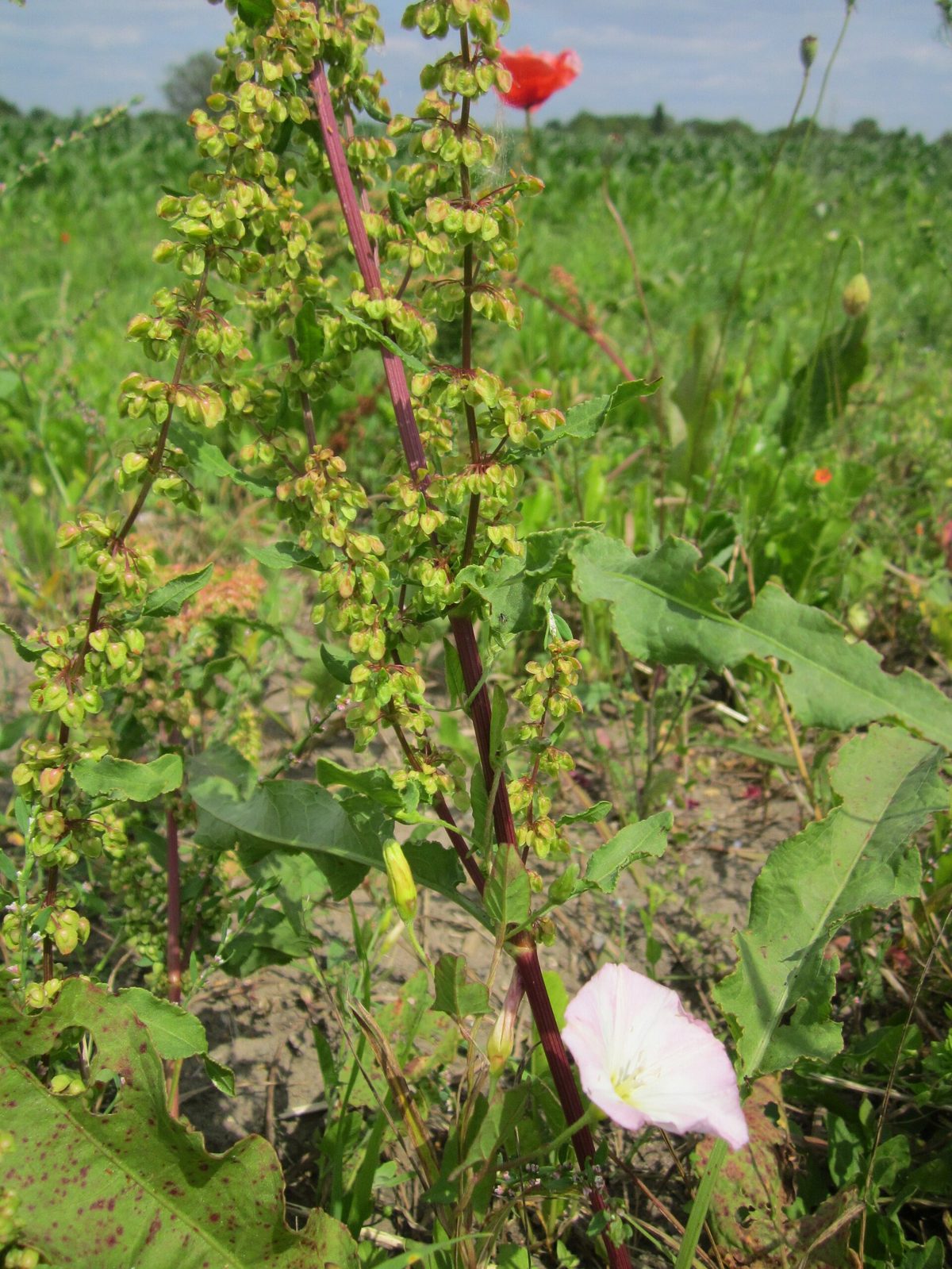
Photo: AnRo0002, CC0 via Wikimedia Commons

Quick facts
| Light: | Full sun and part shade (full sun preferred)111 source |
|---|---|
| Water: | Dry to wet11 source |
| Soil: | Moist, occasionally wet and occasionally dry21 source |
| Hardiness: | Zones 4a–8b11 source |
| Size: | 1.5–4 ft (0.46–1.22 m) × 1 ft (0.3 m)511 source |
| Growth rate: | Moderate111 source |
| Bloom: | Brown, yellow and green11 source |
| Cats: | Toxic to cats 41 |
| Dogs: | Toxic to dogs 41 |
| Native range: | AFG, ALB, ALG, ALT, AUT, AZO, BAL, BGM, BLR, BLT, BUL, CHC, CHI, CHM, CHN, CHQ, CHS, CHX, CNY, COR, CTA, CVI, CYP, CZE, DEN, EAI, EGY, FIN, FRA, GER, GRB, GRC, HUN, IRE, IRK, IRN, IRQ, ITA, KAZ, KGZ, KHA, KOR, KRA, KRY, KUR, LBS, LBY, MAG, MDR, MON, MOR, MYA, NCS, NET, NOR, PAL, POL, POR, PRM, ROM, RUC, RUE, RUN, RUS, RUW, SAK, SAR, SAU, SIC, SPA, SWE, SWI, TAI, TCS, THA, TUE, TUN, TUR, TVA, TZK, UKR, UZB, WHM, WSB, YAK, YUG6 |
| Family: | Polygonaceae |
How much light does a Curly Dock need?
Full sun is the preferred exposure for curly dock outdoors, meaning six or more hours of direct sunlight a day. It also grows in part shade, which gives it two to six hours of direct sun. Either exposure works for this plant, which grows at a moderate rate.
How often to water a Curly Dock
Soil moisture for curly dock can run from dry soil at one end to medium wet soil at the other. It grows at sites with full sun and conditions described as moist to dry. No single moisture level is required for this plant to grow outdoors.
- Water: Dry to wet1
Best soil for a Curly Dock
Drainage conditions suited to curly dock include moist soil, soil that is occasionally wet, and soil that is occasionally dry. It can also grow in low areas that stay damp for long periods. That list of three separate moisture conditions means curly dock is not limited to only one type of drainage in a garden bed or border planting. Its broader water range runs from dry to medium wet soil.
- Soil drainage: Moist, occasionally wet and occasionally dry2
Hardiness and temperature
This plant is rated hardy across USDA zones 4a through 8b, a wide span across cold and warm regions. Zone 4a marks the cold end of that range, and zone 8b marks the warm end where it is still rated hardy. Gardeners anywhere inside that zone range can expect the plant to survive winter outdoors.
- Hardiness: Zones 4a–8b1
How to plant a Curly Dock
Choose a planting site in full sun or part shade, since curly dock does well in both. Give it room to spread, since its rosette of basal leaves reaches about 1 ft (0.3 m) across. Mature plants reach 1.5 to 4 ft (0.46 to 1.22 m) tall. Outdoors, this species is reported to grow across USDA hardiness zones 4a through 8b.
- Hardiness: Zones 4a–8b1
Winter care
USDA zones 4a through 8b cover the range where curly dock is reported to survive winters outdoors. Gardeners in zone 4a sit at the cold edge of that range, while those in zone 8b sit at the warm edge. Anywhere between these two zones, the plant is rated hardy enough to overwinter in the ground.
- Hardiness: Zones 4a–8b1
How to propagate a Curly Dock
Only one propagation method is documented for curly dock: seed. Growing it from seed is the approach the available information supports. No cuttings, division, or other vegetative method is listed as a way to grow this plant. That makes seed the only route covered here for starting new plants.
- Propagation: Seed1
Common problems
Fall armyworm, Japanese beetle, spider mites, stem nematode, and soybean cyst nematode are recorded as pests of curly dock. Tomato spotted wilt virus, tobacco ringspot virus, cotton root rot, and Pierce's disease are the diseases documented for this particular species.
| Problem | Kind |
|---|---|
| Fall armyworm | Pest |
| Japanese beetle | Pest |
| Spider mites | Pest |
| Stem nematode | Pest |
| Soybean cyst nematode | Pest |
| Tomato spotted wilt virus | Disease |
| Tobacco ringspot virus | Disease |
| Cotton root rot | Disease |
| Pierces disease | Disease |
Is Curly Dock toxic to cats and dogs?
The ASPCA lists curly dock as toxic to cats. The ASPCA also lists it as toxic to dogs. Both cats and dogs are named specifically in that toxic listing, not just animals in general. Reported signs in these pets include kidney problems, described as rare, along with tremors and drooling. Keep both cats and dogs away from this plant because of that listing.
Pet-safe alternatives
Recommended supplies
- Soil: a mix that holds moisture without staying wet.
Questions and answers
- Is curly dock toxic to cats and dogs?
- Yes, the ASPCA lists curly dock as toxic to both cats and dogs. Reported signs include kidney problems, described as rare, along with tremors and drooling.
- How much sun does curly dock need?
- Curly dock prefers full sun outdoors, meaning six or more hours of direct sunlight a day. It also tolerates part shade, with as little as two hours of direct sun.
- What USDA zones can curly dock grow in?
- Curly dock is reported to grow outdoors in USDA hardiness zones 4a through 8b. Zone 4a marks the coldest part of that span, and zone 8b marks the mildest part.
Sources
- NC State Extension Gardener Plant Toolbox. https://plants.ces.ncsu.edu/plants/rumex-crispus/. Accessed 14 October 2026.
- Clemson Cooperative Extension Home & Garden Information Center. https://hgic.clemson.edu/what-is-it-wednesday-curly-dock/. Accessed 14 October 2026.
- EPPO Global Database. https://gd.eppo.int/taxon/RUMCR/pests. Accessed 14 October 2026.
- ASPCA Animal Poison Control Center. https://www.aspca.org/pet-care/aspca-poison-control/toxic-and-non-toxic-plants/dock. Accessed 14 October 2026.
- Utah State University Extension. https://extension.usu.edu/rangeplants/forbs-herbaceous/curly-dock. Accessed 14 October 2026.
- Royal Botanic Gardens, Kew (World Checklist of Vascular Plants). https://sftp.kew.org/pub/data-repositories/WCVP/wcvp.zip. Accessed 4 June 2026.
How this page was made
- Written with AI assistance from the sources listed on this page. AI is never the source of a fact.