Rocketsalad (Eruca sativa)
Formerly Eruca cappadocica, Eruca cappadocica, Eruca glabrescens
Full sun to part shade keeps rocketsalad growing well outdoors. It prefers at least six hours of direct light a day. It grows quickly once established. The soil should drain well and stay evenly moist. A soil pH of 6.0 to 6.5 suits it best. It grows across USDA zones 2a through 11b. Watering needs and toxicity to cats and dogs are not documented here.
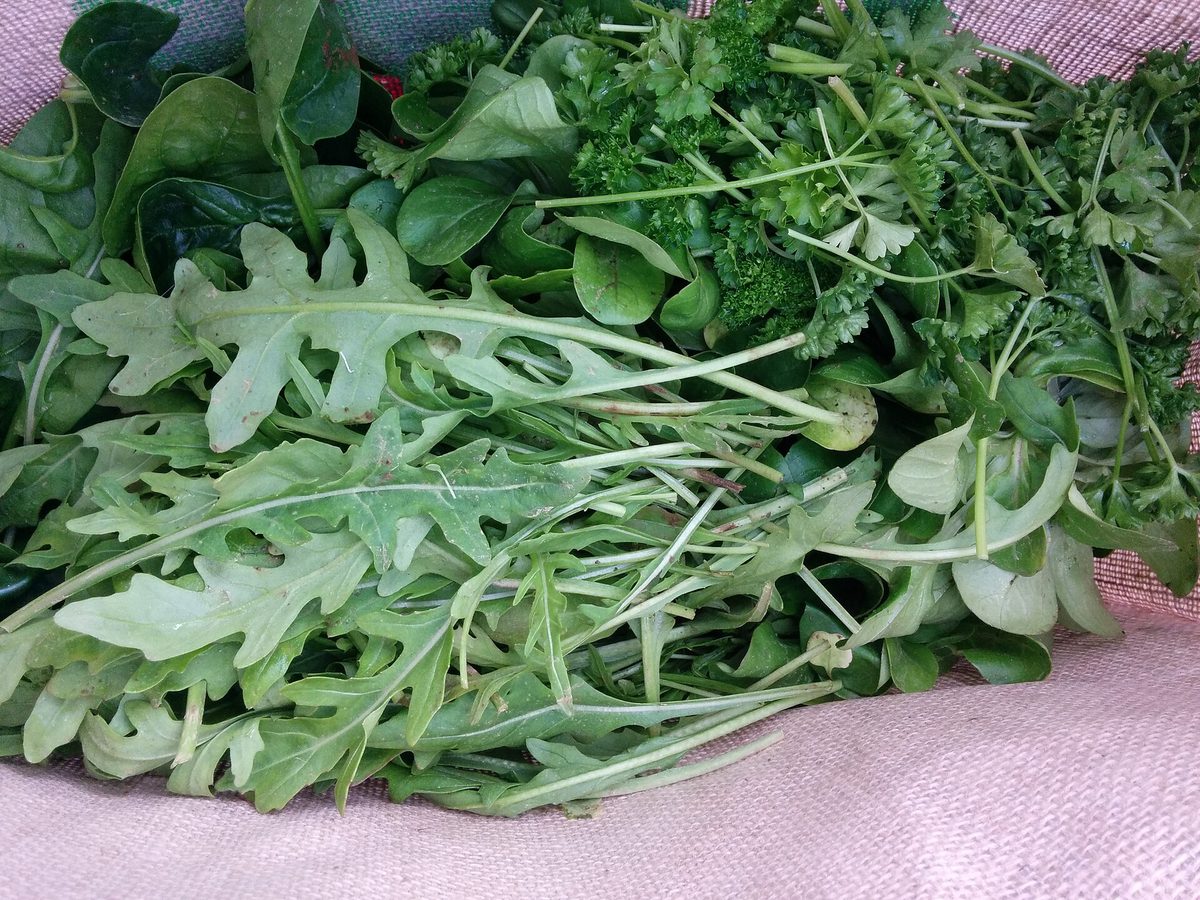
Photo: QuimGil, CC0 via Wikimedia Commons

Quick facts
| Light: | Full sun and part shade (full sun preferred)11 source |
|---|---|
| Water: | Medium to wet3Not documented by major sources |
| Soil: | Well drained, moist and occasionally wet; pH 6–6.5231 source |
| Hardiness: | Zones 2a–11b11 source |
| Size: | 2–3 ft (0.61–0.91 m) × 0.7–1.5 ft (0.2–0.46 m)5211 source |
| Growth rate: | Rapid211 source |
| Bloom: | White, yellow and purple521 |
| Cats: | Not documented by major sources |
| Dogs: | Not documented by major sources |
| Native range: | AFG, ALG, BAL, CHC, CHI, CHM, CHN, CHQ, CHS, CHX, COR, CYP, EAI, EGY, GRC, GST, IRN, IRQ, ITA, KAZ, KGZ, KRI, KRY, KUW, LBS, LBY, MON, MOR, OMA, PAK, PAL, POR, SAR, SAU, SIC, SIN, SPA, TKM, TUE, TUN, TUR, TZK, UZB, YEM7 |
| Family: | Brassicaceae |
How much light does a Rocketsalad need?
Plant rocketsalad somewhere it gets at least six hours of direct sun a day outdoors. It also grows in part shade, though full sun is its preferred spot. Give it soil with good drainage as well. It is a fast-growing annual that you grow from seed. Outdoors, it survives from USDA zone 2a to zone 11b. It stays compact, growing just 2 to 3 ft (0.6-0.9 m) tall outdoors. Minor diseases such as bacterial leaf spot can also appear. The bagrada bug can also trouble it outdoors.
- Light: Full sun and part shade (full sun preferred)1
Best soil for a Rocketsalad
Good drainage is the top soil requirement for rocketsalad. It also tolerates soil that stays moist or occasionally wet. Keep the soil pH between 6.0 and 6.5 for the best results. This annual grows at a rapid pace once it is in the ground. Its flowering stems can reach 2 to 3 ft (0.6-0.9 m) tall. The plant typically spreads 8 to 18 in (20-46 cm) wide. Seed is the recommended way to start it in this soil.
Hardiness and temperature
Outdoors, rocketsalad survives from USDA zone 2a up to zone 11b. No cited source here gives a specific minimum temperature for this plant. It grows as an annual. Sources describe its growth rate as rapid. It prefers a soil pH between 6.0 and 6.5. It also tolerates part shade as well as full sun outdoors. You grow it from seed. It spreads 8 to 18 in (0.2-0.46 m) wide at maturity.
How to plant a Rocketsalad
You can grow rocketsalad outdoors in USDA zones 2a through 11b. Within that range, start new plants from seed, since that is the recommended method. In the United States, rocketsalad is an introduced plant rather than a native one. Its native range stretches across North Africa, the Mediterranean, the Middle East, and into Central and East Asia. Give it soil with good drainage and a pH between 6.0 and 6.5. Mature plants reach 2 to 3 ft (0.6-0.9 m) tall and spread 8 to 18 in (20-46 cm) wide. Its flowers open in white, cream, or yellow, each with purple to brown-red veining.
- Hardiness: Zones 2a–11b1
Winter care
Rocketsalad's outdoor hardiness holds from zone 2a up to zone 11b. This range spans the hard frosts of zone 2a to the near frost-free climate of zone 11b. As an annual, it finishes its whole life cycle in a single growing season. It grows at a rapid pace during that season, from seed to maturity. Soil that drains well and holds a pH of 6.0 to 6.5 suits it throughout that season.
How to propagate a Rocketsalad
Growing rocketsalad from seed is the easiest way to start new plants outdoors. Transplants work too, though seed is the method most sources recommend. Because it is an annual, each planting completes its life cycle within one growing season. It grows at a rapid pace after sowing, reaching maturity quickly. You can start it outdoors across USDA zones 2a through 11b. Mature plants reach 2 to 3 ft (0.6-0.9 m) tall and 8 to 18 in (20-46 cm) wide.
Common problems
Watch for aphids and flea beetles on rocketsalad's leaves. The bagrada bug can also affect this plant. Bacterial leaf spot and powdery mildew are the most common diseases to watch for. White rust and bacterial blight can affect it too, since this plant is in the host group for white rust. These issues can appear wherever rocketsalad is grown, from USDA zone 2a to 11b.
| Problem | Kind |
|---|---|
| Aphids | Pest |
| Flea beetles | Pest |
| Bagrada bug | Pest |
| Bacterial leaf spot | Disease |
| Powdery mildew | Disease |
| White rust | Disease |
| Bacterial blight | Disease |
Is Rocketsalad toxic to cats and dogs?
Recommended supplies
- Soil: a free-draining mix, and a pot with a drainage hole.
Questions and answers
- How much light does rocketsalad need outdoors?
- Rocketsalad grows best outdoors with six or more hours of direct sun a day. It also tolerates part shade if full sun is not available. It stays compact, reaching about 2 to 3 ft (0.6-0.9 m) tall outdoors.
- What pests and diseases affect rocketsalad?
- Aphids, flea beetles, and the bagrada bug are the most common pests. Bacterial leaf spot, powdery mildew, white rust, and bacterial blight are the diseases most often reported. It is also a fast-growing annual grown from seed.
- Is rocketsalad toxic to cats or dogs?
- No cited source lists a toxicity status for rocketsalad in cats or dogs, and you should contact your vet or a pet poison line if you are ever unsure.
Sources
- NC State Extension Gardener Plant Toolbox. https://plants.ces.ncsu.edu/plants/eruca-vesicaria/common-name/mediterranean-salad/. Accessed 12 October 2026.
- NC State Extension Gardener Plant Toolbox. https://plants.ces.ncsu.edu/plants/eruca-vesicaria/. Accessed 13 October 2026.
- Clemson Cooperative Extension Home & Garden Information Center. https://hgic.clemson.edu/factsheet/arugula-kale-mesclun-mustard-and-swiss-chard/. Accessed 12 October 2026.
- University of Illinois Extension. https://extension.illinois.edu/blogs/good-growing/2018-11-07-arugula-new-trendy-green-old-world. Accessed 12 October 2026.
- University of Wisconsin-Madison Division of Extension (Wisconsin Horticulture). https://hort.extension.wisc.edu/articles/arugula/. Accessed 12 October 2026.
- UC Statewide Integrated Pest Management Program. https://ipm.ucanr.edu/agriculture/cole-crops/white-rust/. Accessed 12 October 2026.
- Royal Botanic Gardens, Kew (World Checklist of Vascular Plants). https://sftp.kew.org/pub/data-repositories/WCVP/wcvp.zip. Accessed 4 June 2026.
How this page was made
- Written with AI assistance from the sources listed on this page. AI is never the source of a fact.