Egyptian Starcluster (Pentas lanceolata)
Formerly Pentas carnea, Vignaldia quartiniana, Virecta lanceolata
Pentas lanceolata is a fast-growing plant that produces pink, purple, red or white flowers from May to September. It needs water somewhere between dry and medium, so let the soil dry out before watering again. This page does not have a cited source on indoor light needs or on toxicity to cats and dogs for this plant.
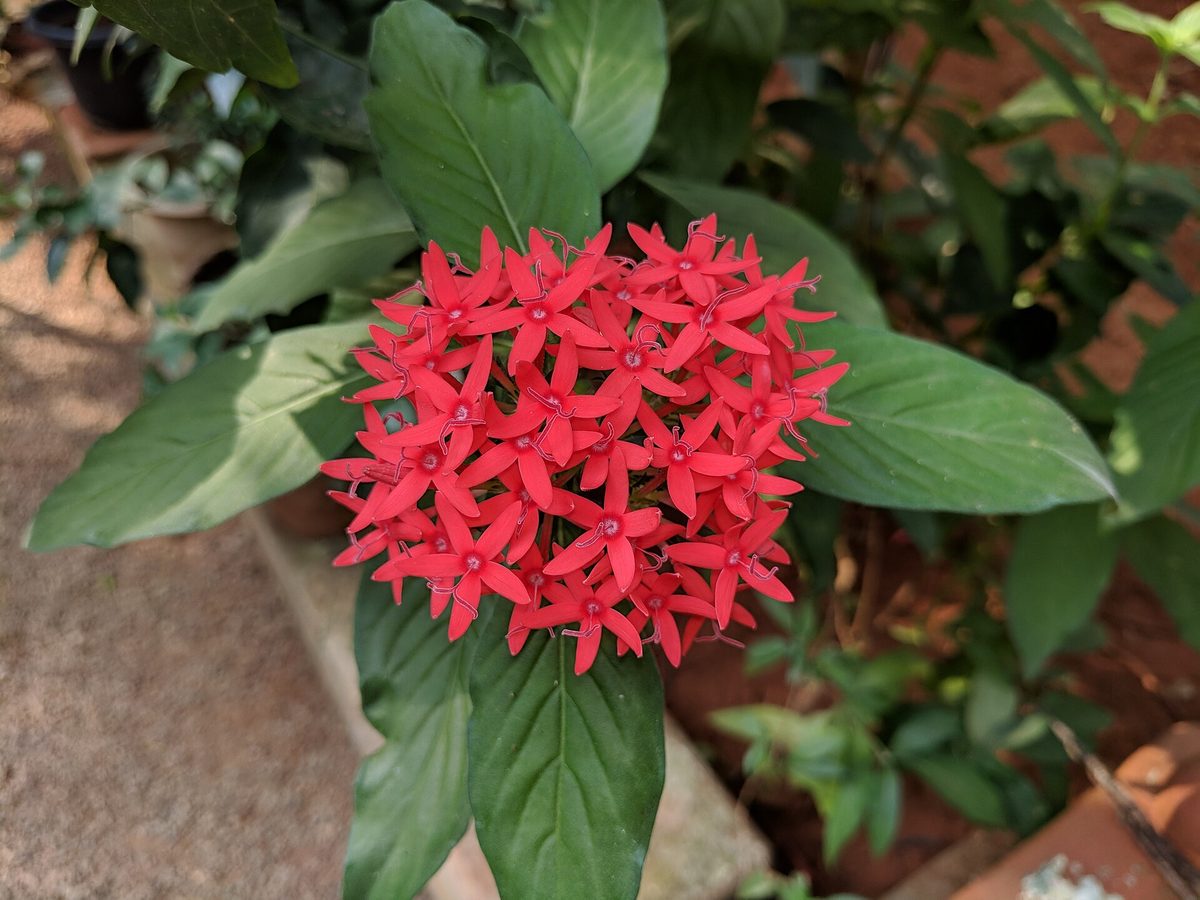
Photo: Vengolis, CC BY 4.0 via Wikimedia Commons

Quick facts
| Water: | Dry to medium11 source |
|---|---|
| Soil: | Well drained and occasionally dry12 |
| Size: | 1–2 ft (0.3–0.61 m) × 0.8–2 ft (0.23–0.61 m)11 source |
| Growth rate: | Rapid11 source |
| Bloom: | May–Sep, Pink, purple, red and white11 source |
| Cats: | Not documented by major sources |
| Dogs: | Not documented by major sources |
| Family: | Rubiaceae |
How often to water an Egyptian Starcluster
Pentas lanceolata needs water that ranges from dry to medium, not soil that is soaking wet. Let the top of the soil dry out before you water again. The soil itself should drain well, and it does fine with soil that occasionally stays dry. This range runs from fairly dry to medium moisture, as described in extension guidance.
- Water: Dry to medium1
Best soil for an Egyptian Starcluster
This plant's soil should have good drainage overall. The same extension guidance also notes that the plant can tolerate soil that occasionally turns dry between waterings. Extension sources also recommend a mix rich in organic matter for this plant. It tolerates soil moisture anywhere from dry to medium. No cited source on this page records a preferred soil pH for pentas lanceolata.
Temperature and humidity
No cited source on this page states a specific minimum temperature for pentas lanceolata. Outdoors, the plant is listed as hardy in USDA zones 10a through 11b. Indoors, in climates north of zone 10, it is typically grown as a houseplant in a sunny room with high humidity.
- Humidity: High1
Fertilizing an Egyptian Starcluster
Feed pentas lanceolata about once each month during the growing season, using either an all-purpose, slow-release granular fertilizer or a liquid fertilizer. Extension guidance lists both fertilizer types as suitable for this monthly schedule. Either option gives the plant the feeding that this schedule calls for.
- Fertilizer: Monthly in the growing season2
Common problems
Spider mites and aphids are the two insects most often reported as problems on pentas lanceolata. Caterpillars are also recorded chewing on the foliage of this plant. No cited source on this page lists a disease that specifically affects this species of pentas.
| Problem | Kind |
|---|---|
| Spider mites | Pest |
| Aphids | Pest |
| Caterpillars | Pest |
Is Egyptian Starcluster toxic to cats and dogs?
Recommended supplies
- Soil: a free-draining mix, and a pot with a drainage hole.
- Humidity: it wants humid air; a pebble tray or a humidifier is the usual fix.
Questions and answers
- How often should you water pentas lanceolata?
- Give it water somewhere between dry and medium, letting the soil surface dry before the next watering. It also needs soil with good drainage rather than soil that stays soggy.
- How often does pentas lanceolata need fertilizer?
- Feed it roughly once a month while it is actively growing. A slow-release granular product or a liquid fertilizer both work, according to extension guidance.
- What pests affect pentas lanceolata?
- Spider mites and aphids are the insects most often reported on this plant, and caterpillars may chew on its leaves too. No cited source on this page names a disease specific to it.
Sources
- NC State Extension Gardener Plant Toolbox. https://plants.ces.ncsu.edu/plants/pentas-lanceolata/. Accessed 16 November 2026.
- Clemson Cooperative Extension HGIC. https://hgic.clemson.edu/hummingbird-favorite-pentas/. Accessed 15 November 2026.
How this page was made
- Written with AI assistance from the sources listed on this page. AI is never the source of a fact.