Peruvian Groundcherry (Physalis peruviana)
Formerly Boberella peruviana, Physalis edulis, Physalis incana
Keep Peruvian groundcherry's soil moist but well drained; it needs medium water. It grows fast as a herbaceous perennial. Outdoors it grows best in full sun. It reaches 1 to 3 ft (0.3 to 0.9 m) tall. It is hardy in USDA zones 3a to 9b. You can propagate it by seed or division. Indoor light needs and toxicity to cats and dogs are not documented in the sources checked.
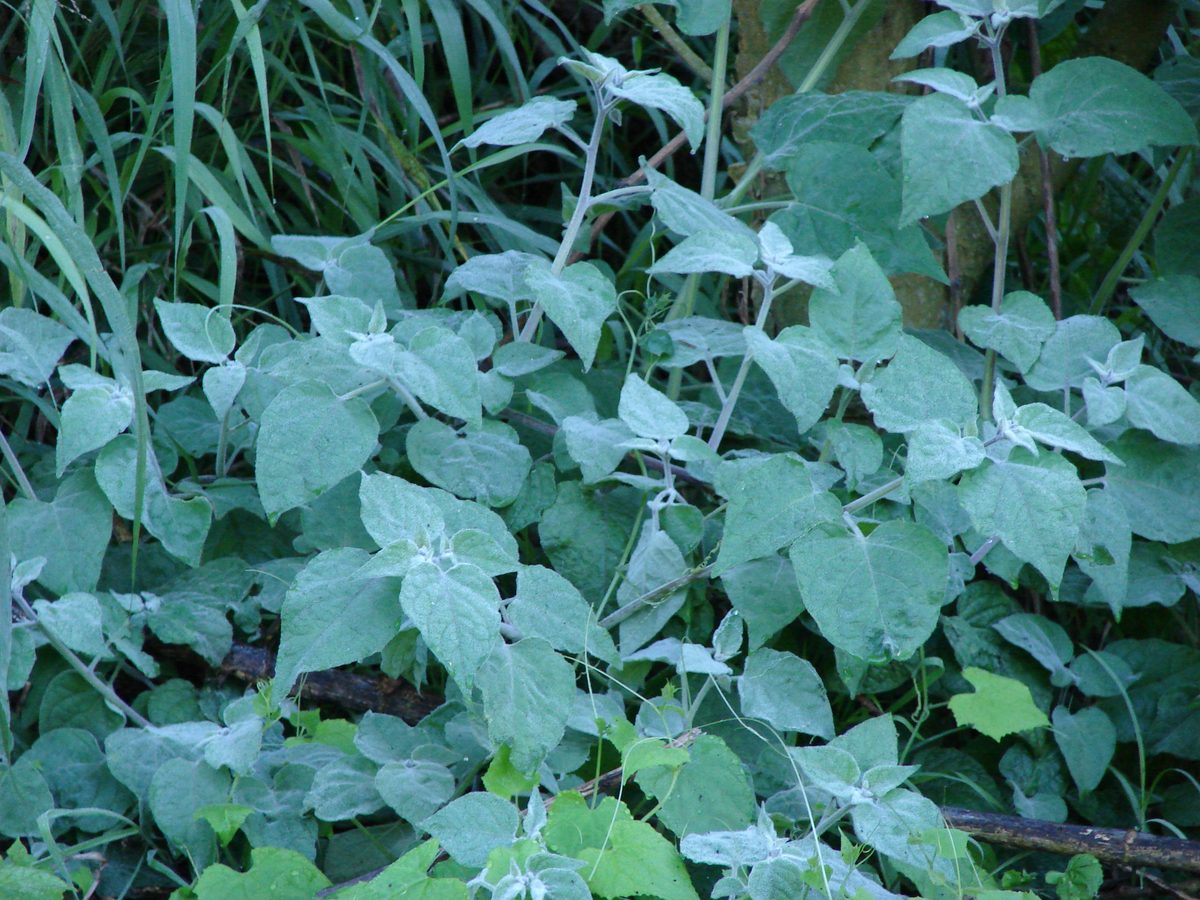
Photo: Forest & Kim Starr, CC BY 3.0 via Wikimedia Commons

Quick facts
| Water: | Medium11 source |
|---|---|
| Soil: | Well drained and moist11 source |
| Size: | 1–3 ft (0.3–0.91 m) × 1–2 ft (0.3–0.61 m)3411 source |
| Growth rate: | Rapid511 source |
| Bloom: | Yellow, purple and brown31 |
| Cats: | Not documented by major sources |
| Dogs: | Not documented by major sources |
| Native range: | BOL, BZC, BZN6 |
| Family: | Solanaceae |
How often to water a Peruvian Groundcherry
Medium is the water level listed for Peruvian groundcherry, neither low nor high. Extension sources describe its soil as moist but well drained. This species also grows at a rapid pace. Mature plants spread 1 to 2 ft (0.3 to 0.6 m) wide. They reach a height of 1 to 3 ft (0.3 to 0.9 m). The plant is hardy from USDA zones 3a to 9b. Outdoors, it needs full sun, meaning at least 6 hours of direct light a day. Its flowers are brown and yellow. It is native to Bolivia and nearby parts of Brazil. In the United States, it is considered introduced in Hawaii and across the lower 48 states.
- Water: Medium1
Best soil for a Peruvian Groundcherry
Peruvian groundcherry's listed soil condition combines good drainage with constant moisture. No cited source here gives a soil pH range for this plant. The plant also needs medium water, matching that moist but well drained profile. It also grows at a rapid pace. Mature plants also spread 1 to 2 ft (0.3 to 0.6 m) across. They can reach 1 to 3 ft (0.3 to 0.9 m) in height. Propagation works from seed or by division. This species is also classified as a herbaceous perennial. Several pests and diseases are documented for it, covered elsewhere on this page.
- Soil drainage: Well drained and moist1
How to propagate a Peruvian Groundcherry
Growing new plants from seed is one documented method for Peruvian groundcherry. Division is the other method listed for this species. This plant also grows quickly. USDA hardiness for this plant spans zones 3a to 9b. Its flowers are brown and yellow. Mature plants reach 1 to 3 ft (0.3 to 0.9 m) tall and spread 1 to 2 ft (0.3 to 0.6 m) wide. Outdoors, it grows best in full sun.
- Propagation: Seed and division1
Common problems
Fruit flies such as Bactrocera dorsalis, Bactrocera latifrons, Bactrocera tryoni, and Ceratitis capitata are reported for this plant. Other reported pests include the potato tuber moth, a flea beetle, two mites, whitefly, and a root-knot nematode. Reported diseases include a bacterium, a fungus, a viroid, two viruses, and a geminivirus. It is native to Bolivia and Brazil. In the US, it is introduced in Hawaii and the lower 48 states.
- Common pests: bactrocera dorsalis, bactrocera latifrons, bactrocera tryoni, ceratitis capitata, phthorimaea operculella, epitrix cucumeris, tetranychus evansi, aculops lycopersici, bemisia tabaci and meloidogyne enterolobii2
- Common diseases: candidatus liberibacter solanacearum, chondrostereum purpureum, pospiviroid fusituberis, polerovirus plrv, orthotospovirus tomatomaculae and begomovirus solanumdelhiense2
| Problem | Kind |
|---|---|
| Bactrocera dorsalis | Pest |
| Bactrocera latifrons | Pest |
| Bactrocera tryoni | Pest |
| Ceratitis capitata | Pest |
| Phthorimaea operculella | Pest |
| Epitrix cucumeris | Pest |
| Tetranychus evansi | Pest |
| Aculops lycopersici | Pest |
| Bemisia tabaci | Pest |
| Meloidogyne enterolobii | Pest |
| Candidatus liberibacter solanacearum | Disease |
| Chondrostereum purpureum | Disease |
| Pospiviroid fusituberis | Disease |
| Polerovirus plrv | Disease |
| Orthotospovirus tomatomaculae | Disease |
| Begomovirus solanumdelhiense | Disease |
Is Peruvian Groundcherry toxic to cats and dogs?
Recommended supplies
- Soil: a free-draining mix, and a pot with a drainage hole.
Questions and answers
- How much water does Peruvian groundcherry need?
- Peruvian groundcherry needs medium water, not heavy and not light. Sources describe its soil as moist but well drained. Its USDA hardiness range runs from zone 3a to zone 9b. Growth for this species is rapid. At maturity, this plant spreads 1 to 2 ft (0.3 to 0.6 m). It is also native to Bolivia and Brazil.
- Does Peruvian groundcherry need full sun?
- Outdoors, this plant grows best in full sun. This species also grows quickly. At maturity, it stands 1 to 3 ft (0.3 to 0.9 m) tall and spreads 1 to 2 ft (0.3 to 0.6 m) across. Its flowers are brown and yellow. Hardiness for this species covers USDA zones 3a through 9b. This plant's pests and diseases are documented separately above.
- How do you propagate Peruvian groundcherry?
- You can propagate Peruvian groundcherry from seed or by division. It is native to Bolivia and Brazil. US sources list it as introduced in Hawaii and across the lower 48 states. Pests and diseases are also documented for this species. It also prefers full sun outdoors.
Sources
- NC State Extension Gardener Plant Toolbox. https://plants.ces.ncsu.edu/plants/physalis/common-name/cape-gooseberry/. Accessed 6 October 2026.
- EPPO Global Database. https://gd.eppo.int/taxon/PHYPE/pests. Accessed 24 September 2026.
- Penn State Extension. https://extension.psu.edu/growing-ground-cherries. Accessed 6 October 2026.
- Penn State Extension. https://extension.psu.edu/programs/master-gardener/counties/susquehanna/news/off-the-beaten-path-ground-cherries. Accessed 6 October 2026.
- NC State Extension Gardener Plant Toolbox. https://plants.ces.ncsu.edu/plants/physalis/. Accessed 6 October 2026.
- Royal Botanic Gardens, Kew (World Checklist of Vascular Plants). https://sftp.kew.org/pub/data-repositories/WCVP/wcvp.zip. Accessed 4 June 2026.
How this page was made
- Written with AI assistance from the sources listed on this page. AI is never the source of a fact.