Common Globe Amaranth (Gomphrena globosa)
Formerly Xeraea globosa, Amaranthoides globosa, Gomphrena rubra
Give common globe amaranth, Gomphrena globosa, full sun and well-drained soil, and water it regularly during the growing season. It is an annual that grows 1–2 ft (0.3–0.61 m) tall. This page records no toxicity position for cats or dogs.
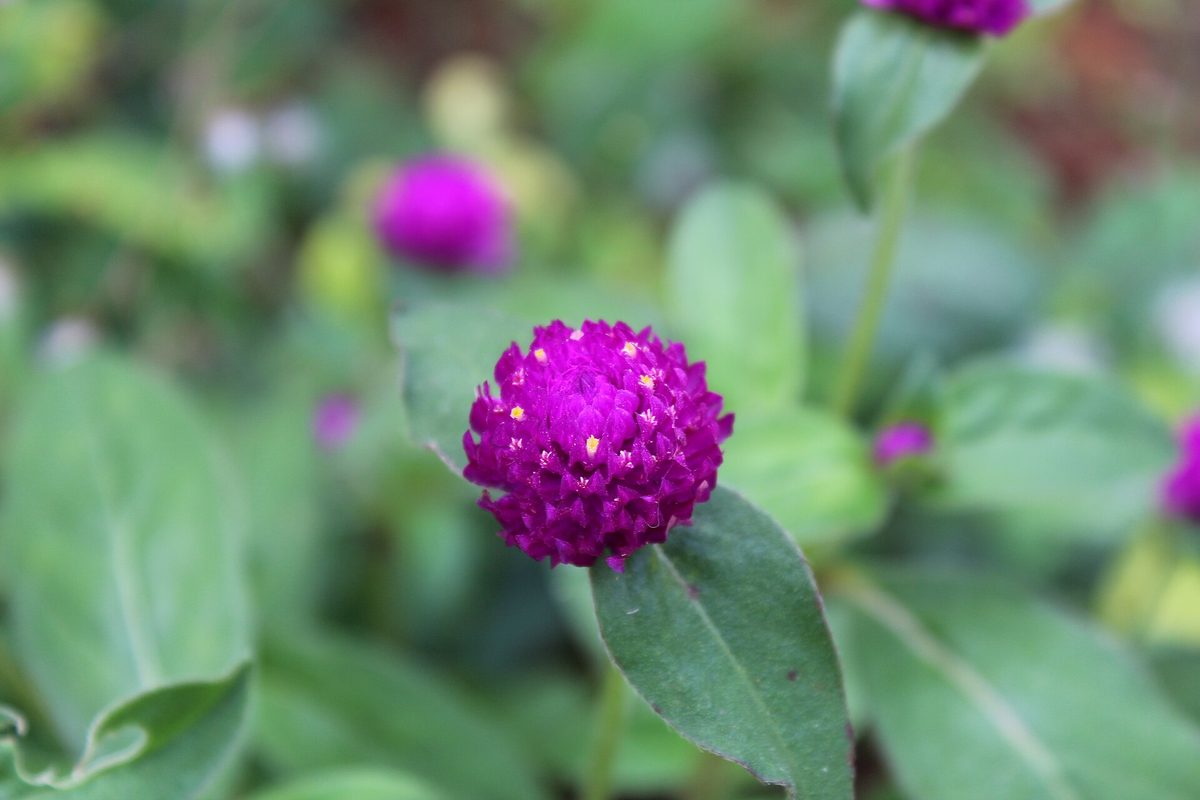
Photo: Dvellakat, CC BY-SA 3.0 via Wikimedia Commons

Quick facts
| Water: | Dry to medium12 |
|---|---|
| Soil: | Well drained and occasionally dry31 |
| Size: | 1–2 ft (0.3–0.61 m) × 0.5–1 ft (0.15–0.3 m)423 |
| Growth rate: | Moderate34 |
| Bloom: | White, pink, purple and yellow11 source |
| Cats: | Not documented by major sources |
| Dogs: | Not documented by major sources |
| Native range: | BOL, BZC, BZE, BZL, BZN, CLM, ECU, GUA, GUY, HON, MXE, MXG, MXS, MXT, NIC, PAN5 |
| Family: | Amaranthaceae |
How often to water a Common Globe Amaranth
Common globe amaranth has good drought tolerance, yet it benefits from regular watering during the growing season. One source describes it as preferring moist soil while tolerating dry conditions. The recorded moisture range for this plant runs from dry to medium. Its soil drainage is listed as well drained and occasionally dry.
Best soil for a Common Globe Amaranth
Well-drained soil in full sun suits this plant best. Its drainage entry lists well drained and occasionally dry. One source describes the ideal as moist, well-drained, fertile, acidic soil. Another says it grows best in average, well-drained soil. No cited source records a soil pH range for this species. Light matters here too: it takes full sun and part shade, with full sun preferred. It tolerates some partial shade but needs at least 6 to 8 hours of full sun.
How to propagate a Common Globe Amaranth
Seed is the recorded propagation method for this annual. You can sow seed directly in the garden or start it early indoors. If you start indoors, sow 6 to 8 weeks before your last frost date. Hardiness is listed as zones 9a–11b, and the plant is winter hardy in zones 9 through 11.
Common problems
The diseases recorded for this plant are powdery mildew, gray mold and leaf spot. It is susceptible to powdery mildew, gray mold and fungal leaf spots during prolonged cool, damp weather. No cited source records common pests for this species, so none are listed here.
| Problem | Kind |
|---|---|
| Powdery mildew | Disease |
| Gray mold | Disease |
| Leaf spot | Disease |
Is Common Globe Amaranth toxic to cats and dogs?
Recommended supplies
- Soil: a free-draining mix, and a pot with a drainage hole.
Questions and answers
- How much sun does common globe amaranth need?
- It prefers full sun, which means 6 or more hours of direct sunlight a day. It can tolerate some partial shade, but it needs at least 6 to 8 hours of full sun.
- How tall does common globe amaranth grow?
- It grows 1–2 ft (0.3–0.61 m) tall. Its spread is 0.5–1 ft (0.15–0.3 m). It is an annual. Its growth rate is listed as moderate.
- Does common globe amaranth tolerate drought?
- It has good drought tolerance, but it benefits from regular watering during the growing season. The recorded moisture range runs from dry to medium. Its soil drainage is listed as well drained and occasionally dry.
Sources
- Clemson Cooperative Extension HGIC. https://hgic.clemson.edu/annual-globe-amaranth-gomphrena-globosa-in-south-carolina/. Accessed 21 October 2026.
- University of Wisconsin-Madison Division of Extension (Wisconsin Horticulture). https://hort.extension.wisc.edu/articles/globe-amaranth-gomphrena-globosa/. Accessed 21 October 2026.
- NC State Extension Gardener Plant Toolbox. https://plants.ces.ncsu.edu/plants/gomphrena-globosa/. Accessed 21 October 2026.
- University of Florida IFAS Extension (EDIS). https://ask.ifas.ufl.edu/publication/FP234. Accessed 21 October 2026.
- Royal Botanic Gardens, Kew (World Checklist of Vascular Plants). https://sftp.kew.org/pub/data-repositories/WCVP/wcvp.zip. Accessed 4 June 2026.
How this page was made
- Written with AI assistance from the sources listed on this page. AI is never the source of a fact.