Common Cowparsnip (Heracleum maximum)
Formerly Heracleum lanatum, Heracleum dulce, Pastinaca lanata
Common cowparsnip does best in full sun, and it also grows in part shade and full shade. It needs moist conditions but not constantly wet ones, and the soil should drain well. The ASPCA lists the plant as toxic to both cats and dogs.
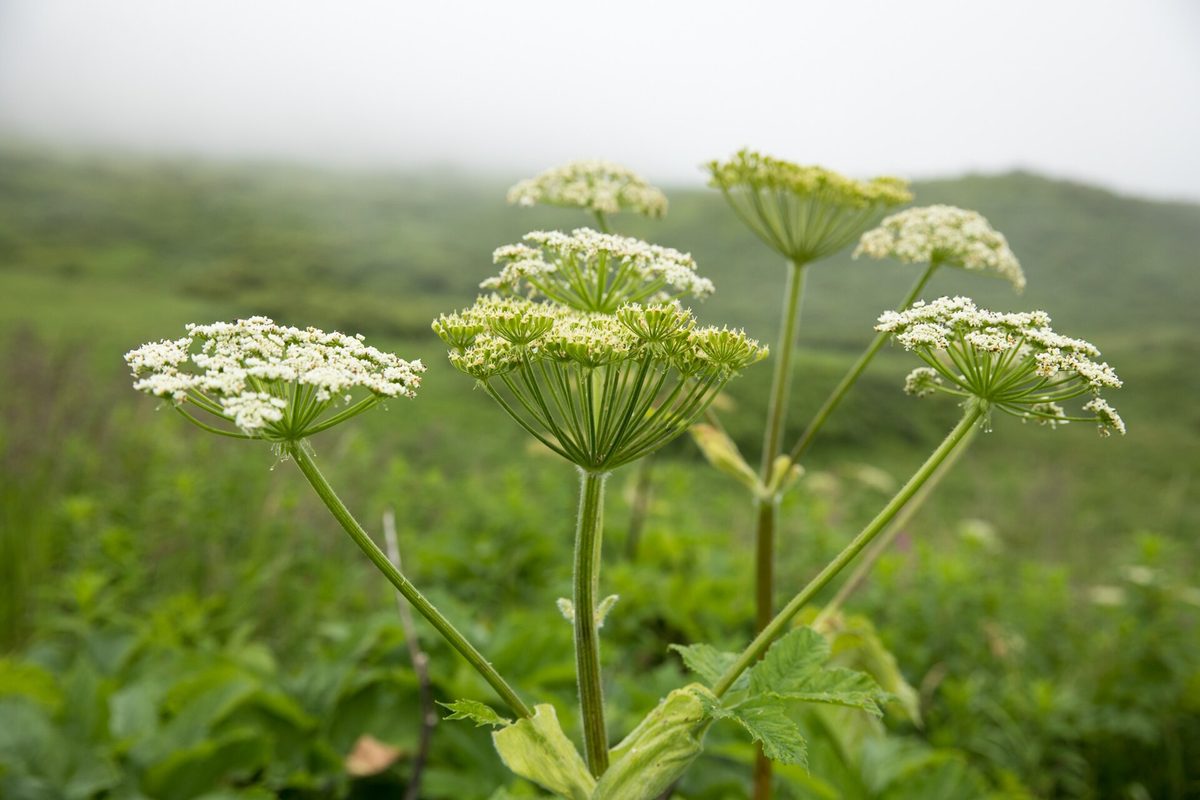
Photo: U.S. Fish and Wildlife Service - Midwest Region, Public domain via Wikimedia Commons

Quick facts
| Light: | Full sun, part shade and full shade (full sun preferred)111 source |
|---|---|
| Water: | Medium to wet12 |
| Soil: | Well drained, moist and occasionally wet13 |
| Hardiness: | Zones 4a–10a11 source |
| Size: | 3.3–9.8 ft (1–3 m)21 source |
| Growth rate: | Rapid11 source |
| Bloom: | Feb–Sep, White311 source |
| Cats: | Toxic to cats (1 source) 6 |
| Dogs: | Toxic to dogs (1 source) 6 |
| Native range: | ABT, ALU, ARI, ASK, BRC, CAL, CNT, COL, DEL, GEO, IDA, ILL, INI, IOW, JAP, KAM, KAN, KHA, KTY, KUR, LAB, MAI, MAN, MAS, MIC, MIN, MNT, MRY, MSO, NBR, NCA, NDA, NEB, NEV, NFL, NSC, NWH, NWJ, NWM, NWT, NWY, OHI, ONT, ORE, PEI, PEN, QUE, RHO, SAK, SAS, SDA, TEN, UTA, VER, VRG, WAS, WDC, WIS, WVA, WYO, YUK7 |
| Family: | Apiaceae |
How much light does a Common Cowparsnip need?
Full sun is the preferred exposure for common cowparsnip, which means six or more hours of direct sunlight a day. Part shade is also listed, and that setting means direct sunlight for only two to six hours. Full shade appears in the record as well. Of the three settings, full sun is the one marked as preferred. The minimum recorded for direct sun is 2 hours a day.
How often to water a Common Cowparsnip
This plant needs moist conditions but not constantly wet ones. The record puts its water needs between medium and wet. Utah State University Extension describes it as growing best on moist to semi-wet soils with good drainage. Soil that is constantly wet is not what the source describes. Well drained, moist and occasionally wet soils are all named for this plant.
Best soil for a Common Cowparsnip
Common cowparsnip is recorded in soil that is well drained, moist or occasionally wet. Good drainage is one of the conditions named. Occasionally wet soil is listed as well. Utah State University Extension says the plant grows best on moist to semi-wet soils with good drainage. That description pairs moisture with good drainage, and the plant needs moist conditions but not constantly wet ones.
Hardiness and temperature
Common cowparsnip is rated for USDA hardiness zones 4a through 10a. That span covers thirteen half-zone steps, from 4a and 4b up to 9b and 10a. The coldest zone listed is 4a, and the warmest is 10a. The plant is also recorded as a herbaceous perennial.
- Hardiness: Zones 4a–10a1
How to plant a Common Cowparsnip
Check that your zone falls between 4a and 10a before you plant common cowparsnip. The plant is an erect herbaceous perennial that reaches 3.3 to 9.8 ft (1 to 3 m) tall. Its growth rate is rapid. Full sun is the preferred exposure, though part shade and full shade are also listed. The plant is native to both Alaska and the lower 48 states.
- Hardiness: Zones 4a–10a1
Winter care
Common cowparsnip is a herbaceous perennial rated for USDA zones 4a through 10a. The cold limit in the record is zone 4a. The warm limit is zone 10a. The thirteen half-zone steps in between are all listed for the plant. It is native to Alaska and the lower 48 states.
- Hardiness: Zones 4a–10a1
How to propagate a Common Cowparsnip
Seed is how common cowparsnip reproduces, according to the USDA Forest Service Fire Effects Information System. Seed is the only propagation method recorded for this plant. Division and cuttings are not listed among its methods. The plant is recorded as a herbaceous perennial that is erect in habit.
Common problems
Two pests are recorded for common cowparsnip: the parsnip webworm and the ground pearl. Utah State University Extension describes the parsnip webworm as a European-introduced herbivorous insect that feeds on developing flowers and seeds of cow parsnip. Phymatotrichopsis root rot is the one disease recorded for the plant. The EPPO Global Database lists Phymatotrichopsis omnivora in connection with that disease.
| Problem | Kind |
|---|---|
| Parsnip webworm | Pest |
| Ground pearl | Pest |
| Phymatotrichopsis root rot | Disease |
Is Common Cowparsnip toxic to cats and dogs?
The ASPCA Animal Poison Control Center lists common cowparsnip as toxic to cats. It lists the plant as toxic to dogs as well. For cats the recorded position is toxic, and for dogs the recorded position is also toxic. The listing attaches no mild or severe grade to either animal. Cats and dogs therefore share the same position, which is toxic. The position for each animal is stated separately in the ASPCA record.
Pet-safe alternatives
Recommended supplies
- Soil: a free-draining mix, and a pot with a drainage hole.
Questions and answers
- Is common cowparsnip toxic to cats and dogs?
- The ASPCA lists common cowparsnip as toxic to cats. It also lists the plant as toxic to dogs. The listing attaches no severity grade to either animal.
- How much sun does common cowparsnip need?
- Full sun is preferred, which means six or more hours of direct sunlight a day. Part shade is also listed, with direct sun for only two to six hours. Full shade appears in the record too.
- How tall does common cowparsnip grow?
- Utah State University Extension says cow parsnip grows from 3 to 10 feet (1 to 3 m) tall. The plant is an erect herbaceous perennial. Its growth rate is recorded as rapid.
Sources
- NC State Extension Gardener Plant Toolbox. https://plants.ces.ncsu.edu/plants/heracleum-maximum/. Accessed 14 October 2026.
- Utah State University Extension. https://extension.usu.edu/rangeplants/forbs-herbaceous/cow-parsnip. Accessed 14 October 2026.
- Lady Bird Johnson Wildflower Center. https://www.wildflower.org/plants/result.php?id_plant=HEMA80. Accessed 14 October 2026.
- USDA Forest Service Fire Effects Information System. https://www.fs.usda.gov/database/feis/plants/forb/hermax/all.html. Accessed 14 October 2026.
- EPPO Global Database. https://gd.eppo.int/taxon/HERMA/pests. Accessed 14 October 2026.
- ASPCA Animal Poison Control Center. https://www.aspca.org/pet-care/aspca-poison-control/toxic-and-non-toxic-plants/cow-parsnip. Accessed 14 October 2026.
- Royal Botanic Gardens, Kew (World Checklist of Vascular Plants). https://sftp.kew.org/pub/data-repositories/WCVP/wcvp.zip. Accessed 4 June 2026.
How this page was made
- Written with AI assistance from the sources listed on this page. AI is never the source of a fact.