Eastern Poison Ivy (Toxicodendron radicans)
Formerly Rhus radicans, Cotinus radicans, Philostemon radicans
Give eastern poison ivy, Toxicodendron radicans, full sun, which is its preferred light, and medium water. It also takes part shade and full shade, and it is rated for hardiness zones 4a–10b. The ASPCA lists it as non-toxic to cats and non-toxic to dogs.
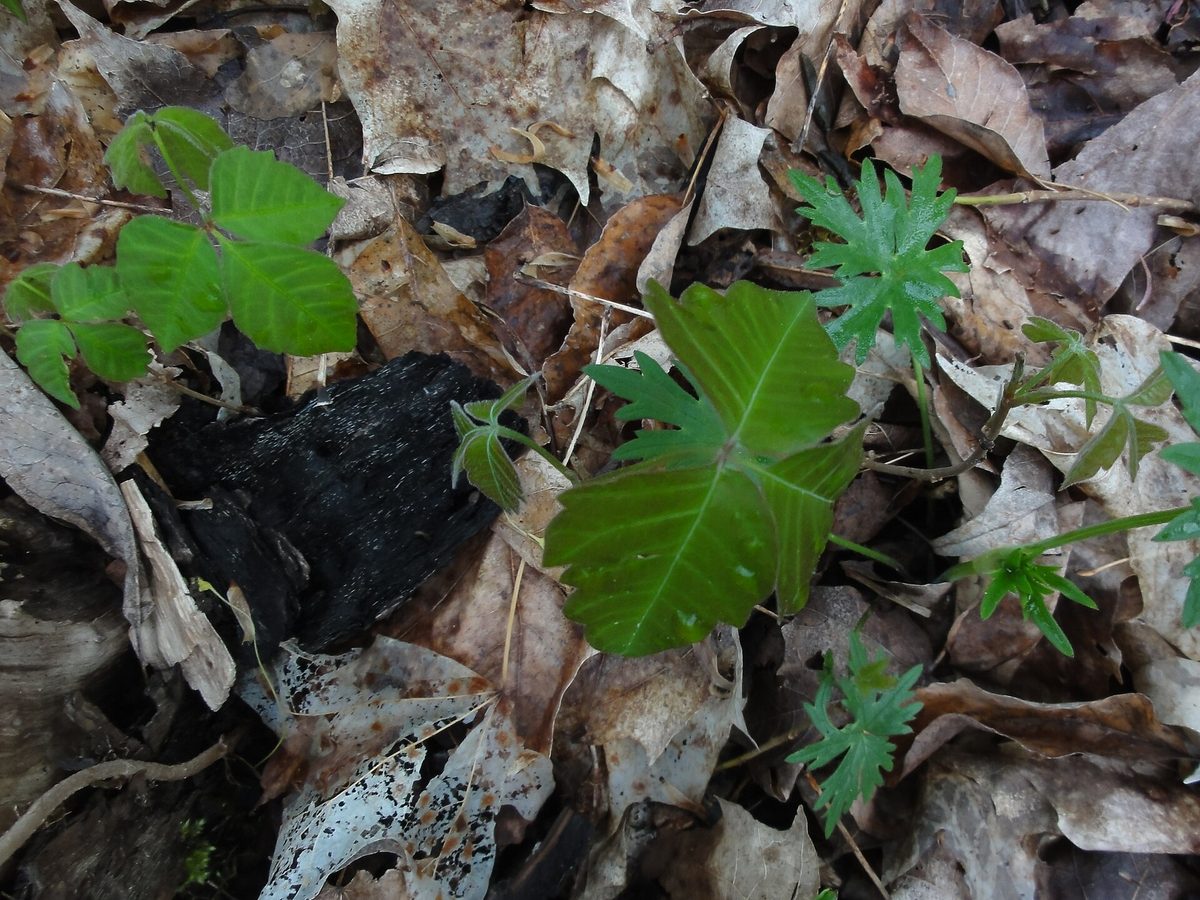
Photo: R. A. Nonenmacher, CC BY-SA 4.0 via Wikimedia Commons

Quick facts
| Light: | Full sun, part shade and full shade (full sun preferred)11 source |
|---|---|
| Water: | Medium23 |
| Soil: | Moist21 source |
| Hardiness: | Zones 4a–10b11 source |
| Size: | 1–150 ft (0.3–45.72 m) × 1–9.8 ft (0.3–3 m)611 source |
| Growth rate: | Rapid11 source |
| Bloom: | Apr–Jun, Green, white and brown271 source |
| Cats: | Non-toxic to cats 51 |
| Dogs: | Non-toxic to dogs 51 |
| Native range: | ABT, ALA, ARI, ARK, BAH, BER, BRC, CNT, DEL, FLA, GEO, GUA, IDA, ILL, INI, IOW, KAN, KTY, LOU, MAI, MAN, MAS, MIC, MIN, MNT, MRY, MSI, MSO, MXC, MXE, MXG, MXN, MXS, MXT, NBR, NCA, NDA, NEB, NEV, NSC, NWH, NWJ, NWM, NWY, OHI, OKL, ONT, ORE, PEI, PEN, QUE, RHO, SAS, SCA, SDA, TEN, TEX, UTA, VER, VRG, WAS, WDC, WIS, WVA, WYO, YUK8 |
| Family: | Anacardiaceae |
How much light does an Eastern Poison Ivy need?
Eastern poison ivy prefers full sun, which the source describes as six or more hours of direct sunlight a day. It is also listed for part shade and for full shade. In sunny areas it can appear as a bushy, erect or trailing shrub. It can also appear as a woody climbing vine. The listed light conditions are full sun, part shade and full shade, with full sun as the preferred one.
- Light: Full sun, part shade and full shade (full sun preferred)1
How often to water an Eastern Poison Ivy
Water needs for this plant are rated medium. The Lady Bird Johnson Wildflower Center gives its soil moisture as moist. The University of Florida IFAS Extension says it grows best in fertile, moist, and well-drained soil. The drainage record for the plant also lists moist soil. No cited source gives a watering schedule in days, so that detail is not documented.
Best soil for an Eastern Poison Ivy
The soil drainage record for this plant lists moist soil. The University of Florida IFAS Extension says it grows best in fertile, moist, and well-drained soil. The Lady Bird Johnson Wildflower Center gives its soil moisture as moist. No cited source gives a soil pH range, so that value is not documented.
- Soil drainage: Moist2
Hardiness and temperature
Eastern poison ivy is rated for USDA hardiness zones 4a through 10b. The range covers every half-zone from 4a, 4b, 5a, 5b, 6a, 6b, 7a, 7b, 8a, 8b, 9a, 9b to 10a and 10b. A reader in zone 4a and a reader in zone 10b are both inside the listed range. No cited source records a minimum temperature or a humidity preference, so those values are not documented.
- Hardiness: Zones 4a–10b1
How to plant an Eastern Poison Ivy
The listed hardiness range for planting is zones 4a–10b. Mature height runs from 1–150 ft (0.3–45.72 m). Mature spread runs from 1–9.8 ft (0.3–3 m). The growth rate is listed as rapid. Its US native status is native in the lower 48 states. Planting depth, spacing and timing are not documented for this page.
- Hardiness: Zones 4a–10b1
Winter care
Eastern poison ivy is listed as deciduous. Its hardiness range runs from zone 4a to zone 10b, which takes in both cold and warm regions. No cited source records a minimum temperature, so that value is not documented. Mulching, covering and cutting back for winter are not documented for this page either.
- Hardiness: Zones 4a–10b1
How to propagate an Eastern Poison Ivy
The recommended propagation strategy for this plant is seed. Seed is the only propagation method on file for it. Cuttings, division and layering are not documented for this page. Sowing depth, timing and any seed treatment are not documented either, so this section stops at the method.
- Propagation: Seed1
Common problems
No cited source records a pest for this plant, so pests are not documented. One disease is on file: leaf scorch caused by Xylella fastidiosa. An EPPO Global Database entry lists a first report of leaf scorch of poison ivy caused by Xylella fastidiosa in Virginia. Symptoms and treatment for this disease are not documented here.
| Problem | Kind |
|---|---|
| Diabrotica virgifera zeae | Pest |
| Spotted lanternfly | Pest |
| Xylella fastidiosa leaf scorch | Disease |
Is Eastern Poison Ivy toxic to cats and dogs?
The ASPCA Animal Poison Control Center lists this plant as non-toxic to cats. The same listing records it as non-toxic to dogs. The ASPCA entry reads 'Non-Toxic to Dogs, Non-Toxic to Cats'. The NC State Extension Gardener Plant Toolbox also tags it non-toxic for cats and non-toxic for dogs. The positions for cats and for dogs are recorded separately here, and both read non-toxic. This page covers cats and dogs only.
Recommended supplies
- Soil: a mix that holds moisture without staying wet.
Questions and answers
- Is eastern poison ivy toxic to cats and dogs?
- The ASPCA lists it as non-toxic to cats and non-toxic to dogs. The NC State Extension Gardener Plant Toolbox tags it non-toxic for both as well.
- How much sun does eastern poison ivy need?
- Full sun is preferred, meaning six or more hours of direct sunlight a day. It is also listed for part shade and for full shade.
- What color are the flowers of eastern poison ivy?
- The flowers are listed as green, white and brown. The Chicago Botanic Garden describes clusters of insignificant greenish flowers located in the axils of the leaves.
Sources
- NC State Extension Gardener Plant Toolbox. https://plants.ces.ncsu.edu/plants/toxicodendron-radicans/common-name/poison-ivy/. Accessed 21 October 2026.
- Lady Bird Johnson Wildflower Center (Native Plant Database). https://www.wildflower.org/plants/result.php?id_plant=tora2. Accessed 21 October 2026.
- University of Florida IFAS Extension (EDIS). https://ask.ifas.ufl.edu/publication/EP609. Accessed 21 October 2026.
- EPPO Global Database. https://gd.eppo.int/taxon/TOXRA/pests. Accessed 14 October 2026.
- ASPCA Animal Poison Control Center. https://www.aspca.org/pet-care/aspca-poison-control/toxic-and-non-toxic-plants/poison-ivy. Accessed 21 October 2026.
- NC State Extension Gardener Plant Toolbox. https://plants.ces.ncsu.edu/plants/toxicodendron-radicans/. Accessed 30 October 2026.
- Chicago Botanic Garden. https://www.chicagobotanic.org/plant-information/pests/poison-ivy. Accessed 21 October 2026.
- Royal Botanic Gardens, Kew (World Checklist of Vascular Plants). https://sftp.kew.org/pub/data-repositories/WCVP/wcvp.zip. Accessed 4 June 2026.
How this page was made
- Written with AI assistance from the sources listed on this page. AI is never the source of a fact.