Blue Giant Hyssop (Agastache foeniculum)
Formerly Stachys foeniculum, Vleckia foeniculum, Hyssopus foeniculum
Give blue giant hyssop full sun, its preferred light. It is also listed for part shade and full shade. Its water needs run from dry to medium. Its hardiness zones run from 4a to 8b. It grows 3–5 ft (0.91–1.52 m) tall. It tolerates drought. No toxicity position for cats or dogs is documented for this plant.
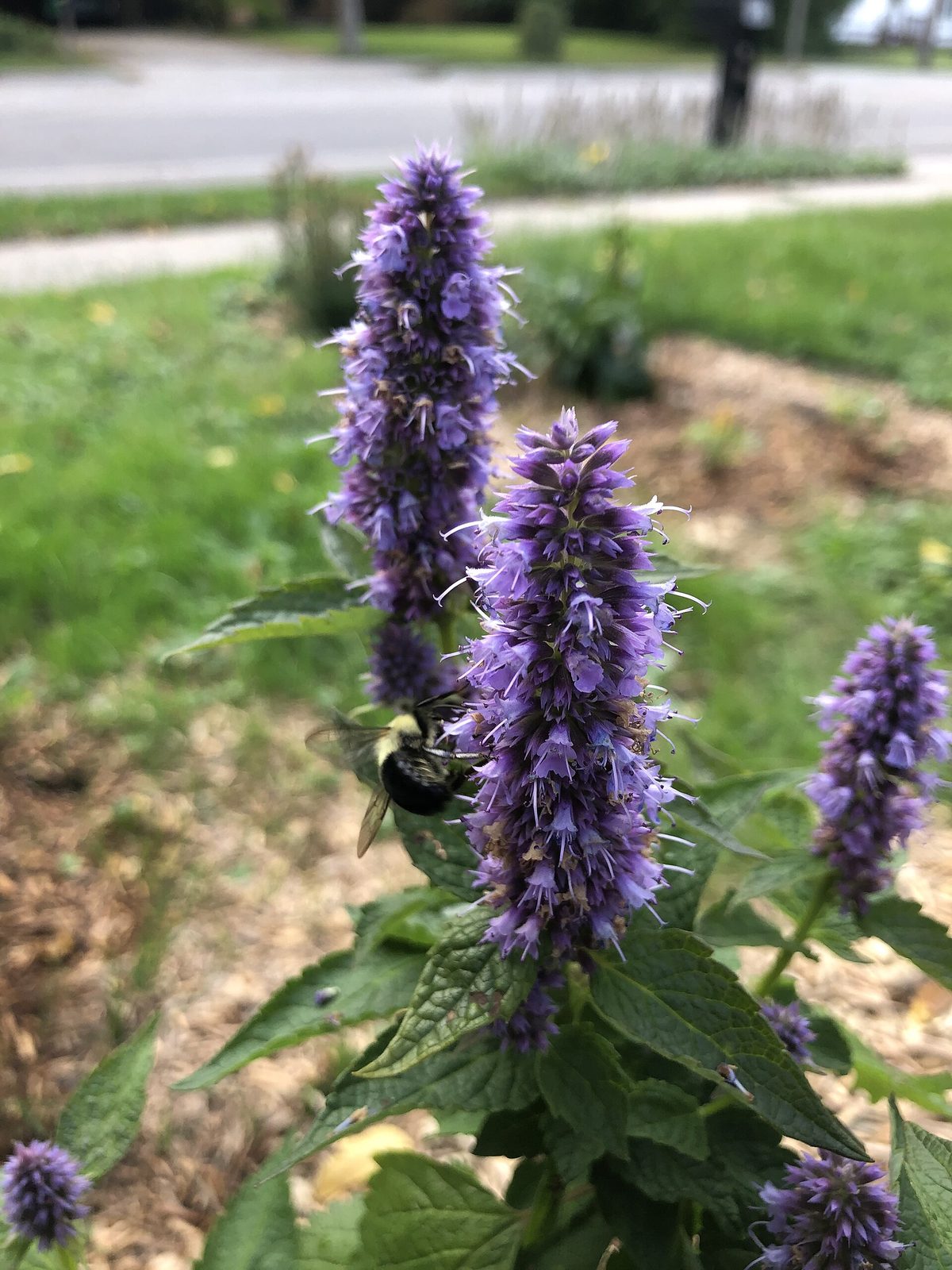
Photo: Guettarda, CC BY-SA 4.0 via Wikimedia Commons

Quick facts
| Light: | Full sun, part shade and full shade (full sun preferred)123 |
|---|---|
| Water: | Dry to medium31 source |
| Soil: | Well drained132 |
| Hardiness: | Zones 4a–8b145 |
| Size: | 3–5 ft (0.91–1.52 m) × 1.5–3 ft (0.46–0.91 m)41 source |
| Growth rate: | Moderate411 source |
| Bloom: | Jun–Oct, Blue and purple74521 source |
| Cats: | Not documented by major sources |
| Dogs: | Not documented by major sources |
| Native range: | ABT, BRC, COL, IDA, ILL, IOW, MAN, MIN, MNT, NBR, NDA, NEB, NWT, ONT, QUE, SAS, SDA, WAS, WIS, WYO8 |
| Family: | Lamiaceae |
How much light does a Blue Giant Hyssop need?
Blue giant hyssop prefers full sun, which means 6 or more hours of direct sunlight a day. It is also listed for part shade and full shade. Part shade means direct sunlight for only part of the day, in the range of 2 to 6 hours. The minimum recorded for this plant is 2 hours of direct sun a day.
How often to water a Blue Giant Hyssop
Water needs for blue giant hyssop run from dry to medium. The low end of that range is dry to medium and the upper end is medium. A description of its soil calls it well-drained and moist. The plant also tolerates drought, and that is the only tolerance recorded for it.
- Water: Dry to medium3
Best soil for a Blue Giant Hyssop
Blue giant hyssop grows in well-drained soil. The drainage rating listed for it is good. One description pairs that drainage with moist soil. Crown rot and root rot may develop in poorly drained soils. Its moisture range is dry to medium. It tolerates drought. No cited source records a soil pH range for this plant.
Hardiness and temperature
Blue giant hyssop is rated for USDA hardiness zones 4a to 8b. The listing names each half-zone: 4a, 4b, 5a, 5b, 6a, 6b, 7a, 7b, 8a and 8b. Zone 4a is the coldest zone in that range. Zone 8b is the warmest. A gardener in zone 6 or zone 7 falls inside the range. A gardener in zone 3 or zone 9 falls outside the listed range. No cited source records a minimum temperature for this plant.
Pruning a Blue Giant Hyssop
Deadheading spent flowers will encourage new bloom spikes. Two pruning approaches are recorded for blue giant hyssop: deadheading, and removing dead growth only. The second approach means you cut away only what is dead. The flowers are blue and purple, and the bloom season runs from June to October.
- Pruning: Deadheading and Remove dead growth only3
How to plant a Blue Giant Hyssop
Plant blue giant hyssop in USDA zones 4a to 8b. A spot with full sun suits it best. At maturity it reaches 3–5 ft (0.91–1.52 m) tall. Its spread is 1.5–3 ft (0.46–0.91 m). Its habit is erect. Its growth rate is moderate. The drainage listed for it is well-drained soil.
Winter care
Cold hardiness for blue giant hyssop is given as a zone range, 4a to 8b. Zone 4a, the coldest in that range, is where the listing stops on the cold side. Zone 8b is where it stops on the warm side. It is a herbaceous perennial. It is also native to the lower 48 US states. Gardeners in zone 3 or colder are outside the listed range. No cited source records a minimum temperature or any winter protection.
How to propagate a Blue Giant Hyssop
You can propagate blue giant hyssop by seed or by division. It is easily started from seed and often blooms the first year. Division can be done in spring or fall. Division suits plants that spread by rhizomes. Those are the two methods recorded for it, seed and division.
Common problems
Crown rot, root rot, rust, powdery mildew and leaf spot are the diseases recorded for blue giant hyssop. Five diseases are recorded in all. Both rots may develop where drainage is poor. Watch for rust, powdery mildew and leaf spots. The plant is reported to be resistant to deer and rabbits.
| Problem | Kind |
|---|---|
| Crown rot | Disease |
| Root rot | Disease |
| Rust | Disease |
| Powdery mildew | Disease |
| Leaf spot | Disease |
Is Blue Giant Hyssop toxic to cats and dogs?
Recommended supplies
- Soil: a free-draining mix, and a pot with a drainage hole.
Questions and answers
- How much sun does blue giant hyssop need?
- It prefers full sun, meaning 6 or more hours of direct sunlight a day. Part shade and full shade are also listed for it. The lowest figure recorded for direct sun is 2 hours a day.
- What color are the flowers and when do they bloom?
- The flowers are blue and purple. The bloom season runs from June to October. Removing spent flowers encourages new bloom spikes.
- Does blue giant hyssop tolerate drought or deer?
- It tolerates drought, and its water needs run from dry to medium. It is also reported to be resistant to deer and rabbits.
Sources
- NC State Extension Gardener Plant Toolbox. https://plants.ces.ncsu.edu/plants/agastache-foeniculum/common-name/anise-hyssop/. Accessed 14 October 2026.
- Lady Bird Johnson Wildflower Center (Native Plant Database). https://www.wildflower.org/plants/result.php?id_plant=AGFO. Accessed 14 October 2026.
- Clemson Cooperative Extension Home & Garden Information Center. https://hgic.clemson.edu/anise-hyssop/. Accessed 14 October 2026.
- NC State Extension Gardener Plant Toolbox. https://plants.ces.ncsu.edu/plants/agastache-foeniculum/. Accessed 28 October 2026.
- Chicago Botanic Garden. https://www.chicagobotanic.org/plant-information/plant-finder/agastache-foeniculum-anise-hyssop. Accessed 14 October 2026.
- University of Wisconsin-Madison Division of Extension (Wisconsin Horticulture). https://hort.extension.wisc.edu/articles/anise-hyssop-agastache-foeniculum/. Accessed 1 November 2026.
- University of Minnesota Extension. https://extension.umn.edu/garden-and-home/yard-and-garden/lawns-and-landscapes-in-minnesota/rain-gardens. Accessed 21 October 2026.
- Royal Botanic Gardens, Kew (World Checklist of Vascular Plants). https://sftp.kew.org/pub/data-repositories/WCVP/wcvp.zip. Accessed 4 June 2026.
How this page was made
- Written with AI assistance from the sources listed on this page. AI is never the source of a fact.